
An arrowhead plant can end up looking nothing like itself after about a year: the cute little heart-shaped leaves it was bought for give way to long vining stems with deeply lobed leaves that barely resemble the original shape. It’s easy to assume something has gone wrong, but this is just what syngonium does as it matures — the whole plant genuinely changes character over time rather than staying arrow-shaped forever.
Quick triage
| Symptom | Likely cause |
|---|---|
| Soil bone dry, leaves drooping | Underwatering |
| Soil consistently wet, stems feel soft | Overwatering |
| Plant vining and leggy with differently shaped leaves over time | Normal maturation |
| Variegated leaves coming in more solid green than before | Fading color from low light |
Underwatering
Letting the soil dry out completely causes leaves to droop and can lead to crispy edges if it happens repeatedly. A thorough watering typically restores firmness within a day, and watering again once the top inch or two of soil has dried out prevents this from recurring.
Overwatering
Consistently wet soil causes drooping paired with yellowing lower leaves or a soft, mushy stem, this is a more serious problem than underwatering and needs a change in watering habits to resolve. If the base feels soft or mushy, root rot is worth checking for directly.
Changing leaf shape as it matures
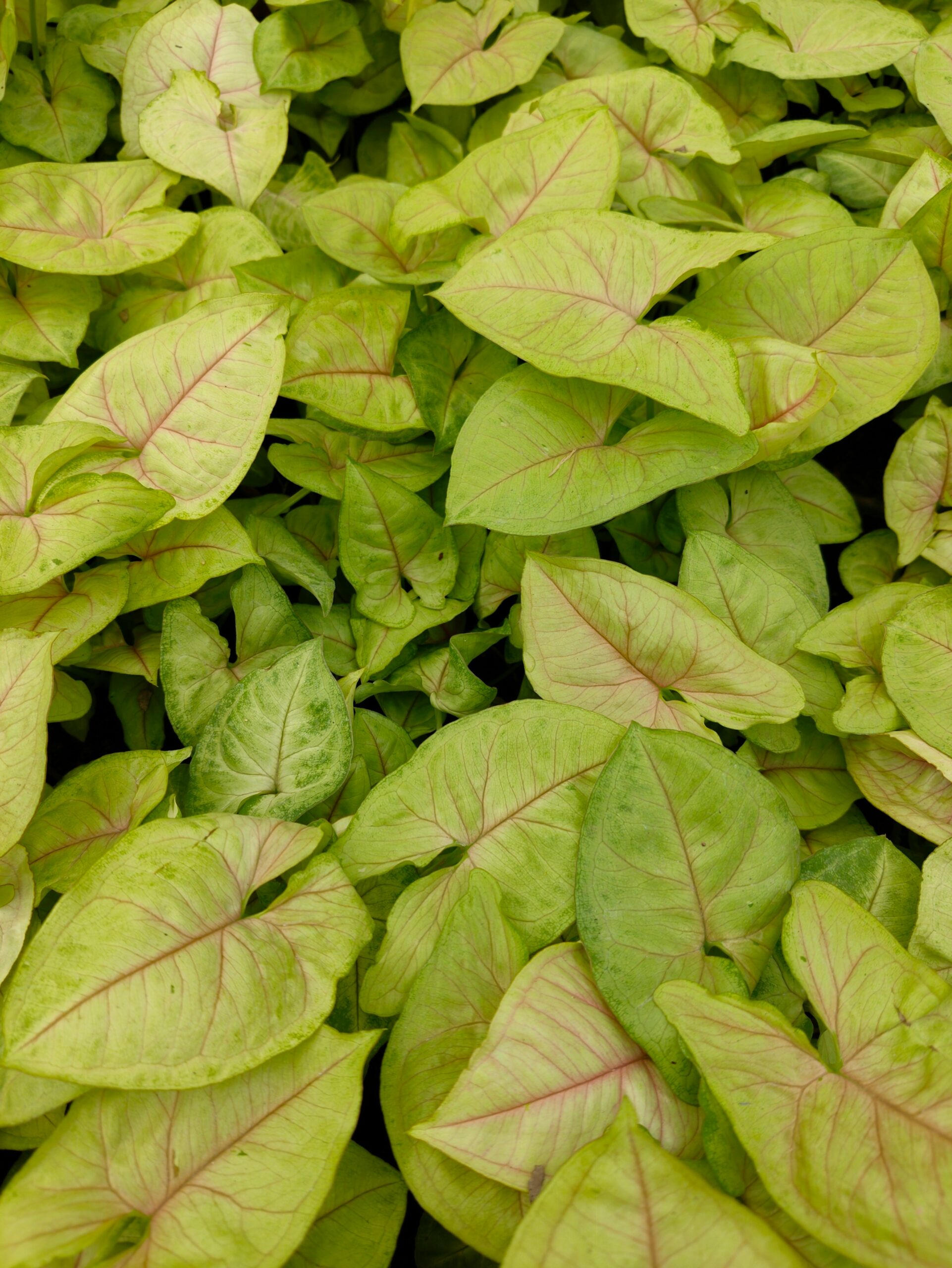
Young syngonium plants have simple, arrow or heart-shaped leaves, the look most people picture and the reason for the common name. As the plant matures and its stems lengthen into a vining habit, new leaves come in progressively more deeply lobed and divided, eventually becoming pedate with several leaflets if allowed to climb, eventually looking quite different from the compact young growth. This is completely normal, not a sign of stress or a care problem, and it happens faster when the plant is given something to climb, like a moss pole, since climbing triggers more mature growth than trailing does. If you prefer the compact arrowhead look, regular pruning of the vining stems keeps the plant producing more youthful, simply-shaped leaves.
Fading variegation from low light
Variegated syngonium varieties, with pink, cream, or white patterning, need brighter indirect light to maintain that coloring, in low light new leaves tend to come in more uniformly green. Moving the plant to a brighter spot, without direct sun, usually restores more colorful new growth within a few weeks, though already-green leaves won’t change back.
A few things people ask
Is arrowhead plant toxic to pets? Yes, the ASPCA lists arrowhead vine as toxic to cats and dogs, causing mouth irritation and drooling if chewed, keep it out of reach of curious pets.
Should I let it climb or keep it trailing? Either works, giving it a moss pole or trellis produces larger, more mature, deeply lobed leaves and a more dramatic look, while letting it trail or pruning it back keeps the smaller, arrow-shaped juvenile leaves people often prefer.
How do I propagate arrowhead plant? It roots easily from stem cuttings with at least one node, placed in water or moist soil, roots typically appear within a couple of weeks, making it one of the easier plants in this guide series to propagate.
Why does my plant look sparse at the base with all the growth up top? This is common in vining syngonium as it matures, older lower leaves naturally drop while new growth concentrates near the growing tip, pruning back and propagating the cuttings is an easy way to fill the base back in.
For a full rundown of light, watering, soil, and climbing versus trailing, see our arrowhead plant care guide. Next reads: Why Is My Tradescantia Losing Its Color?, English Ivy Care Guide: Light, Water, and Propagation and Philodendron Care Guide: Light, Water, and Propagation.