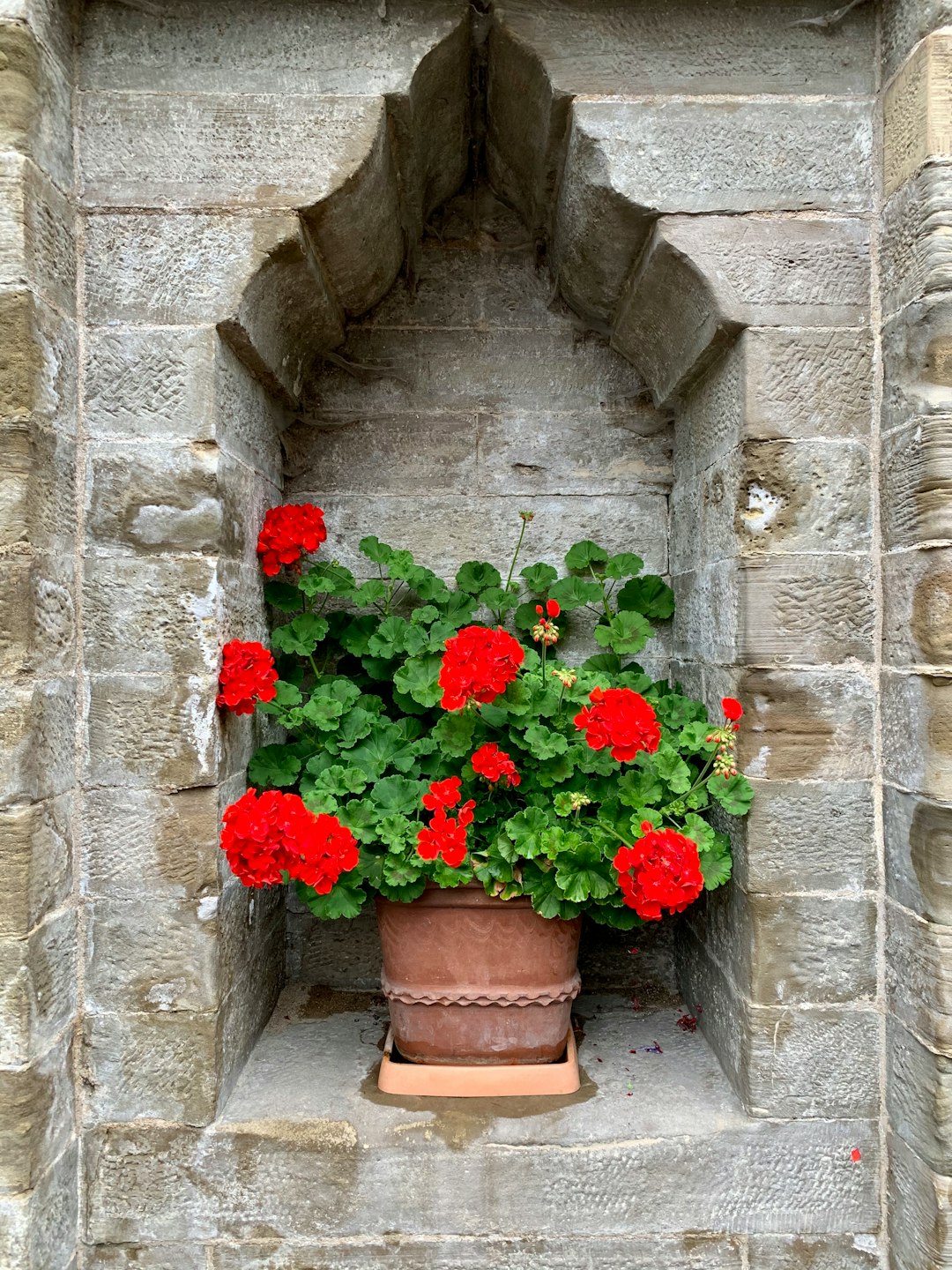
Geraniums look cheerful and forgiving, and they mostly are, as long as they get what they were built for: bright light, a free-draining pot, and a watering can that is used sparingly. Most problems come from treating them like a lush foliage plant.
This guide covers the common zonal geranium (Pelargonium) in the order that affects results most. If leaves are already yellowing, why geranium leaves turn yellow goes deeper.
Light
Give geraniums as much light as you can. A south-facing window or a bright outdoor spot with several hours of direct sun suits them best. In low light they stretch, drop leaves, and stop blooming. If no bright window is available, see grow lights for houseplants.
Watering
Let the top of the soil dry out, then water thoroughly and let the excess drain away. Pelargoniums handle a missed watering far better than constantly wet roots. Water the soil rather than the leaves, and water less in winter when growth slows. The guide to overwatering and underwatering is useful when the signs are confusing.
Soil and potting
Use a light, well-draining potting mix and a pot with drainage holes. Terracotta helps the soil dry evenly. Geraniums bloom well when slightly snug in their pots, so repot only when roots fill the container, moving up one size at a time.
Humidity and temperature
Average household humidity is fine, and misting is not needed or helpful, since wet foliage invites mold. Good air circulation matters more. Geraniums prefer mild conditions and should be kept away from frost, so potted plants kept outdoors in summer need to come inside before cold nights.
Fertilizing
Feed lightly during the growing and flowering season with a balanced fertilizer, following the label directions. Too much nitrogen gives leafy growth at the expense of flowers. Skip feeding in winter.
Pruning and propagation
Pinching back tips encourages bushier growth, and removing spent blooms and dead leaves keeps the plant tidy and healthier. Geraniums root readily from stem cuttings: take a healthy tip, let the cut end dry for a day, and set it in a light, barely moist mix in a bright spot.
The flowers: what makes this plant different
Geraniums are one of the few common houseplants grown mainly for a long display of color. That changes how they should be treated. Flowers need strong light, modest feeding, and regular removal of faded clusters, while overwatering and shade are the quickest ways to end the show.
Because they are semi-succulent in their stems, geraniums also reward a drier approach than most flowering plants. A sunny, airy spot with careful watering will keep them blooming far longer than pampering will.
Common problems
Yellowing leaves, leggy stems, and gray mold are the usual complaints. The page on why geranium leaves turn yellow sorts out the causes. For a wider look at what a struggling plant might be showing, see houseplant problems by symptom.
A few things people ask
Can geraniums live indoors?
Yes, in a very bright window with good airflow. Many growers keep them outdoors in warm weather and bring them in before frost.
Why is my geranium not blooming?
Usually the light is too weak, or the plant is getting too much nitrogen. Move it to a brighter spot and ease off the fertilizer.
How often should geraniums be watered?
There is no fixed schedule. Water when the top of the soil has dried, and let it drain fully.
Are geraniums safe around pets?
The ASPCA lists geranium as toxic to dogs, cats, and horses. See the ASPCA geranium page for details.