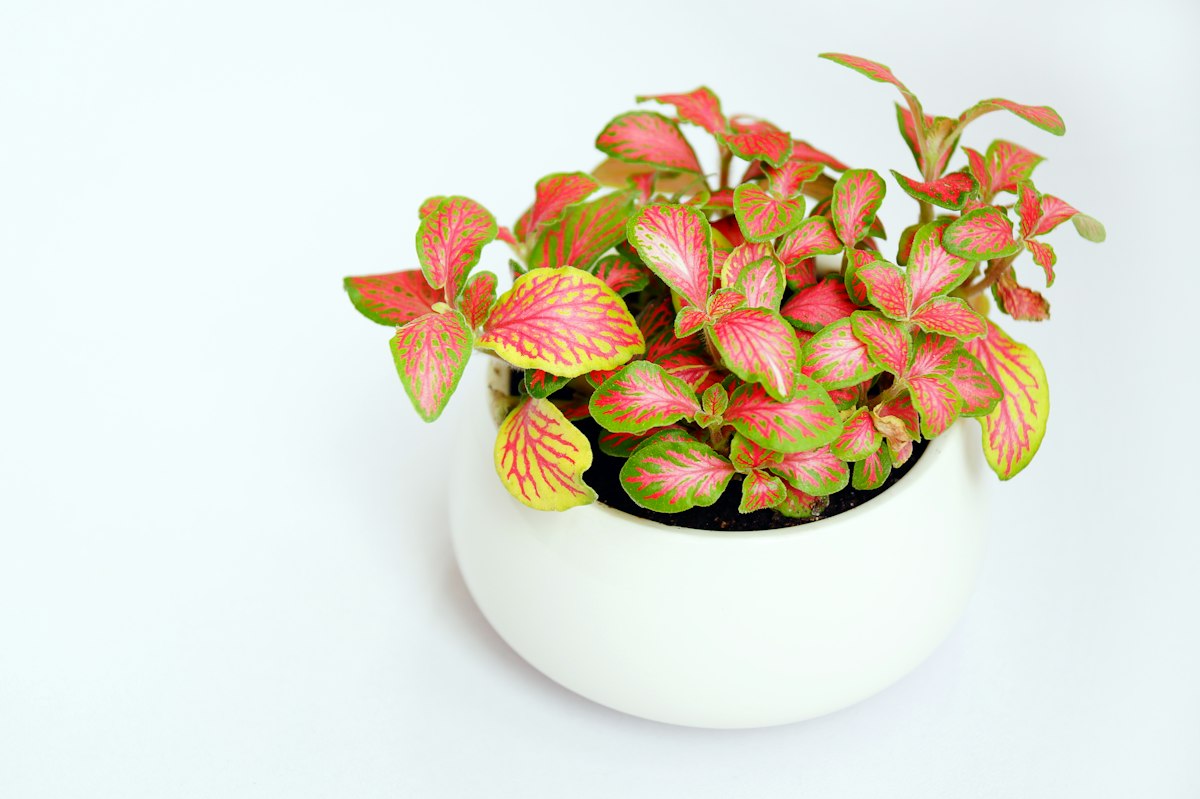
Coming home to find a fittonia completely flat, every leaf collapsed over the rim of the pot like someone let the air out of it, is alarming — it looks dead. Watering it anyway often has it standing back up quickly, like nothing happened. That dramatic, almost theatrical wilt is completely normal for this plant, and once it’s understood, fittonia becomes one of the easier plants to read.
Quick triage
| Cause | Symptom | What to do |
|---|---|---|
| Underwatering | Whole plant flat and limp, dry soil | Water thoroughly |
| Overwatering / root rot | Soil wet or soggy, base dark or mushy | Let soil dry, check for root rot |
| Low humidity | Crispy brown leaf edges, plant stays upright | Humidifier or a naturally humid spot |
| Too much direct light | Pink/white patterning fading | Move to bright, indirect light |
Did the whole plant go flat and limp within a day or two, with dry soil? Underwatering, the most common cause and usually the easiest to fix. Is the soil wet or soggy and the base looks dark or mushy? Overwatering or root rot, more urgent. Are the leaf edges going crispy and brown while the plant stays upright? Low humidity is the likely culprit. Has the vivid pink or white patterning faded to a duller green, especially on leaves facing a window? Check for too much direct light next.
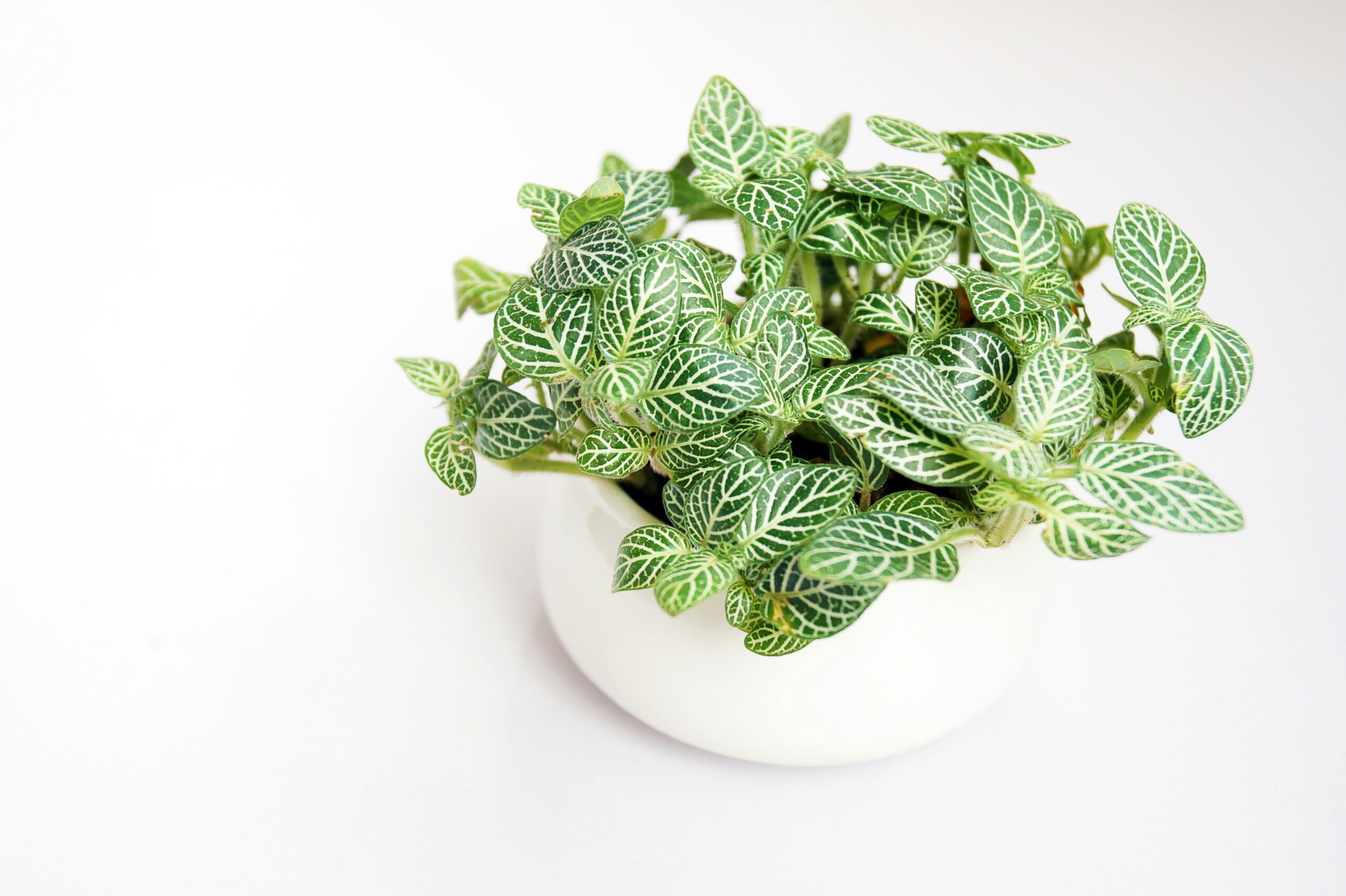
Underwatering (the dramatic wilt)
Fittonia is famous among houseplant people for how theatrically it responds to dry soil — NC State Extension confirms that if it gets too dry it will dramatically wilt but comes back after getting a drink — the whole plant can go from upright to completely collapsed within a matter of hours once the soil dries out. This looks alarming, but it’s usually not, a thorough watering brings the leaves back up within an hour or two in most cases. Check the soil with a finger before assuming the worst, if it’s dry an inch down, water is almost always the fix. Letting this happen repeatedly over a long period does weaken the plant over time, so treat it as a warning sign to water more consistently rather than a party trick to repeat.
Overwatering and root rot
Wilting that doesn’t recover after watering, paired with consistently wet soil, points to overwatering rather than thirst. Fittonia likes consistent moisture but not standing water, soil that never gets a chance to dry even slightly at the surface sets up the roots to rot. If the base of the stems feels soft or dark, root rot is worth checking for directly.
Low humidity
Fittonia has thin, delicate leaves that are notably more sensitive to dry air than a lot of common houseplants, crispy brown edges and curling tips are the typical result, especially during winter heating season. This is different from the dramatic wilt, the plant stays upright but the leaf texture itself deteriorates. A humidifier or a spot in a naturally humid room like a bathroom makes a real difference here.
Too much direct light
The pink, red, and white vein patterns that make fittonia distinctive can fade or bleach out under strong direct sun, and prolonged exposure can scorch the leaves outright. Bright, indirect light keeps the coloring the most saturated, a spot a few feet back from a south or west window is usually a safer bet than right on the sill.
A few things people ask
Is fittonia toxic to pets? No, the ASPCA lists nerve plant as non-toxic to cats and dogs, one of the safer choices in this guide series for households with curious pets.
Why does my fittonia wilt so dramatically compared to other plants? Its thin leaves and shallow root system lose water faster than thicker-leaved plants, so the visible response to dryness happens much faster and much more completely, it’s a trait of the plant rather than a sign something is unusually wrong.
Does misting help? Misting gives a brief, short-lived humidity boost at best, a humidifier or a naturally humid spot in the home does far more for the crispy-edge problem than misting alone.
Can it fully recover after wilting badly several times? Usually yes for occasional wilting, but repeated severe collapses stress the plant and can cause some lower leaf loss over time, consistent watering is worth aiming for rather than relying on the recovery.
For a full breakdown of light, watering, humidity, and why this plant does so well in terrariums, see our complete fittonia care guide. Next reads: Why Is My Chinese Money Plant Drooping?, Why Is My Polka Dot Plant Losing Its Color or Getting Leggy? and Why Is My Alocasia Drooping or Losing All Its Leaves?.