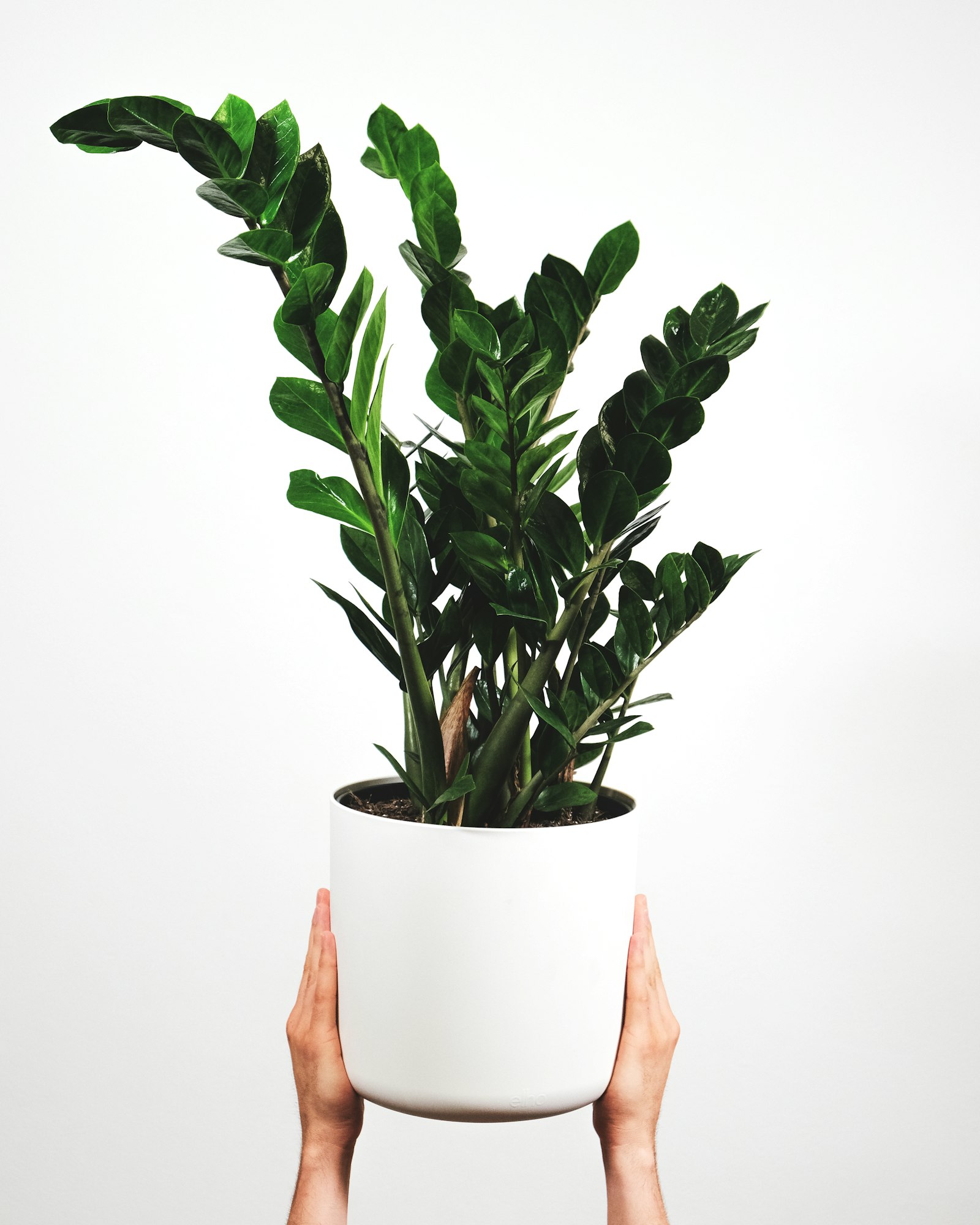
The best thing about a ZZ plant is watching a new shoot come up. It emerges as a single tightly curled spear, almost like a fiddlehead fern, bright chartreuse and glossy, before slowly unfurling into the familiar dark green fronds over a couple of weeks. It’s one of the more satisfying things to watch in the plant world, and it happens whether or not you’ve been paying the plant much attention at all.
| Care area | What it needs |
|---|---|
| Light | Tolerates low light; grows fastest in medium/indirect |
| Water | Let soil dry out completely between waterings |
| Soil | Fast-draining succulent or cactus mix |
| Humidity | Average household humidity is fine |
| Temperature | Normal room temps, avoid below 50°F |
| Fertilizing | Half strength every couple months, spring/summer |
Light
ZZ plant tolerates low light better than almost any other common houseplant, including dim interior corners with no direct window access, which is a big part of its popularity in offices. It does best and grows fastest in medium, indirect light, but unlike a lot of plants marketed as “low light tolerant,” this one genuinely holds up in dim conditions for years rather than just surviving a few months. Avoid direct sun, which can bleach or scorch the glossy leaves.
Watering
Let the soil dry out completely between waterings, then water thoroughly. ZZ plant stores water in thick underground rhizomes, similar in principle to how a succulent stores water in its leaves, which is what makes it so drought tolerant. This also means it’s far more likely to run into trouble from overwatering than underwatering, rhizome rot from consistently wet soil is the most common serious problem with this plant.
If you’re seeing yellowing leaves, working through the specific cause is worth doing before assuming the worst, since ZZ plant also sheds individual old stems as a completely normal part of its growth cycle, which is often mistaken for a problem. If the base feels soft or mushy, root rot is worth checking for directly.
Soil and potting
A fast-draining mix, a succulent or cactus blend works well, helps guard against the rhizome rot this plant is most vulnerable to. Make sure the pot has drainage holes. ZZ plant grows slowly and is comfortable being root bound for quite a while, so repotting every two to three years, or when the rhizomes are visibly crowding and lifting out of the pot, is typically enough.
Humidity and temperature
Average household humidity is fine, ZZ plant doesn’t need any special humidity intervention. Normal indoor temperatures work well, though it doesn’t tolerate cold drafts or temperatures much below 50°F for extended periods.
Fertilizing
A balanced liquid fertilizer, diluted to about half strength, every couple of months during spring and summer is plenty. ZZ plant is an extremely light feeder and grows fine with minimal fertilizing, over-feeding is more likely to cause problems than under-feeding with this one.
Propagation
ZZ plant can be propagated by division, separating rhizomes with roots attached during repotting, which is the fastest method. It can also be propagated from a single leaflet placed in water or soil, but this route is notably slow, it can take several months to over a year for a leaflet to form its own small rhizome and begin producing new growth, far longer than leaf propagation on most other houseplants in this guide series. Division is worth doing if you want faster results.
Common varieties
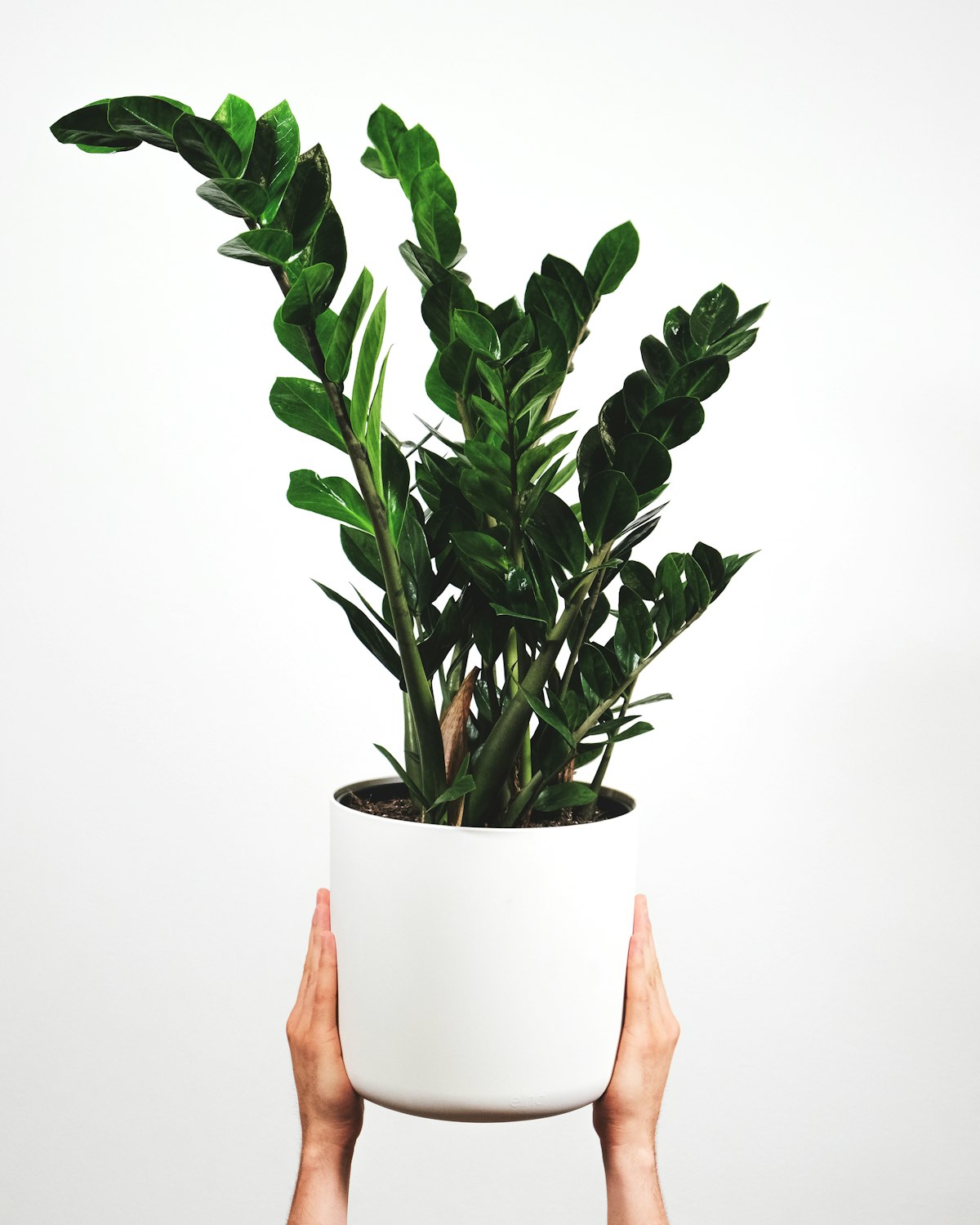
Standard Zamioculcas zamiifolia has glossy, deep green leaflets on upright stems. “Raven” is a increasingly popular cultivar with leaves that emerge green and darken to a deep, near-black purple as they mature, giving the plant a dramatically different look while needing identical care. A dwarf or compact variety is also sometimes available, staying smaller and more suited to tight spaces.
Common problems
Yellowing is the most frequent concern, and the cause is often a single stem naturally cycling out rather than a sign of overall decline, though overwatering is the more serious possibility worth ruling out. If the plant is wilting alongside soft, mushy growth at the base, check for root rot.
A few things people ask
Is ZZ plant toxic to pets? Yes, it contains calcium oxalate crystals that are toxic to cats and dogs if chewed, typically causing oral irritation and digestive upset rather than anything severe, but it’s worth keeping out of reach.
Why is a new shoot curled up tightly instead of looking like the rest of the plant? That’s just how ZZ plant sends out new growth, tightly coiled spears that gradually unfurl over a couple of weeks into the normal glossy fronds. It’s a completely normal growth stage, not a problem.
Can ZZ plant really survive with almost no light? It tolerates low light better than most houseplants and can survive for a long time in fairly dim spots, but “survive” and “thrive” are different things, growth slows dramatically and new shoots become rare in very low light, even if the existing leaves stay green.
Does ZZ plant purify air? It was included in an older NASA-adjacent body of research on air-filtering houseplants, though the real-world effect in a typical room with normal airflow is much smaller than that research is sometimes made out to suggest. It’s a nice bonus, not a substitute for ventilation. Next reads: Snake Plant Care Guide: Light, Water, and Propagation, Alocasia Care Guide: Light, Water, and Understanding Dormancy and Chinese Evergreen Care Guide: Light, Water, and Choosing a Variety.