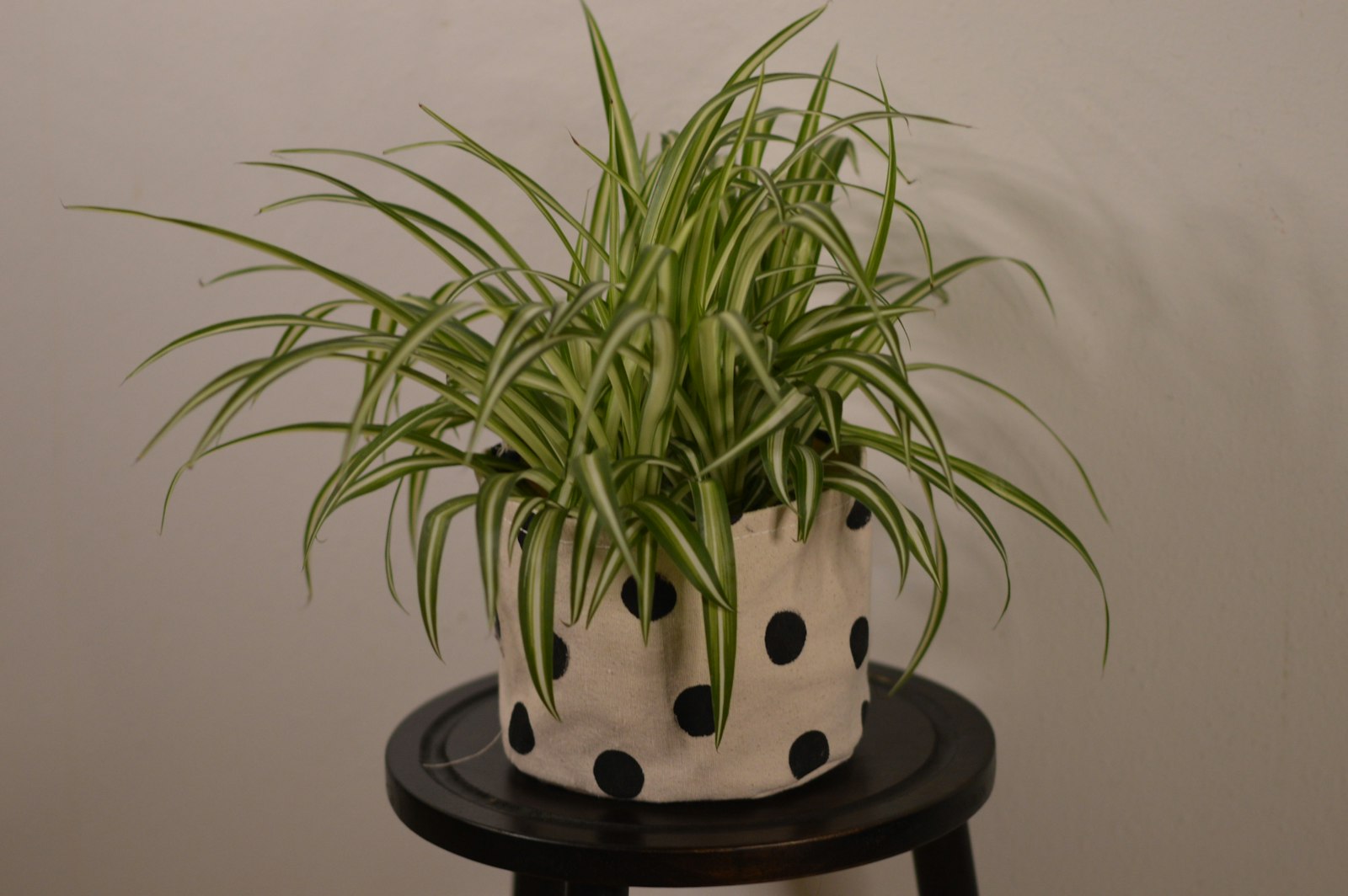
The first time a spider plant sends out a long arching stem with a tiny plantlet dangling off the end, it can look like something is wrong. That’s just what a happy, slightly root-bound spider plant does — it throws out babies almost as a reflex. Once that’s understood, there’s less reason to fuss over the plant and more reason to just let it do its thing, which is honestly the whole philosophy of growing this one well.
| Care area | What it needs |
|---|---|
| Light | Bright, indirect light; tolerates low light |
| Water | Let top 1–2 inches dry, then water thoroughly |
| Soil | Standard, well-draining potting mix |
| Humidity | Average household humidity is fine |
| Fertilizing | Half-strength, monthly, spring/summer only |
| Repotting | Every 1–2 years; blooms better slightly root-bound |
Light
Spider plant does best in bright, indirect light but tolerates a wide range, including fairly low light, better than most houseplants. Direct sun, especially through an unfiltered south or west window, can scorch the leaves, so bright indirect or filtered light is the safer target. Growth slows noticeably in dim corners, but the plant stays alive and green there for a long time.
Watering
Let the top inch or two of soil dry out between waterings, then water thoroughly. Spider plant isn’t especially drought sensitive, and its thickened root structure stores some moisture, so it handles a missed watering better than a lot of common houseplants. Consistently soggy soil is more likely to cause problems than letting it dry out a bit too long.
If you’re seeing crispy brown tips rather than a general watering issue, working through the specific cause is worth doing separately, since tap water sensitivity is a much more common culprit for this plant than it is for most others. If the base feels soft or mushy, root rot is worth checking for.
Soil and potting
A standard, well-draining potting mix works fine. Make sure the pot has drainage holes. Spider plant actually flowers and produces plantlets more readily when it’s a bit root bound, so there’s no need to rush to repot every year, every one to two years, or when roots are visibly circling and pushing up out of the soil, is plenty.
Humidity and temperature
Average household humidity is fine for spider plant, it isn’t a particularly humidity-demanding species, though very dry air can contribute to tip browning alongside water quality. Normal indoor temperatures work well, and it tolerates minor temperature swings better than more sensitive tropical houseplants.
Fertilizing
A balanced liquid fertilizer, diluted to about half strength, once a month during spring and summer is enough. Spider plant is a light feeder overall, and over-fertilizing is actually one of the more common causes of tip burn on this particular plant, so it’s worth erring on the side of less rather than more.
Propagation
This is where spider plant is unusually easy compared to almost anything else in this guide series. Mature, slightly root-bound plants send out long stems with baby plantlets already forming roots at the base. You can snip a plantlet off and set it directly in water or soil, it will typically root within a couple of weeks, or leave it attached to the mother plant and simply pin the still-connected plantlet into a nearby pot of soil until it roots, then cut it free. Either method works, and it’s a fast, forgiving way to fill out a collection or share with friends.
Common varieties
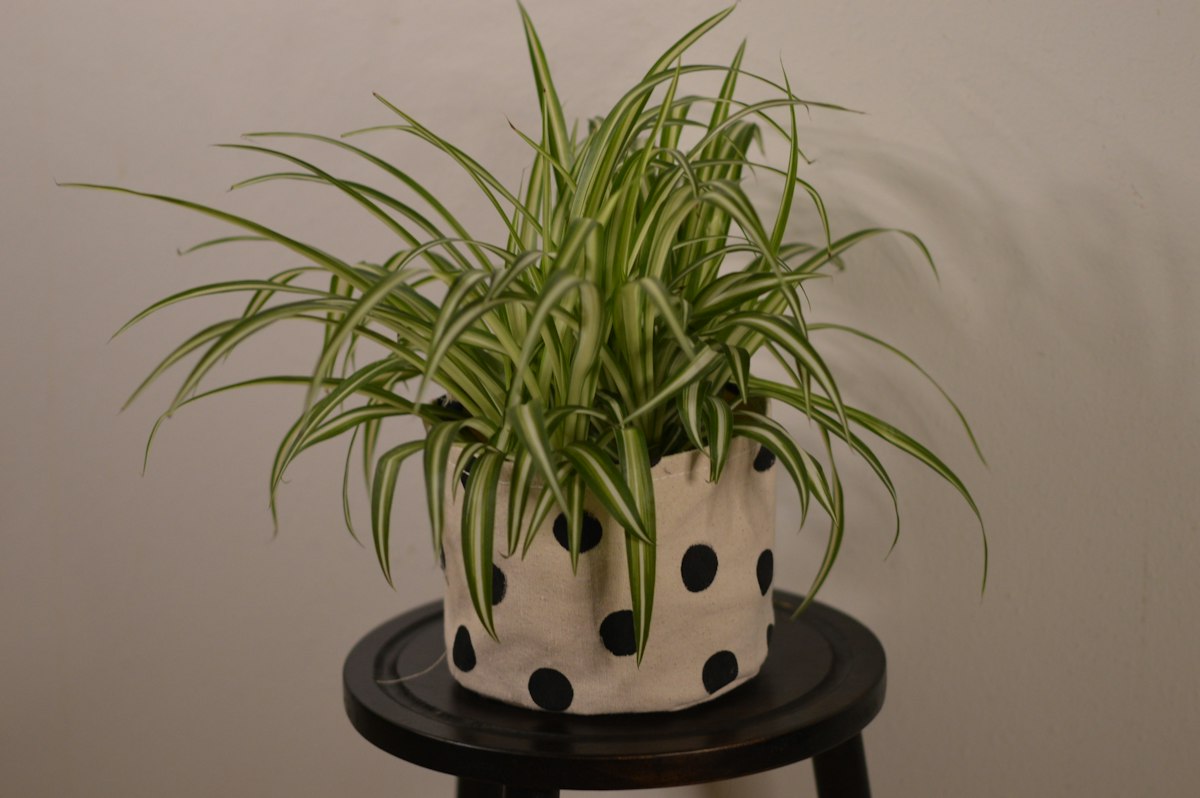
Chlorophytum comosum “Vittatum” is the classic variety, with a white central stripe running down each leaf. “Variegatum” is the reverse, with white edges and a green center stripe. “Bonnie” has the same variegation as Vittatum but with distinctively curly, twisting leaves rather than straight ones, giving it a fuller, more compact look.
Common problems
Brown, crispy leaf tips are the most frequent complaint with this plant, and the most common cause is tap water sensitivity rather than anything about your watering routine itself. If the plant is wilting alongside soft, mushy growth near the soil line, check for root rot.
A few things people ask
Is spider plant toxic to pets? No, it’s one of the few genuinely non-toxic common houseplants for cats and dogs, which makes it a popular pick for pet owners. Cats sometimes chew on the leaves anyway simply because they enjoy the texture, not because of any toxicity concern.
Why does my spider plant keep making babies? Plantlet production tends to ramp up when the plant is mature, slightly root bound, and getting decent light, it’s a sign of a healthy, established plant rather than anything you need to encourage or worry about.
Why are the leaves curling? Mild curling is often just a normal response to lower humidity or a bit of underwatering, and usually isn’t a sign of a serious problem on its own. If it’s severe or paired with other symptoms, it’s worth checking watering consistency first.
Does spider plant purify air? It was included in an older NASA study on air-filtering houseplants, though the measurable effect in a typical room with normal airflow is much smaller than that study is sometimes made out to suggest. It’s a nice bonus, not a substitute for ventilation. Next reads: Dracaena Care Guide: Light, Water, and Propagation, Peace Lily Care Guide: Light, Water, and Blooming and Snake Plant Care Guide: Light, Water, and Propagation.