
Peace lily is the plant that shows watering doesn’t have to be a guessing game. It droops dramatically when it’s thirsty, leaves going soft and flopping over the pot in a way that looks alarming the first time you see it, then perks back up within hours of a good watering, good as new. Once that pattern is clear, there’s no need to worry about a watering schedule for this plant — it tells you exactly what it needs.
Light
Peace lily tolerates low light better than a lot of houseplants and is often sold as a low-light option, but it does best in medium, indirect light, and that’s also where you’re most likely to get blooms. In very low light it’ll survive and stay green but flower rarely or not at all. Avoid direct sun, which can scorch the leaves.
Watering
This is where peace lily is unusually easy to read. The leaves droop noticeably when the plant needs water, going soft and drooping over the edge of the pot, and recover within a few hours of a thorough watering. This makes it one of the more forgiving plants to water on instinct rather than a fixed schedule, just watch for the droop and water when you see it, though letting it droop repeatedly and often isn’t ideal for long-term health.
If the tips of the leaves are browning rather than the whole plant drooping, that’s a different issue, worth looking into separately, since it often points toward water quality sensitivity rather than a watering frequency problem. If the base of the plant feels soft or mushy despite the soil being wet, root rot is worth checking for.
Soil and potting
A standard, well-draining potting mix works well. Make sure the pot has drainage holes. Peace lily grows at a moderate pace and typically needs repotting every one to two years, or when you notice roots circling the bottom of the pot or the plant drooping unusually fast between waterings despite consistent care, a sign it’s become root bound.
Humidity and temperature
Peace lily appreciates higher humidity than a lot of common houseplants and can develop crispy leaf edges in persistently dry air, distinct from the water-quality-related browning mentioned above. A humidifier, pebble tray, or grouping with other plants helps if your space runs dry. Normal indoor temperatures work well, and it doesn’t tolerate cold drafts.
Fertilizing
A balanced liquid fertilizer, diluted to about half strength, monthly during spring and summer supports both growth and blooming. Peace lily isn’t a particularly heavy feeder, but consistent light feeding during the growing season does tend to encourage more flowers.
Propagation
Peace lily doesn’t propagate well from leaf or stem cuttings the way many houseplants do, division is really the only reliable method. When repotting a mature plant, gently separate the root ball into sections, each with its own roots and several leaves attached, and pot them individually. This is usually done alongside a routine repotting rather than as a separate step.
Getting it to bloom
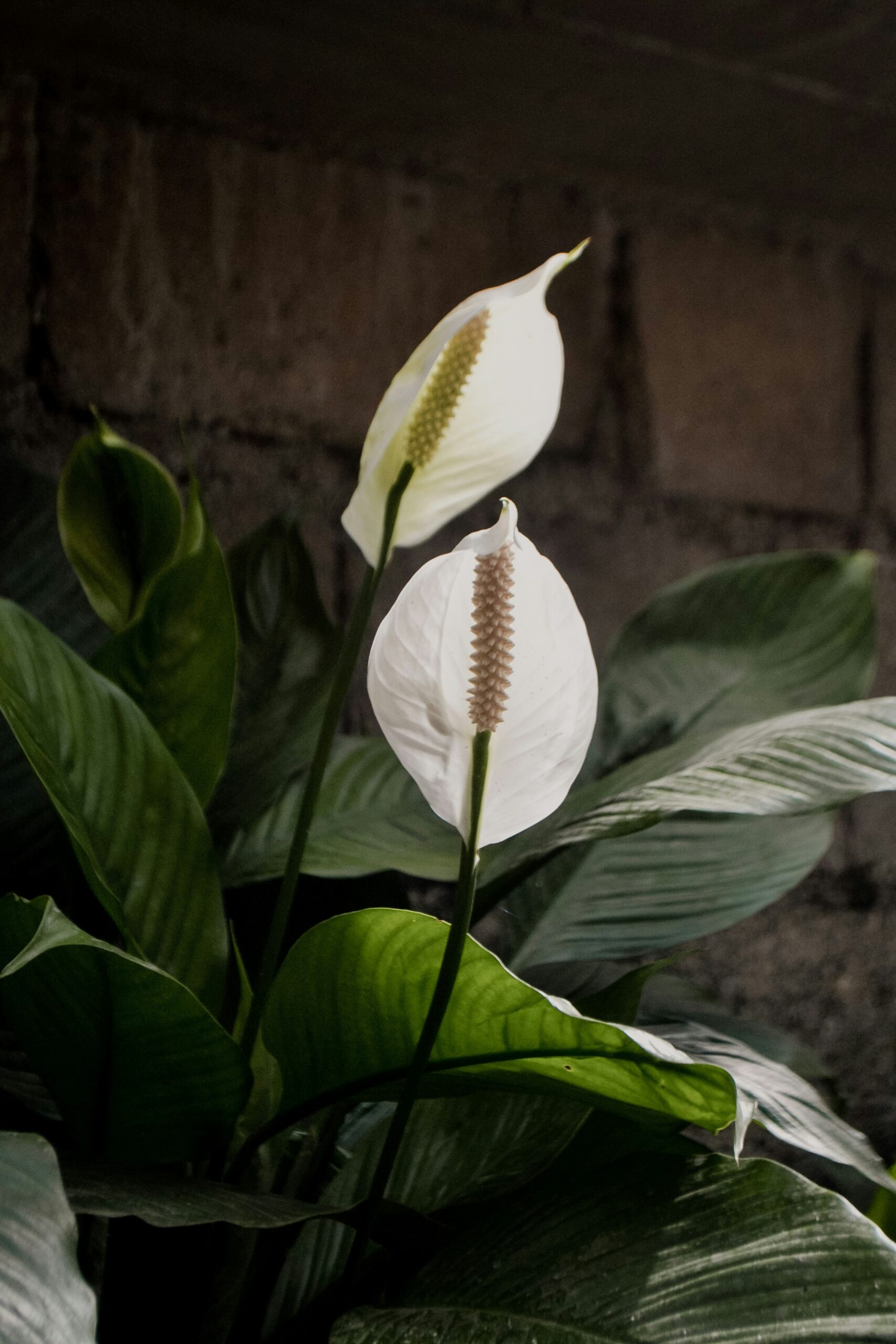
The white “flowers” are technically a modified leaf called a spathe surrounding the actual small flowers on a central spike. Brighter indirect light is the biggest factor in getting a peace lily to bloom reliably, plants in low light often stay healthy and green but produce few or no flowers. Consistent watering and light feeding during the growing season also support blooming. Established, somewhat mature plants tend to flower more reliably than very young ones.
A few things people ask
Is peace lily toxic to pets? Yes, the ASPCA lists peace lily as toxic to cats and dogs due to insoluble calcium oxalates, typically causing oral irritation, drooling, and digestive upset rather than anything severe, but it’s worth keeping out of reach.
Why did the flowers turn green? The white spathes naturally age and turn light green over several weeks as the bloom finishes, this is a normal part of the flowering cycle rather than a problem. You can trim spent blooms at the base once they’ve fully faded.
Should I mist my peace lily? Misting offers only brief, minor humidity benefits. A humidifier is more effective if you’re trying to meaningfully raise humidity around the plant, though occasional misting won’t hurt.
Does peace lily purify air? It was included in an older NASA study on air-filtering houseplants, though a Drexel University review of published studies estimated that it would take roughly 10 to 1,000 plants per square meter of floor space to match the air-cleaning effect of a building’s normal ventilation or even just a couple of open windows, so the real-world effect is much smaller than that study is sometimes made out to suggest. It’s a nice bonus, not a substitute for ventilation. Next reads: Anthurium Care Guide: Light, Water, and Blooming, Orchid Care Guide: Light, Water, and Reblooming and Hoya Care Guide: Light, Water, and Blooming.