
Crispy brown tips on a dracaena often have nothing to do with the watering schedule — the tap water itself is a common culprit. This genus is unusually sensitive to fluoride, which many municipal water supplies add, and switching to distilled or rainwater is the usual fix; when the water is the problem, new growth comes in clean while the old brown tips stay brown.
| Care area | What it needs |
|---|---|
| Light | Low to bright indirect light |
| Water | Let top half of soil dry between waterings |
| Water quality | Sensitive to fluoride/chlorine — use filtered/distilled |
| Soil | Standard, well-draining potting mix |
| Temperature | Avoid cold drafts and below 55°F |
| Fertilizing | Half strength monthly, spring/summer only |
Light
Dracaena tolerates a wide range of light, from fairly low indirect light to bright indirect light, making it a flexible choice for rooms without much natural light. It grows fastest in medium to bright indirect light, but unlike some low-light-tolerant plants, it genuinely holds up for a long time in dimmer spots. Direct sun can scorch the leaves, so keep it out of harsh afternoon rays.
Watering
Let the top half of the soil dry out between waterings, then water thoroughly. Dracaena is fairly drought tolerant and would rather be underwatered than sitting in soggy soil. Water quality matters more with this genus than with most others in this guide series, fluoride and chlorine sensitivity is well documented, so distilled water, filtered water, or tap water left out overnight to let chlorine dissipate all help.
If you’re seeing brown tips despite otherwise consistent care, working through the specific cause is worth doing separately, since water chemistry is a much more common culprit here than with most houseplants. If the base feels soft or mushy, root rot is worth checking for.
Soil and potting
A standard, well-draining potting mix works fine. Make sure the pot has drainage holes. Dracaena grows slowly and can stay in the same pot for a couple of years, repot when roots are visibly circling and crowding, or if a tall cane starts to feel top-heavy and unstable, a slightly heavier pot can help with balance too.
Humidity and temperature
Average household humidity is fine, dracaena doesn’t need any special humidity intervention, though very dry air can contribute to tip browning alongside water quality. Normal indoor temperatures work well, and it doesn’t tolerate cold drafts or temperatures much below 55°F.
Fertilizing
A balanced liquid fertilizer, diluted to about half strength, once a month during spring and summer is enough. Dracaena is a light feeder, and over-fertilizing is actually a fairly common cause of leaf tip burn on this plant, salt buildup from excess fertilizer can mimic the same browning caused by fluoride sensitivity, so it’s worth erring on the side of less.
Propagation
Stem, or cane, cuttings root easily in water or moist soil, cut a section of stem a few inches long and place it with the original growth direction facing up. New shoots typically emerge from dormant nodes along the cane within several weeks. This is the same basic method used to grow “lucky bamboo,” which is actually a different Dracaena species (Dracaena sanderiana) sold and shaped for that specific look.
Common varieties
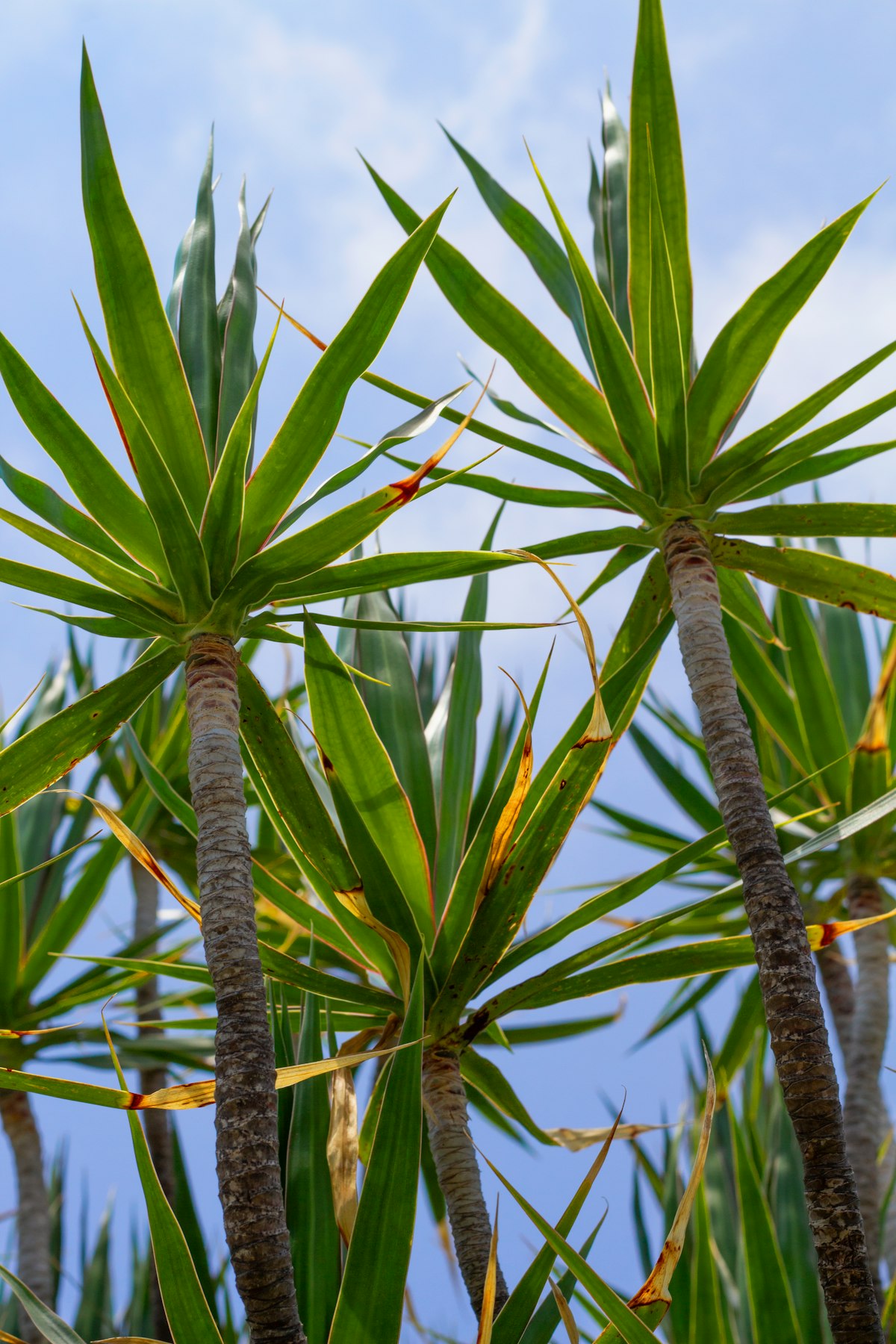
Dracaena fragrans, often called corn plant, has broad, arching leaves on a thick cane and is one of the most common varieties sold. Dracaena marginata, or dragon tree, has narrow, spiky leaves with red edges on slender, often braided stems. Dracaena reflexa, sometimes called song of India, has shorter, densely packed leaves, frequently variegated in cream or yellow. Interestingly, snake plant (Sansevieria) has been reclassified taxonomically into the Dracaena genus in recent years, though it’s different enough in care and appearance that it’s worth treating as its own plant.
Common problems
Brown, crispy leaf tips are the most frequent complaint with this plant, and fluoride sensitivity is a particularly common cause that’s easy to overlook if you’re only reviewing your watering schedule. If the plant is wilting alongside soft, mushy growth near the soil line, check for root rot.
A few things people ask
Is dracaena toxic to pets? Yes, most Dracaena species are toxic to cats and dogs if chewed or ingested, typically causing vomiting and drooling rather than anything severe, but it’s worth keeping out of reach.
Why does my dracaena have a bare, leafless section of stem? This is normal as the plant matures, lower leaves naturally drop as new growth emerges higher up, leaving a bare cane below a cluster of foliage at the top. It’s part of the plant’s natural growth habit, not a sign of a problem.
Can I use regular tap water? It depends on your local water supply, some tap water has low enough fluoride and chlorine that it’s not an issue, but if you’re seeing consistent brown tips, switching to distilled or filtered water is worth trying before assuming a different cause.
Does dracaena purify air? It was included in an older NASA study on air-filtering houseplants, though the real-world effect in a typical room with normal airflow is much smaller than that study is sometimes made out to suggest. It’s a nice bonus, not a substitute for ventilation. Next reads: Ti Plant Care Guide: Light, Water, and Keeping the Color Bright, Why Are My Ti Plant Leaves Turning Brown? and Yucca Care Guide: Light, Water, and Cutting Back the Cane.