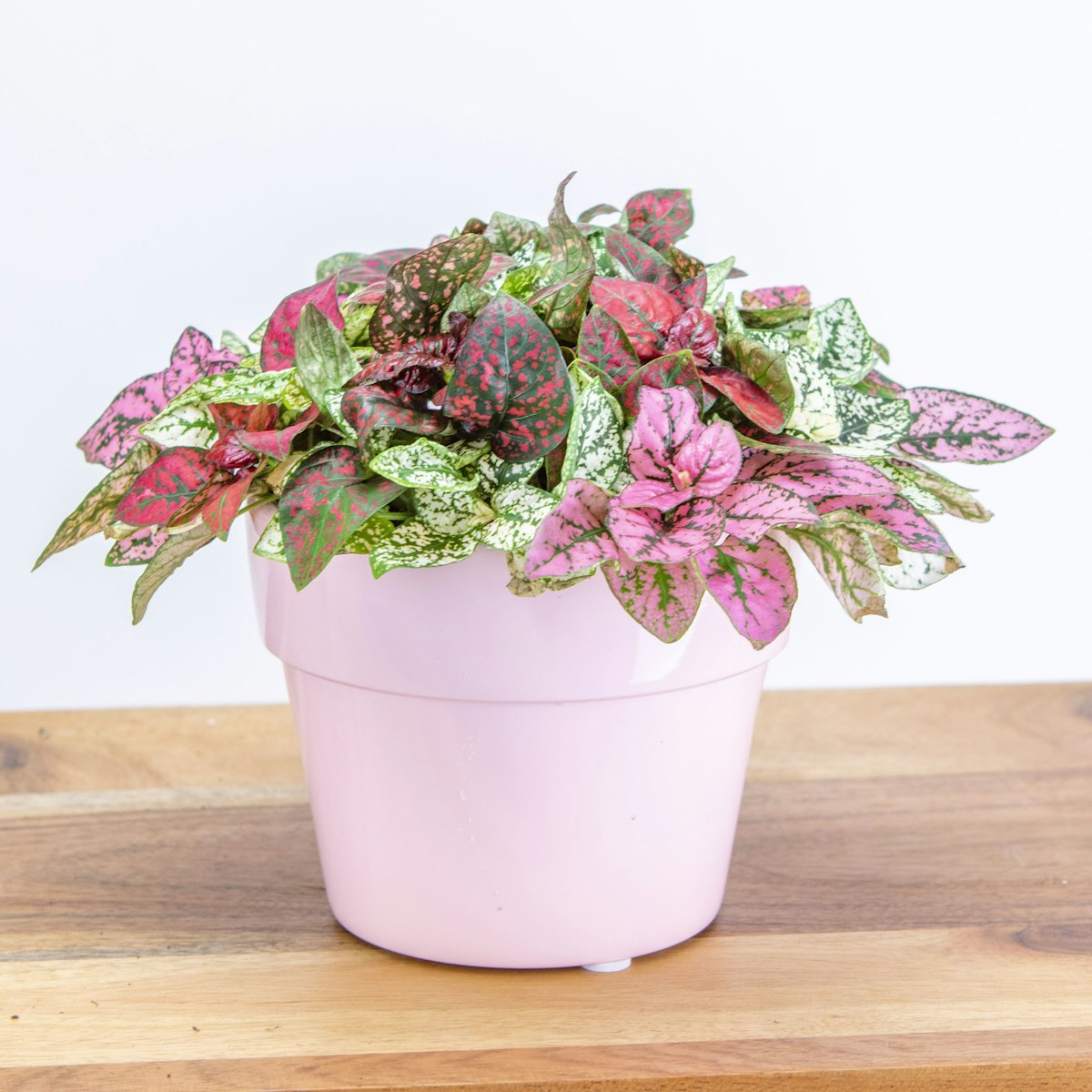
A polka dot plant bought for the vivid pink spots covering every leaf can fade to a dull, mostly green blur within a few months on a dim bookshelf. It’s easy to think the plant has somehow been damaged, but moving it to a brighter spot lets new leaves come in just as vivid as the day it was bought. The color is almost entirely about light, not some permanent trait of the plant.
Quick triage
| Cause | Symptom | What to do |
|---|---|---|
| Too little light | New leaves duller or greener than older growth | Move to a brighter spot |
| Legginess and flowering | Tall, thin, sparse growth, small flower spikes | Pinch tips, remove flower spikes |
| Overwatering / root rot | Soil consistently wet, soft stems | Let soil dry out, check for root rot |
| Underwatering | Wilting leaves, dry soil | Water thoroughly |
Are the newest leaves coming in duller or more solid green than older growth? Too little light, the most common cause. Has the plant gotten tall, thin, and sparse, possibly with small flower spikes? Legginess and flowering, covered below, both usually call for a prune. Is the soil consistently wet and the stems soft? Overwatering or root rot. Are the leaves wilting with dry soil? Underwatering.

Too little light
The pink, red, or white spotted patterning this plant is grown for depends heavily on bright light, in low light new leaves come in noticeably more green and less patterned. This isn’t damage or disease, it’s a direct response to light levels — NC State Extension notes that too little light causes the leaves to fade and the plant to grow leggy as it reaches for brighter lighting — and moving the plant somewhere brighter usually brings the color back within a few weeks of new growth.
Legginess and flowering
Polka dot plant grows quickly and stretches into a tall, sparse, leggy shape if left untrimmed, and it will eventually produce small, unremarkable flower spikes as it matures. Flowering in particular tends to signal the plant shifting energy away from leaf production, and the plant often declines somewhat afterward. Regularly pinching off growing tips, and removing flower spikes as soon as they appear, keeps the plant fuller and more focused on the colorful foliage it’s actually grown for.
Overwatering and root rot
Consistently wet soil leads to soft stems and yellowing lower leaves. Polka dot plant likes evenly moist soil but not standing water, if the base feels soft or mushy, root rot is worth checking for directly.
Underwatering
This plant wilts fairly dramatically and quickly once the soil dries out, more so than many houseplants, but it usually recovers within a few hours of a thorough watering if caught before the leaves crisp up. Consistent watering prevents the repeated wilt-and-recover cycle from stressing the plant over time.
A few things people ask
Is polka dot plant toxic to pets? No, the ASPCA lists polka dot plant as non-toxic to cats and dogs, one of the safer choices in this guide series for households with curious pets.
Why does my plant seem to be declining after a year or two even with good care? Polka dot plant is naturally short-lived as a houseplant, often growing leggy and fading after a year or two regardless of care quality, taking cuttings to start a fresh replacement plant is a normal part of growing it long-term rather than a sign of a mistake.
Should I let it flower? It’s not harmful to let it flower occasionally, but pinching off flower spikes early generally keeps the plant fuller and delays the decline that tends to follow blooming.
How much light does it actually need? Bright, indirect light is ideal, a spot close to an east or west-facing window works well, direct sun can scorch the leaves despite the plant’s general need for brightness.
For a full breakdown of light, watering, and how to keep it full instead of leggy, see our complete polka dot plant care guide. Next reads: Why Is My Fittonia Drooping or Wilting?, Why Is My Tradescantia Losing Its Color? and Why Is My Chinese Money Plant Drooping?.