
A polka dot plant can look fantastic for about four months, then go leggy, send up a few odd little flower spikes, and start looking tired no matter what you do. Treating it like a permanent houseplant makes that decline feel like a failure, but it’s just the plant’s natural timeline — many growers take cuttings every few months to keep a fresh plant going instead of expecting one plant to last for years.
| Care factor | What it needs |
|---|---|
| Light | Bright, indirect; avoid direct sun |
| Water | Keep soil evenly moist, wilts fast once dry |
| Humidity | Average to above-average |
| Lifespan | Often just 1-2 years before natural decline; propagate cuttings to keep color going |
| Toxicity | Non-toxic to cats and dogs |
Light
Bright, indirect light is essential for the vivid pink, red, or white spotted patterning this plant is grown for, a spot close to an east or west-facing window works well. In lower light the color fades toward plain green on new growth. Avoid direct sun, which can scorch the leaves despite the plant’s general need for brightness.
Watering
Keep the soil evenly moist, this plant wilts quickly and dramatically once it dries out, more so than many houseplants. Water when the top inch of soil starts to feel dry, and avoid letting it sit in standing water.
Soil and potting
A standard well-draining potting mix works well. This plant grows quickly and can outgrow a small pot within months, sizing up as needed, though given its naturally short lifespan as a houseplant, many growers never end up repotting it more than once or twice.
Humidity and temperature
Average to above-average humidity keeps the leaves looking their best, dry air can cause crispy edges. It prefers warm, stable temperatures and should be kept away from cold drafts.
Fertilizing
A balanced liquid fertilizer diluted to about half strength, applied monthly during spring and summer, supports steady growth. Skip fertilizing in fall and winter when growth naturally slows.
Propagation
Polka dot plant roots easily and quickly from stem cuttings, a few inches of stem in water typically roots within one to two weeks. Given how naturally short-lived this plant is as a houseplant, keeping a rotation of fresh cuttings going is a genuinely practical long-term strategy rather than a workaround.
Pinching to prevent legginess and flowering
This plant grows fast and stretches into a sparse, leggy shape without regular attention, and it will eventually send up small flower spikes as it matures, which tends to accelerate the plant’s decline. Pinching off the growing tips every few weeks encourages a fuller, bushier shape, and removing flower spikes as soon as they appear redirects the plant’s energy back into colorful foliage rather than seed production.
Common problems
Fading color is almost always tied to low light, our full guide on why polka dot plant is losing its color or getting leggy walks through how to tell that apart from overwatering, underwatering, and the normal flowering-related decline this plant goes through. If the base feels soft or mushy, root rot is worth checking for directly.
A few things people ask
Is polka dot plant toxic to pets? No, it’s considered non-toxic to cats and dogs, one of the safer choices in this guide series for households with curious pets.
How long does a polka dot plant typically last? Often just a year or two before it goes leggy and declines regardless of care, this is normal for the plant rather than a sign of a mistake, propagating fresh cuttings keeps the color going indefinitely.
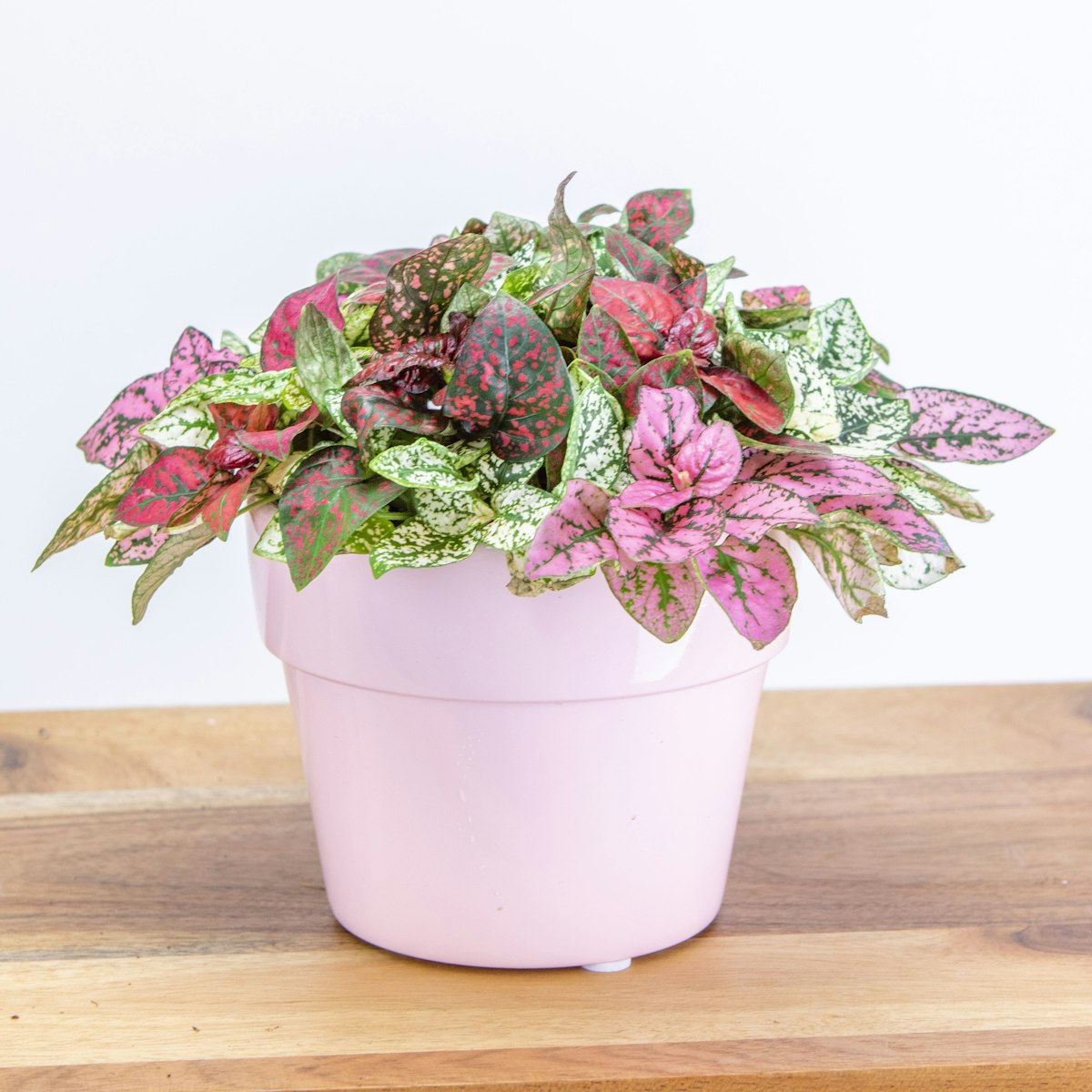
Why are there different colored varieties? Polka dot plant has been bred into many color forms, including pink, red, white, and rose varieties, all with essentially identical care requirements, the differences are purely cosmetic.
Can I grow it in a terrarium? Yes, the humidity of a terrarium suits it well, though its fast growth means it will likely need more frequent trimming in an enclosed space than in an open pot. Next reads: Fittonia (Nerve Plant) Care Guide: Light, Water, and Humidity, Chinese Money Plant Care Guide: Light, Water, and Propagating Pups and Ti Plant Care Guide: Light, Water, and Keeping the Color Bright.