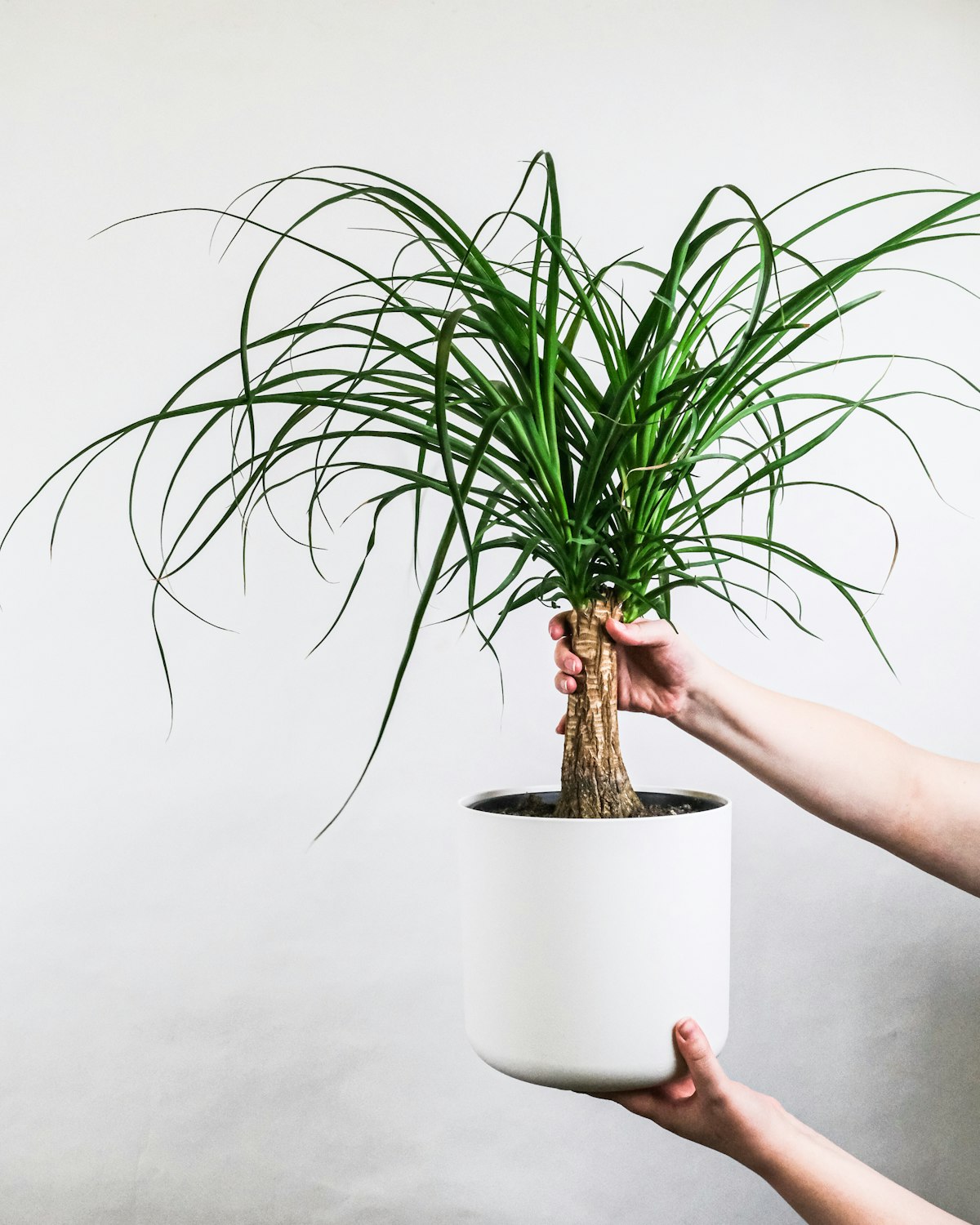
Watering a ponytail palm on the same weekly schedule as everything else on the plant shelf can go on for almost a year before the base of the trunk goes soft in one spot. It’s a regular-houseplant routine applied to something that’s actually much closer to a succulent — that bulbous trunk is a water-storage organ, and it’s easy to overfill it for months without realizing. Watering it like a cactus instead of a pothos tends to make an immediate difference.
Quick triage
| Symptom | Likely cause |
|---|---|
| Swollen base of the trunk soft, mushy, or discolored | Overwatering or trunk rot (most serious, most common) |
| Just a few oldest, lowest leaves browning and dropping, rest healthy | Normal aging |
| Crispy leaf tips, trunk not watered in a very long time | Underwatering (rare) |
| Plant pale or stretching toward a window | Too little light |
Overwatering and trunk rot
This is by far the most common serious problem, and it usually comes from treating this plant like a typical houseplant instead of the succulent it actually is. The swollen base of the trunk, a caudex, stores water, much like a cactus stores water in its stem, and watering on a regular schedule without letting it dry out fully leads to soft, mushy, discolored patches on the trunk that indicate rot. Unlike leaf damage, trunk rot is often fatal since it affects the plant’s main water reserve, prevention matters far more than trying to treat it after the fact.

Normal lower leaf browning
It’s completely normal for the oldest, lowest leaves to yellow, brown, and eventually drop as the plant grows and puts energy into newer growth. This happens gradually and affects only the older leaves at any given time, if the rest of the plant looks healthy, this isn’t something to worry about or try to fix.
Underwatering
Because the trunk stores so much water, this plant can go a genuinely long time without watering, weeks longer than most houseplants, before showing stress. Crispy, browning leaf tips after an extended period of neglect are the main sign, a thorough watering usually resolves it within a couple of weeks.
Too little light
In low light, this plant grows slowly, pale, and can stretch toward the nearest light source. Bright, indirect to direct light supports the healthiest growth and keeps the leaves a deeper green.
A few things people ask
Is ponytail palm toxic to pets? No, it’s considered non-toxic to cats and dogs, one of the safer choices in this guide series for households with curious pets.
Is it actually a palm? No, despite the name and palm-like appearance, it’s actually a succulent more closely related to yuccas and agaves, which is exactly why its watering needs are so different from a true palm.
How often should I really water it? Let the soil dry out completely between waterings, for most homes this means watering every two to four weeks rather than on a weekly schedule.
Can a trunk with some rot be saved? Sometimes, if caught early and the affected area is small, cutting away the soft tissue back to firm, healthy trunk and letting it dry out can work, but extensive rot is usually not recoverable.
For a full breakdown of light, watering, and understanding the water-storing trunk, see our complete ponytail palm care guide. Next reads: Why Does My Parlor Palm Have Brown Tips?, Why Is My Air Plant (Tillandsia) Turning Brown or Dying? and Why Is My Rhipsalis Turning Brown or Shriveling?.