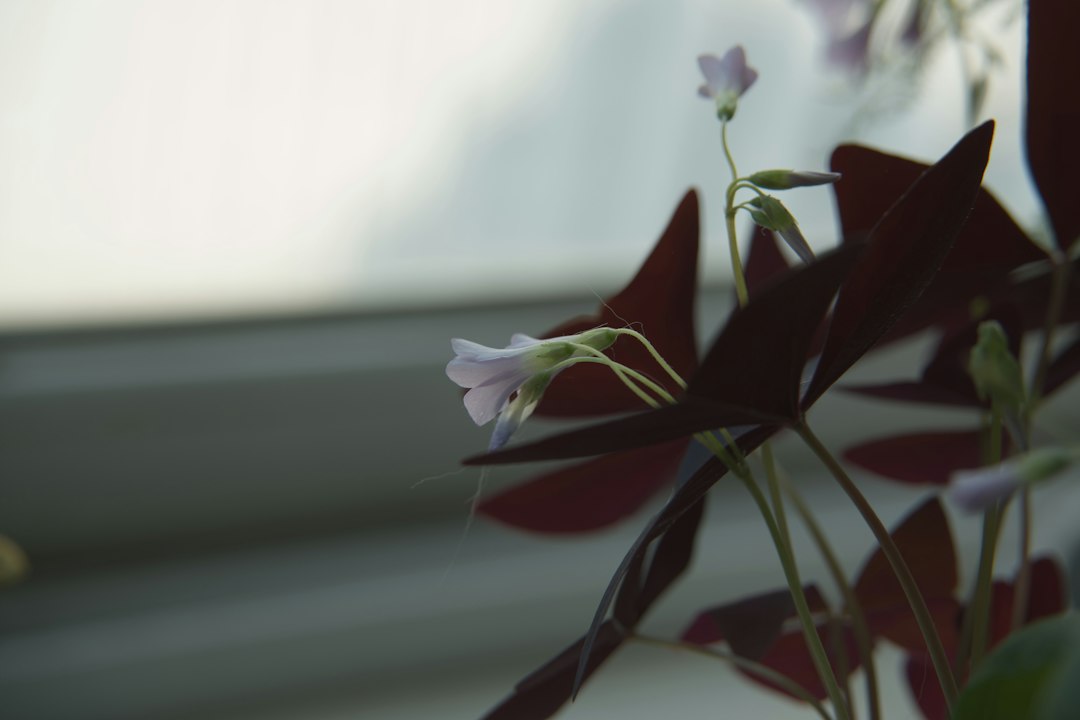
Oxalis has a rhythm of its own, and most of the work is simply not getting in its way. The usual mistake is treating a purple shamrock like a plant that needs constant watering: keep the soil very wet and by late summer it thins out to a few sad stems, which looks like the end of the plant. It is not the end — but it takes understanding that rhythm to see why.
Oxalis triangularis is a small plant from South America that grows from scaly underground rhizomes. It has deep purple, triangle-shaped leaves in groups of three, little pale pink or white flowers for much of the year, and a habit of opening in daylight and folding shut at night. Give it bright light, let it dry a little between drinks, and let it rest when it wants to, and it is an easy, cheerful plant.
| Care area | What it needs |
|---|---|
| Light | Bright light, with a little gentle direct sun if possible |
| Water | Water when the top inch is dry; stop entirely during dormancy |
| Soil | Ordinary potting mix with extra perlite for drainage |
| Humidity | Normal room humidity is fine |
| Temperature | 60 to 75°F, sustained heat pushes it into dormancy |
| Fertilizer | Diluted feed once a month while actively growing |
| Pets | Toxic to cats and dogs |
Light
More than most people give it. Oxalis does best right at a bright window, and an east-facing one with a couple of hours of morning sun is close to ideal. A south or west window works too, as long as it is not blasting afternoon sun through the glass in midsummer, which can bleach the leaves and bring on dormancy early.
Low light shows up quickly. The stems stretch, get floppy, and the leaves stay half-folded even at midday because the plant never registers that it is properly daytime. The colour also dulls from that rich plum to a muddier brown-purple. If yours looks like that, the light is the first thing to change.
Watering
While it is actively growing, water when the top inch of soil is dry, and water until it drains out the bottom. In a bright spot in summer that might be once a week. The rhizomes store some water, so it copes with being a bit dry far better than being kept constantly wet.
Soggy soil is the thing that actually kills oxalis. The rhizomes rot, the stems go soft at the base, and the plant collapses. So if you are in doubt, wait another day or two. And when the plant is dormant and has no leaves, do not water it at all. That is the single most useful rule for this plant, and the one people most often get wrong.
Soil and potting
A general houseplant mix is fine as a base, with a good handful of perlite mixed in so it drains quickly. It does not need anything fancy. Pick a pot with a drainage hole, and a slightly wide, shallow pot suits it better than a tall one, since the rhizomes sit in the top few inches of soil.
The best time to repot is at the end of a dormant period, when there is nothing above ground to damage. Tip it out, and you will find the rhizomes have multiplied. Replant them about an inch deep, spaced a little apart, in fresh mix, and water lightly to wake them up.
Humidity and temperature
No special humidity needed. Ordinary indoor air is fine, and it does not need misting. It is one of the more forgiving plants for a dry heated apartment.
Temperature matters more than humidity. It prefers the cooler side of normal room temperatures, roughly 60 to 75°F. A long run of hot weather, especially above about 80°F, is one of the most common triggers for dormancy, so if you have a cooler room or window in summer, that is where it should go. Keep it away from frosty windowpanes in winter as well.
Fertilizing
A balanced liquid fertilizer at half strength, once a month, while the plant is in active growth. That is all it wants. Stop when it starts to slow down or go dormant, and do not start again until it has put out a decent flush of new leaves after waking up.
Propagation
Division is the way, and it is almost too easy. Every oxalis pot slowly fills with rhizomes, and each one can become a new plant. At repotting time, separate them into small clumps or even single rhizomes and plant them an inch deep in their own pots. New shoots usually appear within a couple of weeks once they are watered and in good light.
Leaf and stem cuttings do not really work for this plant, so do not bother with a glass of water on the windowsill. The rhizomes are where the new plants come from. A single overgrown pot can easily be split into four or five, which makes it a nice plant to pass along to friends.
The sleep cycle: daily folding and seasonal rest
Oxalis runs on two clocks, and understanding both is what separates people who keep it for years from people who throw it out the first summer.
The daily one is the folding. Every evening the three triangular leaflets fold down and together, and in the morning they open back up. On a windowsill you can actually watch it happen over an hour or so, and pots near a lamp will sometimes open back up when you switch it on. It is a response to light, so a plant that stays folded all day is telling you something about where it is sitting.
The seasonal one is dormancy. Every so often, often in summer heat or after months of flowering, the plant lets all its foliage die back and rests underground. When that happens, stop watering, cut away the dead stems, and park the pot somewhere cool and dim. After a few weeks, sometimes up to three months, new shoots appear, and it is back to full size remarkably quickly. You can also nudge it awake after about six weeks by moving it to bright light and watering. Nothing else in the usual houseplant lineup does this quite so dramatically, and once you expect it, it stops being alarming.
Common problems
Drooping is by far the most common complaint, and it can mean anything from “it is evening” to “the rhizomes are rotting.” The full breakdown, with how to tell nightly folding, dormancy, overwatering, thirst and low light apart, is in why your oxalis is drooping. Beyond that, keep an eye out for spider mites in dry, warm rooms, which leave fine speckling on the leaves, and for soft stems at the base, which usually lead back to root rot.
A few things people ask
Is purple shamrock the same as a real shamrock? Not the one from St. Patrick’s Day. The green shamrocks sold in March are usually clover or a different, green-leaved oxalis. Oxalis triangularis is a related plant with those distinctive purple triangles, and it is the one most people mean when they say purple shamrock.
How often does it flower? Pretty much on and off whenever it is growing well and getting good light. The flowers are small, pale pink or white, and held up above the leaves. A plant that stops flowering is often short on light.
How long does dormancy last? Anywhere from a few weeks to about three months. Keep the pot dry and cool while it rests, and watch for new shoots as the sign to start watering again.
Is it safe for pets? No. It contains soluble oxalates and is listed as toxic to cats and dogs by the ASPCA. Keep it on a shelf pets cannot reach. Next reads: Poinsettia Care Guide: Light, Water, and Getting the Red Back, Cyclamen Care Guide: Cool Light, Bottom Watering, and the Summer Rest and Amaryllis Care Guide: Light, Water, and the Yearly Rest.