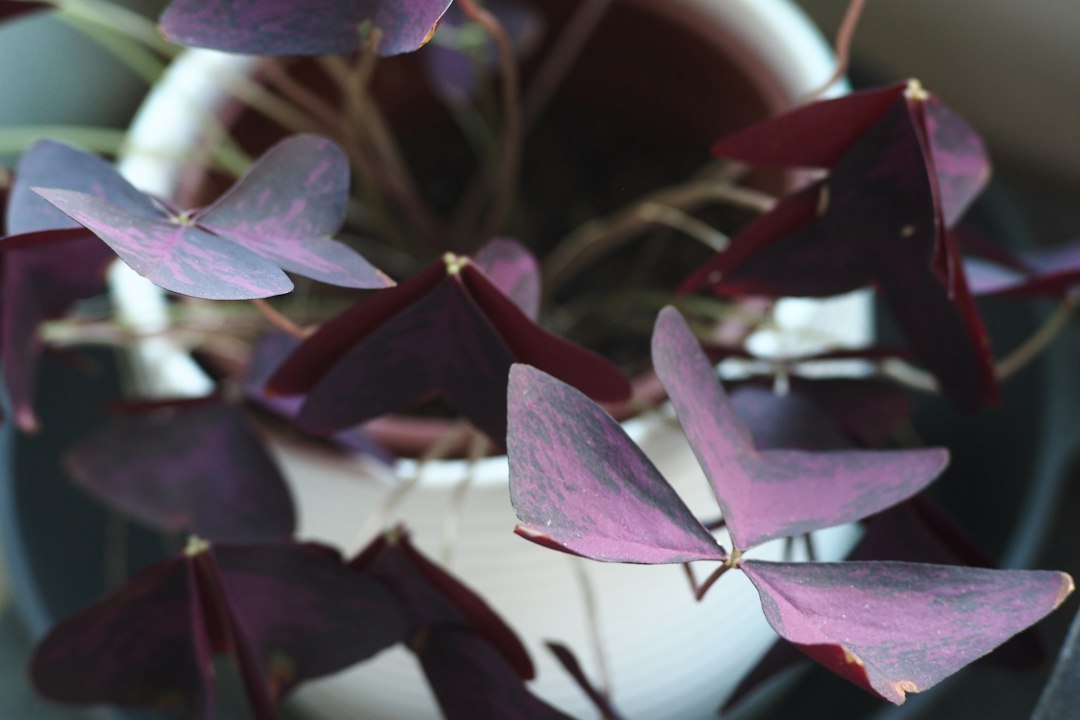
A purple shamrock can look dead on its second evening in a new home. Come home from work, flick the kitchen light on, and every single leaf is folded down flat against its stem like a closed umbrella. It is easy to assume the move killed it and give it a big drink out of guilt — and then the next morning it is sitting there wide open and perfectly happy. The drink did nothing, except make the soil wetter than it needed to be. It was just night.
That is the first thing worth knowing about a drooping oxalis: some of the drooping is not a problem at all. The rest usually comes down to dormancy, water, or light, and each one looks a little different once you know what to check.
Quick triage: leaves folded down in the evening or on a gloomy day, but open again by mid-morning? That is normal, nothing to fix. Leaves yellowing and collapsing across the whole plant over a week or two, with no new shoots coming up, often after a hot spell or a long flowering run? It is going dormant. Stems soft and dark right at the soil line, soil still damp from days ago? Overwatering, and possibly rotting rhizomes. Everything limp and the pot feels light as a feather? Thirsty. Long thin stems that flop over sideways and never stand back up, all leaning toward a window? Not enough light.
It is evening, and the plant is just closing up
Oxalis triangularis opens its leaves in light and folds them down when the light drops. Each leaf is three triangles joined at the tip of the stem, and at dusk those three triangles fold down and together so the whole thing looks limp and a bit sad. It does the same on very overcast days, and sometimes in a room that suddenly gets darker when you draw the curtains. Botanists call it nyctinasty. You can call it the plant going to bed.
The way to tell this from real trouble is timing and texture. Folded leaves that are still firm and richly coloured, on stems that are still upright, are fine. Check again in the morning. If they reopen, there is nothing to do, and please do not water in response. Where it gets worth a second look is if the leaves stay folded all day in a spot that should be bright. That usually means the spot is not as bright as you think, which is covered further down.
Dormancy, which looks like dying but is not
This is the one that causes the most panic. Oxalis grows from small scaly rhizomes under the soil, and after several months of steady growth it will sometimes decide it is done for a while. The leaves go pale, then yellow, the stems collapse, and over a couple of weeks the whole top of the plant withers away until there is just a pot of dirt. People throw these plants out at this stage all the time, and there is nothing wrong with them.
Dormancy tends to follow a stretch of heat in summer, a long run of flowering, or just enough months of growth. The giveaway is that it is gradual and it hits the whole plant, rather than one side or a few stems. What to do: stop watering once most of the foliage has died back, trim off the dead stems at soil level, and put the pot somewhere cool and out of the way. Leave it completely dry for somewhere between a few weeks and about three months. When you see tiny new shoots poking up, or when you get impatient after six weeks or so and want to nudge it, move it back into bright light and give it a normal watering. It regrows surprisingly fast.
The mistake to avoid is keeping the soil damp through dormancy because you think the plant is thirsty. A rhizome with no leaves to use that water just sits in it, and that is how a resting plant turns into a dead one.
Too much water and soft rhizomes
Those rhizomes store water and food, and they rot quickly if they sit in wet soil. An overwatered oxalis droops in a particular way: the stems go soft and translucent low down, sometimes darkening right where they meet the soil, and they fall over without the leaves having dried out first. The soil smells a little sour, and the pot stays damp for days after watering.
If that sounds familiar, tip the plant out and look. Healthy rhizomes are firm, like small pinecones or grains of rice depending on size. Mushy, dark ones have gone, and they can take their neighbours with them. Pick out the soft ones, let the firm ones dry for a day, and replant in fresh fast-draining mix. The general walkthrough on root rot in houseplants covers the cleanup in more detail. From then on, let the top inch of soil dry before watering again.
Too little water, which is the easy one
The opposite problem looks similar from across the room but feels completely different up close. An underwatered oxalis droops everywhere at once, the leaves feel thin and papery rather than soft, and the pot is noticeably light when you pick it up. Stems stay firm at the base. Give it a proper soak until water runs from the drainage hole and it usually stands back up within a few hours, which is about as satisfying as plant care gets.
If you are genuinely not sure which way you have gone wrong, the texture and weight checks in the guide to telling overwatered from underwatered plants settle it quickly. With oxalis the answer matters more than usual, because watering a rotting plant finishes it off.
Not enough light, so the stems cannot hold themselves up
In a dim room, oxalis stretches. The stems get long and thin as the plant reaches for light, and eventually they are too long and too weak to carry the leaves, so they flop over the rim of the pot and stay there. The leaves may also stay half-closed through the day, because as far as the plant is concerned it never really got bright. This is the same stretching you get from any light-starved plant, explained in the general piece on leggy houseplants.
Move it to a bright window, ideally one with a few hours of gentle morning sun. Stretched stems will not shorten, so trim the floppiest ones off at the base and the new growth will come in shorter and sturdier. Turning the pot a quarter turn each week helps it grow evenly instead of all leaning one way.
A few things people ask
Why do the leaves close at night? It is a built-in response to light levels. The leaves fold down in darkness and open again in the morning. It is normal and a sign the plant is responding properly, not a sign of stress.
How do I know if it is dormant or dead? Dig gently into the soil and find a rhizome. If it is firm, the plant is resting. If every one you find is soft and mushy or dried to hollow husks, it is gone. Most of the time they are firm.
Should I cut off the drooping stems? Yellow or collapsed stems can come off at the soil line, and it does no harm. Healthy stems that are only folded for the night should be left alone. Pull stems gently away from the rhizome rather than yanking, so you do not lift the rhizome out with them.
Is oxalis safe around pets? No. It contains soluble oxalates and is listed by the ASPCA as toxic to cats and dogs. A nibble usually means mouth irritation and drooling, but larger amounts can cause more serious problems, so keep it out of reach.
Once you know which kind of droop you are looking at, the everyday routine is what keeps it from coming back: the right window, letting the soil dry a little, and knowing when to leave the pot alone. All of that, plus how to handle the dormant stretch and split the rhizomes into new plants, is in the oxalis care guide. Next reads: Why Is My Poinsettia Dropping Leaves?, Why Is My Kalanchoe Drooping or Losing Its Leaves? and Why Is My Cyclamen Turning Yellow?.