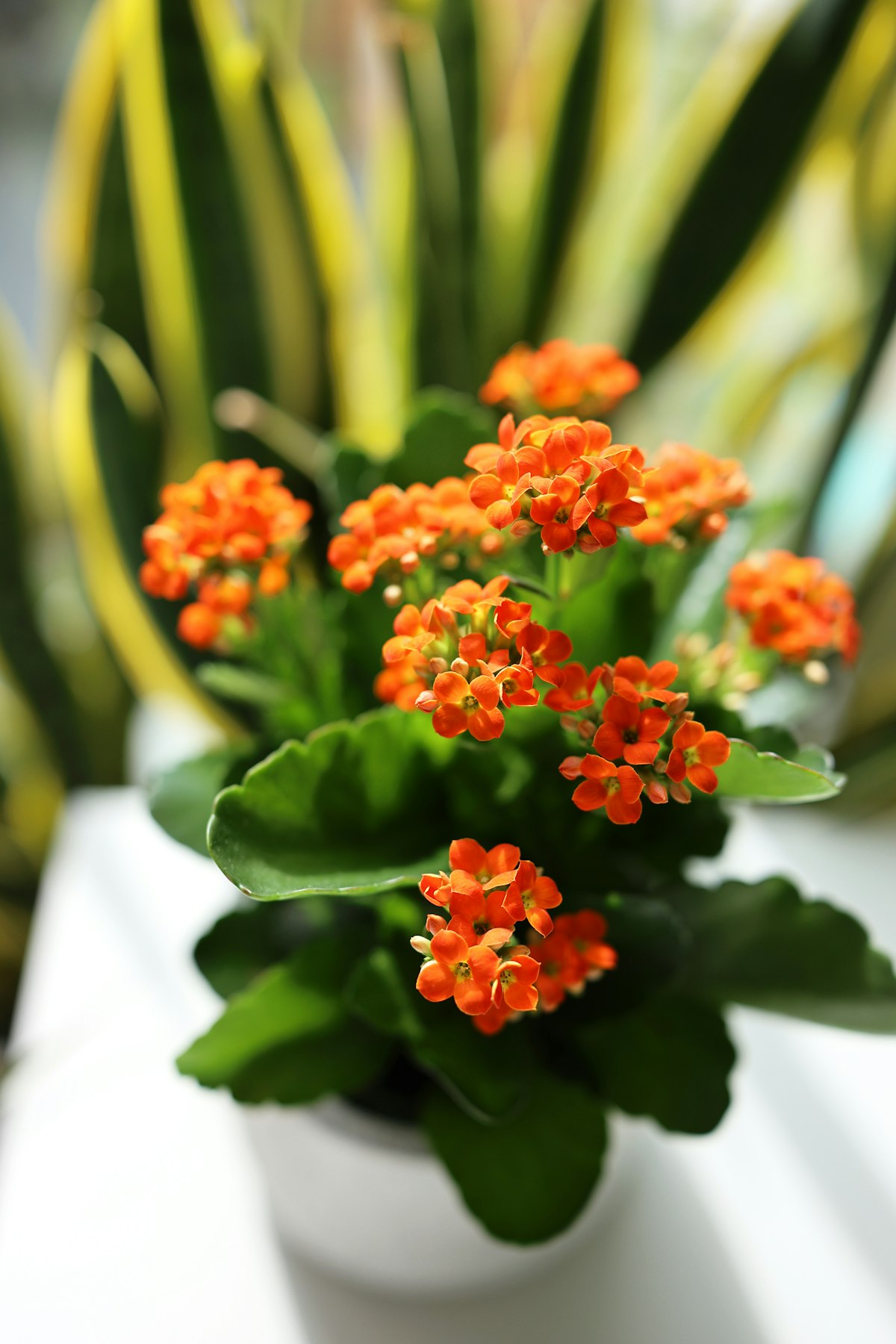
A kalanchoe received as a gift, covered in bright orange blooms, can be kept going for months after the flowers drop without a single new one showing up — even with regular watering and a sunny windowsill. It’s easy to assume the plant has used up whatever made it bloom the first time. It hasn’t; it just needs real darkness at night to flower again, something a bright windowsill actively works against.
Quick triage
| Symptom pattern | Likely cause |
|---|---|
| Soil consistently wet, stems soft or mushy near the base | Overwatering or root rot |
| Leaves wrinkled or thin, soil bone dry | Underwatering |
| Flowers faded and dropped after several weeks | Normal end of bloom cycle |
| Plant stretching toward a window, sparse new growth | Too little light |
Overwatering and root rot
Kalanchoe is a succulent and stores water in its thick leaves, so it needs the soil to dry out between waterings far more than most houseplants. Consistently wet soil leads to soft, mushy stems and yellowing lower leaves, and it doesn’t take long for this to become root rot if left unaddressed. Let the top couple of inches of soil dry out fully before watering again.
Underwatering
Despite its drought tolerance, kalanchoe still wrinkles and thins in its leaves when it goes too long without water, especially in a small pot during warm weather. A thorough watering usually plumps the leaves back up within a day or two, this is a much easier fix than overwatering damage.
Normal flower and leaf drop after blooming
Kalanchoe typically blooms for several weeks to a couple of months, then the flowers naturally fade, dry out, and drop as the plant shifts back into a resting phase. This is completely normal and not a sign of a care problem, deadheading the spent flower stems keeps the plant looking tidy but isn’t strictly necessary. The plant not immediately reblooming afterward is also normal, it needs a specific light trigger to flower again, covered in our full care guide.

Too little light
In low light, kalanchoe stretches toward the nearest light source and produces smaller, more sparsely spaced leaves, and it’s far less likely to flower again under these conditions. Bright, indirect to direct light supports the fullest growth and the best chance at reblooming.
A quick check before you change anything
Drooping kalanchoe leaves usually trace back to one of three things, and a minute of checking tells you which. Push a finger two inches into the soil: wet soil with soft, mushy stems at the base points to overwatering, while bone-dry soil and thin, wrinkled leaves point to thirst. Then look at the flowers: if the bloom cycle has just ended, dropping flowers and a few tired leaves are normal. Finally, look at where the plant sits: stretching toward the window with sparse new growth means too little light.
How to rescue an overwatered kalanchoe
Missouri Extension’s kalanchoe article recommends letting the growing medium dry before watering and emptying any excess water from the saucer so it does not wick back into the soil. It also warns that overwatering can cause crown rot, which may lead to sudden death of the plant.
If the base of the stems is already soft, stop watering, slide the plant out of the pot and look at the roots. Cut away anything brown and mushy with clean scissors, let the cut surfaces dry briefly, and repot into fresh, well-drained mix in a pot with a drainage hole. If the crown itself is too far gone, healthy stem tips or leaves can often be rooted as cuttings.
Getting a kalanchoe to bloom again
The same Missouri Extension article describes a short-day routine for Christmas blooms. Starting around mid-September, give the plant about 14 hours of complete darkness each day, with no light exposure during that period, and the remaining 10 hours of daylight. It prefers night temperatures around 60°F and day temperatures around 70°F, and temperatures above 75°F can delay or reduce flowering. Feed and water sparingly during this stretch; the plant should bloom in about six weeks.
In a home, that usually means a closet or an unused room every evening, because even a lamp or a TV in the same room can break the dark period. It is also why a kalanchoe on a bright kitchen windowsill can stay green but flowerless for a year. Our complete kalanchoe care guide covers the full routine.

After the flowers fade
Once the blooms are finished, snip off the spent flower stems to keep the plant tidy, keep watering sparingly, and give it bright light. The Missouri guide suggests moving plants outdoors in light shade once the danger of frost has passed and feeding them about every two to three weeks while they grow, then repeating the short-day routine in the fall.
A few things people ask
Is kalanchoe toxic to pets? Yes, it contains cardiac glycosides that are toxic to cats and dogs if ingested, potentially causing vomiting, diarrhea, or more serious heart-related symptoms in larger amounts, keep it well out of reach.
Why won’t my kalanchoe bloom again? Reblooming requires a specific period of uninterrupted darkness each night for several weeks, a bright windowsill or a room with evening lights on actually prevents this, our full care guide walks through the process.
How long do the flowers usually last? A single bloom cycle typically lasts several weeks to a couple of months before naturally fading, this varies somewhat by variety and growing conditions.
Is it normal for the leaves to have red edges? Yes, many kalanchoe varieties naturally develop reddish or orange edges on the leaves, especially in brighter light, it’s a normal color response rather than a sign of stress.
Can I save a kalanchoe that dropped most of its leaves? Often, yes, as long as the stems are still firm. Stop watering, move it to bright light, and wait; new growth appears from the stem tips once the plant is no longer stressed. If the stems are soft and mushy, treat it as rot and take cuttings from any healthy growth.
For a full breakdown of light, watering, and the dark period trick to get it flowering again, see our complete kalanchoe care guide. Next reads: Why Is My Oxalis Drooping?, Why Is My Poinsettia Dropping Leaves? and Why Is My Jade Plant Dropping Leaves?.