
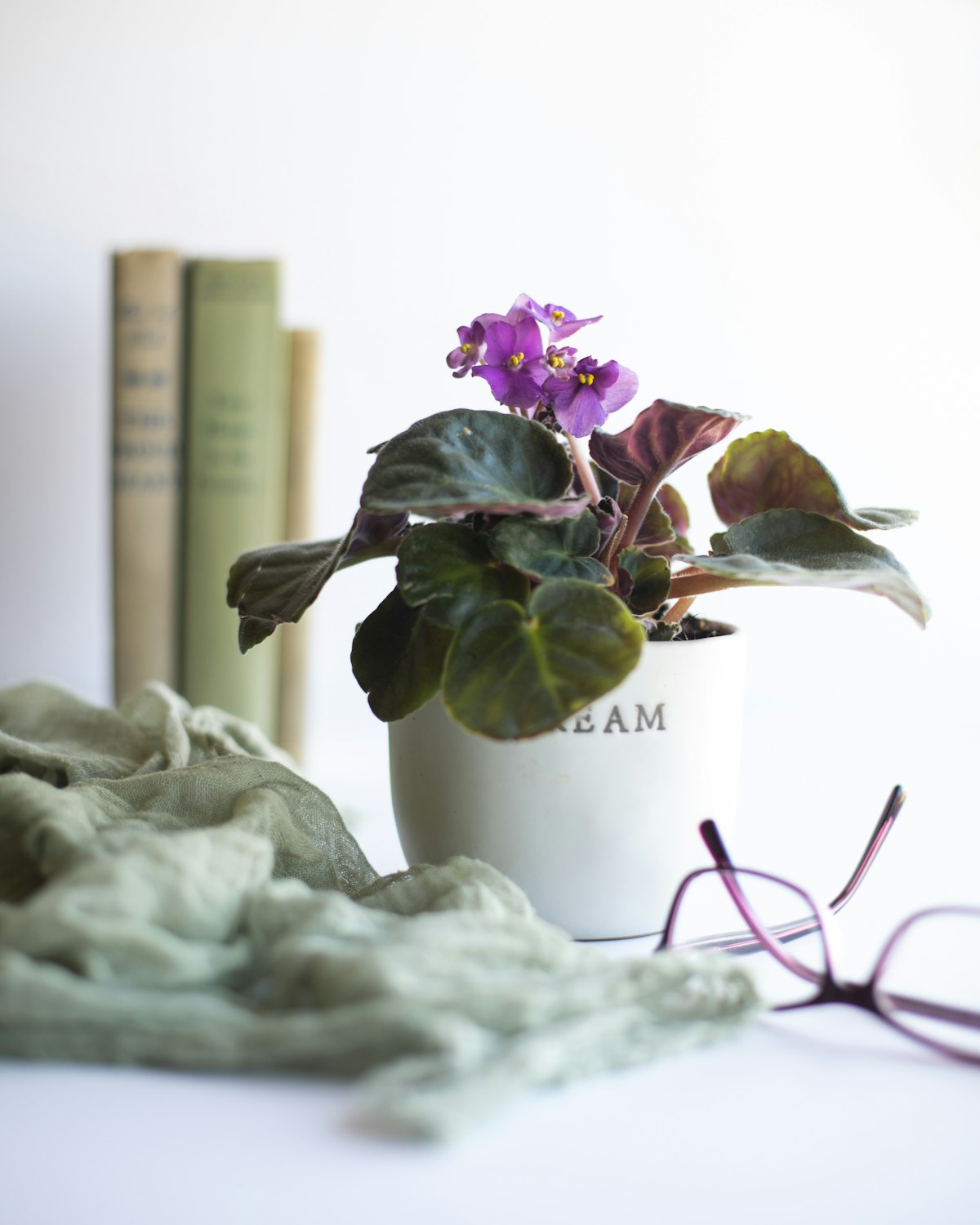
A single leaf from an African violet can turn into several separate plants, which is the moment this plant wins most people over completely. Few houseplants multiply so reliably from one small piece with almost no effort. It’s the easiest, most satisfying propagation in this entire guide series.
| Care area | What it needs |
|---|---|
| Light | Bright, indirect light (east/north window) |
| Water | Room-temp water, avoid leaves; bottom-water when possible |
| Soil | Lightweight mix made for African violets |
| Pot size | Slightly root-bound is fine, do not oversize |
| Humidity | Average household humidity |
| Fertilizing | African violet fertilizer every other watering |
Light
Bright, indirect light supports the most consistent flowering, an east or north-facing window usually works well. Direct sun can scorch the fuzzy leaves, while too little light means fewer blooms and a plant that stretches toward the light source. African violets also grow well under fluorescent or grow lights, which is part of why they’re such a popular choice for offices and windowless rooms.
Watering
Let the top of the soil dry slightly between waterings, then water at room temperature, avoiding the leaves and crown as much as possible. Bottom watering, setting the pot in a shallow dish of water for 15 to 20 minutes and letting the soil absorb what it needs, is a reliable way to keep water off the foliage entirely. Consistently soggy soil, especially around the crown where the leaves meet the roots, leads to rot faster than it does in many other houseplants.
If you’re seeing curled leaves rather than a straightforward watering issue, working through the specific cause is worth doing, since this plant has a couple of quirks, like a defensive light response, that are easy to mistake for damage. If the crown feels soft or mushy, root rot is worth checking for.
Soil and potting
A lightweight, well-draining mix formulated specifically for African violets works best, a dense, heavy potting soil holds too much moisture around the crown. Make sure the pot has drainage holes. This plant actually blooms better when slightly root bound, so choose a pot only marginally larger than the root ball, oversizing the pot is a common mistake that leads to excess moisture retention and fewer flowers.
Humidity and temperature
Average household humidity is generally fine, though very dry air can cause flower buds to drop before opening. Normal indoor temperatures work well, and this plant is notably sensitive to cold drafts and sudden temperature swings, more so than many other houseplants in this guide series, keep it away from drafty windows and doors in winter.
Fertilizing
A fertilizer formulated for African violets, diluted according to the label, every other watering during active growth supports the plant’s tendency toward nearly continuous blooming. This plant flowers more readily and more often than most others in this guide series when fed consistently, sporadic or skipped feeding is a common reason for a healthy-looking plant that just won’t bloom.
Propagation
This is where African violet stands out. Take a healthy leaf with an inch or two of its stem attached, and place the stem in water or moist soil at an angle. Within several weeks, roots form at the base, followed by tiny new plantlets, often several from a single leaf. Once the plantlets have a few leaves of their own, separate and pot them individually. It’s an unusually forgiving and reliable method compared to leaf propagation on most other houseplants.
Common problems
Curling leaves are the most frequent concern, and the cause ranges from a normal defensive light response to cold water exposure to root binding, so it’s worth working through methodically. If the crown feels soft or mushy, root rot is worth checking for directly.
A few things people ask
Is African violet toxic to pets? No, it’s considered non-toxic to cats and dogs, making it one of the safer flowering houseplants to keep around curious pets.
Why does water leave spots on the leaves? Cold water striking the fuzzy leaves can cause permanent light or dark spots where the temperature difference damages the leaf tissue, this is why room-temperature water and bottom watering are worth the extra care with this particular plant.
Why has my plant stopped flowering? Insufficient light and inconsistent fertilizing are the two most common reasons, this plant is capable of blooming nearly year-round under good conditions, so a long gap without flowers is usually a sign one of those two factors needs adjusting.
How do I know if the crown is rotting? A healthy crown, the center where new leaves emerge, feels firm. Softness, discoloration, or leaves that pull away easily from the center are signs of crown rot, usually from water sitting in that area too often. Next reads: Hoya Care Guide: Light, Water, and Blooming, Christmas Cactus Care Guide: Light, Water, and Blooming and Orchid Care Guide: Light, Water, and Reblooming.