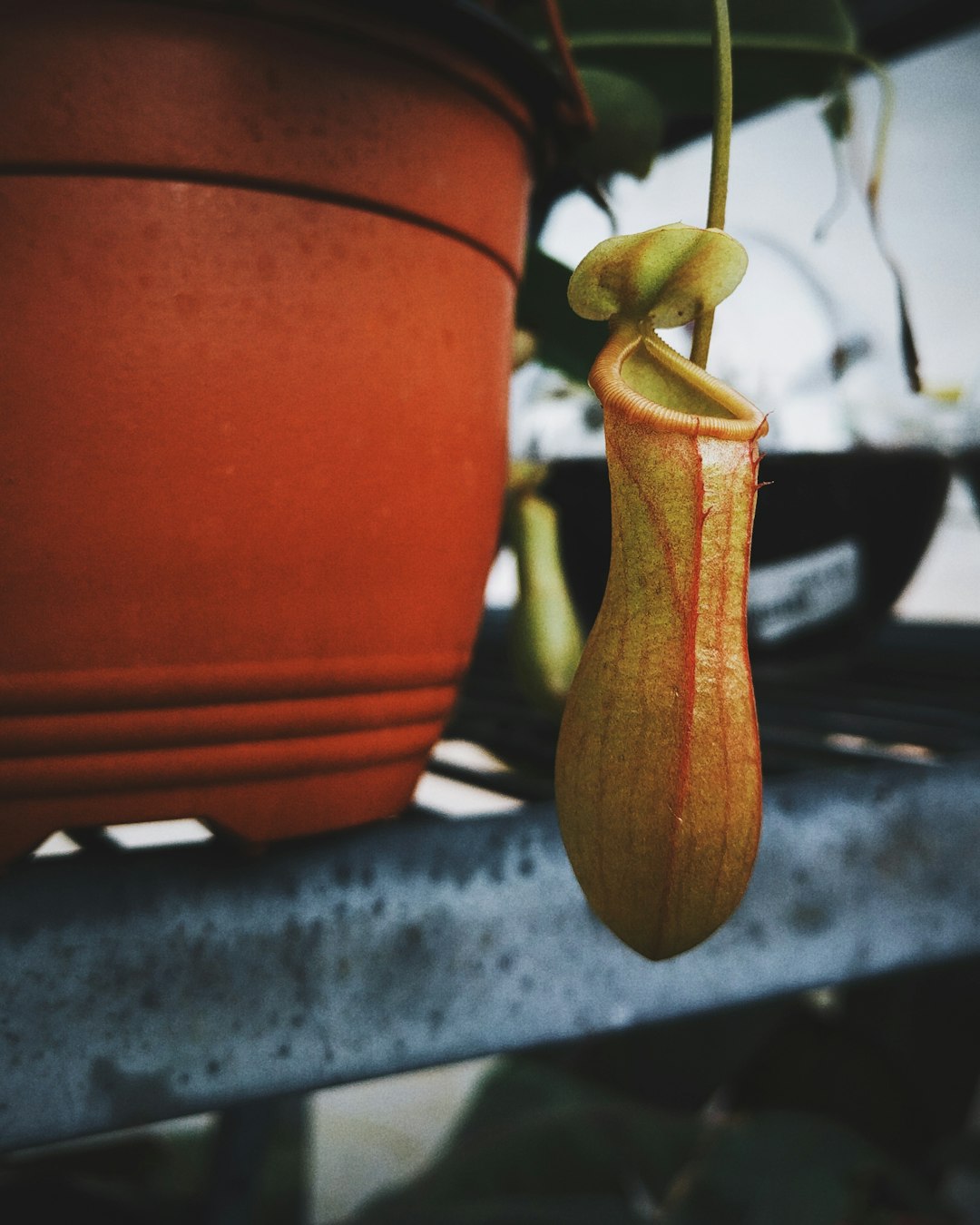
If your Nepenthes keeps producing leaves with a bare, curling tendril at the tip, or the pitchers that do appear shrivel before they open, the plant looks healthy but is not doing the one thing it is grown for. The usual first reaction is to feed it, or to pour fertilizer into the pitchers. That tends to make things worse. Pitcher production is mostly a response to the air around the plant, the light it gets, and the water it is given, and those are the places to look first.
Nepenthes, often called tropical pitcher plants, are vining plants whose pitchers hang from the end of a tendril that extends from the leaf tip. A plant can be alive and growing for months without pitchers when something in its conditions is off. Start with the quick checks below, then read the matching section.
Quick triage
Is the air dry? Pitchers that open, then turn crisp and brown at the lid or rim, or never inflate at all, are a classic sign of low humidity. Go to the section on humidity.
Does the plant sit more than a few feet from a bright window? Dim light produces leaves and long stems but few pitchers. See the section on light.
Is it watered with tap water, or fed with fertilizer? Nepenthes are sensitive to dissolved minerals and salts. See the section on water and feeding.
Are the old pitchers turning brown one at a time while new leaves keep coming? That is often just the normal life of a pitcher. Check the last section.
Is it a young plant, recently moved, or newly bought? New plants often drop or stall pitchers while they adjust. See the section on stress and acclimation.
Low humidity
This is the most common reason a Nepenthes will not produce good pitchers. The genus comes from humid tropical regions, and the thin pitcher walls lose moisture quickly in dry indoor air, especially in winter with the heat running. The typical sign is a young pitcher that forms, fails to open, and dries from the tip, or a tendril that stalls with no pitcher at all.
Raise the humidity around the plant rather than misting the leaves, which gives only a brief lift. A humidifier placed near the plant, or growing it in a closed or semi-closed enclosure such as a cabinet or terrarium, is the more dependable approach. The roundup of the best humidifiers for houseplants covers the options. Keep the plant away from heating vents and drafts.
Not enough light
A pitcher is an expensive structure for the plant to build, and a plant in dim light will not spend the energy. Leaves may look green and healthy while the tendrils never develop pitchers. Bright light is usually what pushes a Nepenthes to produce them, so the plant should sit in a very bright window or under a grow light. See the guide to grow lights for houseplants if natural light is limited.
Increase light gradually, since a plant moved suddenly from dim to intense light can scorch. Pitchers often follow a few weeks to a few months after conditions improve, because new growth has to emerge before anything changes.
Mineral-heavy water and fertilizer
Carnivorous plants evolved in low-nutrient conditions, and Nepenthes roots are sensitive to dissolved minerals. Tap water with a high mineral content can build up in the growing medium over time, leading to brown leaf tips and a plant that grows poorly. Most growers water with rainwater, distilled water, or reverse-osmosis water instead.
Fertilizing the soil is the other common mistake. Standard houseplant fertilizer can burn the roots. If the plant needs extra nutrients, the usual advice is a very dilute feed applied to the leaves, or an occasional insect in a pitcher, never a strong dose in the pot. Flushing the pot with clean water and letting it drain fully can help clear built-up salts.
Stress after a move or purchase
A plant that has just come home from a shop or greenhouse has been moved from steady, humid conditions to a drier living room. It is common for existing pitchers to dry and new ones to be skipped while it adjusts. Hold conditions steady, keep humidity up, and avoid repotting or heavy pruning until new growth shows. Patience, rather than intervention, is usually what is needed here.
Some plants are also grown from cuttings or tissue culture and are small when sold. A young plant may not be mature enough to make large pitchers yet.
It may just be normal pitcher aging
Each pitcher has a limited lifespan. After weeks to months, the older pitchers brown and dry out, while the plant keeps making new leaves. If the plant is still producing new growth and only the oldest pitchers are fading, nothing is wrong. Once a pitcher has fully browned, it can be trimmed off, leaving the leaf and tendril in place until they also die back.
If the leaf and vine themselves are turning yellow or brown, the cause is more likely water, light, or humidity, and the sections above apply. The page on root rot shows what a failing root system looks like if the base of the plant is soft.
Climbing habit and cutting back
Many Nepenthes are vines, and the long, bare stretch of stem that develops as they climb is normal. When the plant becomes leggy, it can be cut back, which encourages new shoots lower down, and the cut top can sometimes be rooted. Trimming and improving conditions at the same time often restarts growth better than waiting on an overgrown plant. The Nepenthes care guide covers the full routine.
A few things people ask
Should fertilizer go in the pitchers?
Generally not. Most guidance for carnivorous plants is to avoid standard fertilizer, which can damage the plant. Many growers leave pitchers to catch their own food or add only a small amount of insect matter.
Do the pitchers need to be filled with water?
Pitchers usually produce their own digestive fluid. If it dries out, a little clean, mineral-free water can be added, but pitchers should not be topped up constantly.
Will a brown pitcher recover?
No. A fully browned pitcher will not turn green again. The goal is for new pitchers to form healthy.
Is Nepenthes safe around pets?
The ASPCA plant database did not return a listing for Nepenthes when it was checked for this guide, so treat pet safety as unconfirmed. Check the ASPCA toxic and non-toxic plants list or ask a veterinarian if a pet may chew the plant.