
Rhipsalis is often described as basically a cactus you can forget about. Forgotten in the desert-cactus sense, with sparse water and blasting sun, it shrivels and bleaches within a month. This trailing, spineless cactus grows wild on tree branches in rainforest canopies, and treated more like a fern than a succulent, it turns out to be one of the easiest, most forgiving plants around.
| Care factor | What it needs |
|---|---|
| Light | Bright, indirect; avoid direct sun |
| Water | Keep lightly moist, don’t let it dry out completely |
| Soil | Well-draining mix with organic content, not pure cactus mix |
| Humidity | Above-average appreciated but tolerates typical indoor air |
| Toxicity | Non-toxic to cats and dogs |
Light
Bright, indirect light suits rhipsalis best, mimicking the dappled shade it gets growing under a rainforest canopy. Direct sun, especially through a south or west-facing window, can bleach or scorch the thin trailing stems. An east-facing window or a spot back from a brighter window works well.
Watering
Water when the top inch or so of soil has dried out, noticeably more often than you’d water a desert cactus or succulent. Rhipsalis stores some water in its segmented stems but not enough to go long stretches completely dry, letting it dry out too much causes the stems to wrinkle and shrivel.
Soil and potting
A well-draining mix with some organic content works better than a pure cactus or succulent mix, in the wild rhipsalis grows in the loose organic debris that collects in tree branches rather than in mineral-heavy desert soil. A standard houseplant mix with added perlite for drainage is a reasonable approach.
Humidity and temperature
Rhipsalis appreciates above-average humidity given its rainforest origins, though it tolerates typical indoor conditions reasonably well and is far more sensitive to watering and light than to air moisture specifically. It prefers average to warm room temperatures and should be kept away from cold drafts.
Fertilizing
A balanced liquid fertilizer diluted to about half strength, applied monthly during spring and summer, supports steady growth. Skip fertilizing in fall and winter when growth naturally slows.
Propagation
Rhipsalis roots readily from stem cuttings, one of the easier plants in this guide series to propagate. Let a cut segment callous over for a day or two, then set it on top of or partially into a well-draining potting mix. Roots typically form within a few weeks, and multiple cuttings potted together quickly fill out into a fuller-looking plant.
Growing it as a hanging or mounted plant
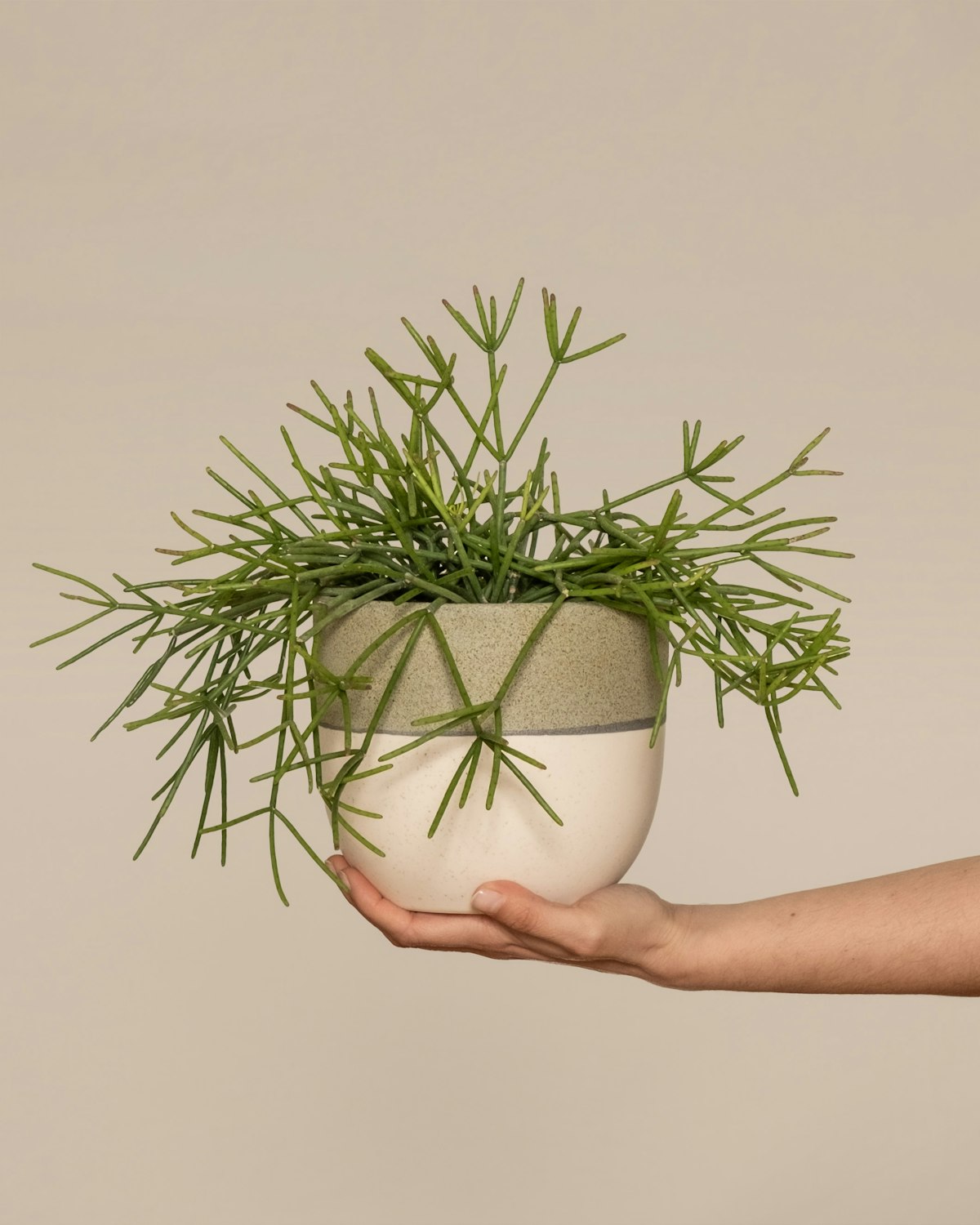
Because rhipsalis grows as an epiphyte in the wild, trailing down from tree branches, it looks most at home in a hanging basket where its thin stems can cascade freely, or mounted on a piece of bark or driftwood the way true epiphytes like orchids sometimes are. A mounted rhipsalis needs slightly more frequent watering or misting than a potted one, since there’s no soil reservoir holding moisture, but it makes for a genuinely distinctive display piece.
Common problems
Shriveled, wrinkled stems usually mean underwatering, while pale or bleached stems point to too much direct sun, our full guide on why rhipsalis turns brown or shrivels walks through how to tell these apart from overwatering and normal segment drop. If the base feels soft or mushy, root rot is worth checking for directly.
A few things people ask
Is rhipsalis toxic to pets? No, it’s considered non-toxic to cats and dogs, one of the safer trailing plants for households with curious pets.
Does rhipsalis flower? Yes, mature plants can produce small, pale flowers followed by tiny berries, though indoor blooming is less reliable than in bright, humid greenhouse conditions.
Why do people call it a cactus if it doesn’t have spines? Rhipsalis is a true cactus botanically, it just belongs to a branch of the cactus family that adapted to rainforest life and lost the spines and water-hoarding habits associated with desert cacti.
How big does it get? Individual stems can trail several feet long over time, though growth is generally slow to moderate, a well-established hanging plant can take a couple of years to fill out fully. Next reads: Christmas Cactus Care Guide: Light, Water, and Blooming, String of Pearls Care Guide: Light, Water, and Propagation and Jade Plant Care Guide: Light, Water, and Growing It as a Tree.