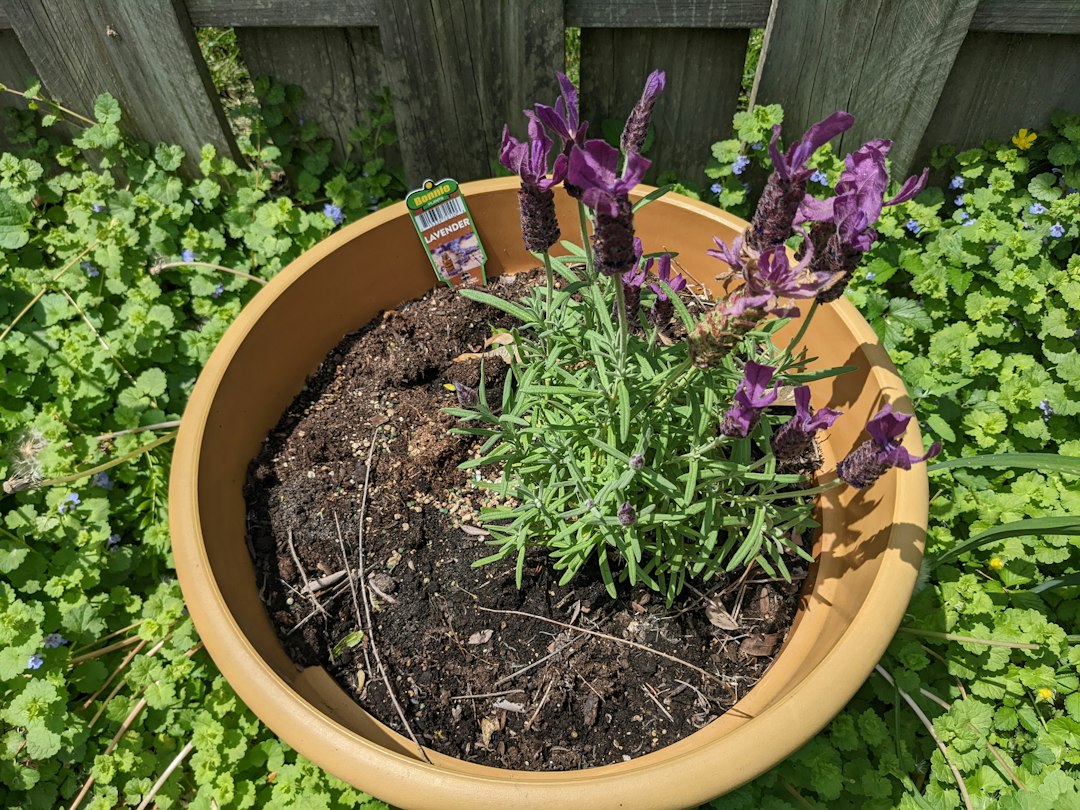
If your lavender is turning brown or gray, the usual first reaction is to water it more. That is almost always the wrong move. Lavender is a Mediterranean plant built for lean, fast-draining soil, and most browning comes from roots that stay too wet, not from thirst.
This page walks through the usual causes in the order worth checking. For the full routine, see the lavender care guide.
Quick triage
Is the soil damp for days and the browning starting at the base?
Suspect overwatering or poor drainage. This is the most common cause by far.
Are the stems woody and bare at the bottom with brown, crispy tips?
Suspect age or a missed pruning. Old lavender thins out and browns from the inside.
Did the plant sit indoors in a dim spot with little airflow?
Suspect low light and stale air, which invite fungal problems.
Did the leaves brown right after a cold snap, a hard frost, or a long wet spell?
Suspect weather stress.
Overwatering and heavy soil
Lavender roots rot quickly in soil that stays wet. Foliage turns gray-brown, stems wilt even though the soil is damp, and the base of the plant can feel soft. Let the soil dry out thoroughly between waterings, use a gritty, fast-draining mix, and make sure the pot has drainage holes. If the roots are already brown and mushy, the page on root rot explains what to do next, and overwatering and underwatering helps tell the two apart.
Not enough sun or airflow
Lavender wants as much direct sun as a window can give. In dim rooms the plant stretches, the stems weaken, and lower foliage browns and drops. Stagnant, humid air makes it worse, because the leaves stay damp and fungal disease spreads. Move the plant to the sunniest spot available, give it room so air can move around it, and see grow lights for houseplants if no bright window exists. Leggy plants explains the stretching.
Woody, overgrown stems
Lavender grows woody with age, and bare brown stems with a tuft of leaves at the tips are a sign it has not been trimmed. Light pruning after flowering keeps growth compact. Cutting back into bare wood is risky, since old wood often does not regrow, so trim within the green growth.
Cold and weather stress
Many lavenders tolerate cold when the soil is dry but suffer when cold arrives with wet soil. Potted plants are more exposed than ground plants because roots chill faster. Move containers to a sheltered spot and keep them on the dry side over winter.
Pests and disease
Spittlebugs, aphids, and whiteflies sometimes settle on lavender, and fungal leaf spots show up in damp conditions. Look for froth on stems, sticky residue, or spotted leaves. Rinse the plant, remove badly affected stems, and improve airflow.
A few things people ask
Can brown lavender recover?
Often yes, if the cause is fixed early. Cut back dead tips, correct the watering, and allow time for new growth.
Should the plant be cut back hard when it turns brown?
Not into bare wood. Trim lightly within the green growth, since old brown stems may not sprout again.
Is lavender hard to grow indoors?
It is one of the more demanding herbs indoors because it needs strong sun and good airflow. A sunny window, gritty soil, and sparing water give the best chance.
Is lavender safe around pets?
The ASPCA lists lavender as toxic to dogs, cats, and horses. See the ASPCA lavender page and keep the plant out of reach.
For the full routine that prevents most of these problems, see the lavender care guide.