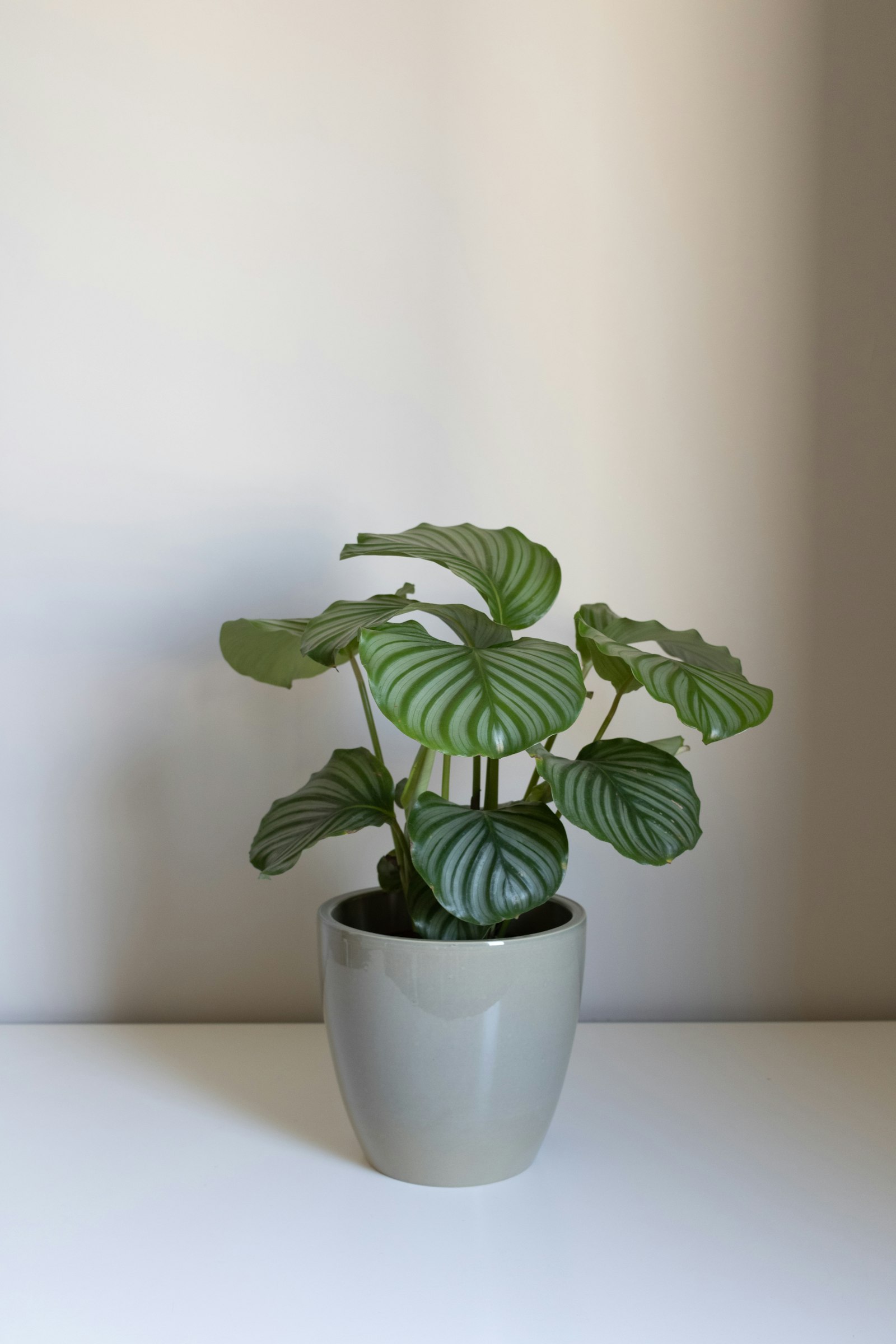
A calathea bought on the assumption that it is the same easy prayer plant as the one at home can have leaf edges that turn crispy and curl inward within a few weeks, even with the same watering schedule. Calathea and prayer plant are related but different genera, and calathea is considerably more particular about humidity. A humidifier running nearby tends to make more difference than anything changed about watering.
Quick triage
| Symptom | Likely cause |
|---|---|
| Leaf edges crispy or brown along with curling, air feels dry | Low humidity (most common) |
| Soil bone dry, leaves curling to conserve moisture | Underwatering |
| Watering with untreated tap water | Mineral sensitivity |
| Plant generally unhappy with no other clear signs | Light levels |
Low humidity
Calathea is native to tropical rainforest floors and is genuinely more humidity-demanding than most common houseplants, including its relative the prayer plant. Dry indoor air, especially during winter heating season, causes leaf edges to brown and curl inward even when the soil itself is adequately moist. A humidifier running nearby makes a much bigger and more consistent difference than misting, which only raises humidity briefly. Grouping plants together or using a pebble tray helps somewhat but rarely matches what a humidifier does for this particular plant.

Underwatering
Calathea prefers consistently moist soil and doesn’t tolerate drying out completely, letting it go too long between waterings causes leaves to curl tightly as a defense against further water loss. Unlike the humidity-related curling above, this version usually resolves within a day of a thorough watering, and the soil should never be allowed to dry out fully between waterings the way you might with a succulent or pothos.
Mineral sensitivity from tap water
Calathea is well known for reacting to the chlorine, fluoride, and dissolved minerals in ordinary tap water, showing up as brown, crispy leaf margins alongside the curling — a multi-university extension handbook describes this same fluoride injury pattern as marginal and tip necrosis that spreads inward on sensitive houseplants. Switching to distilled water, filtered water, or tap water left out uncovered overnight to let chlorine dissipate often reduces new leaf damage noticeably within a few weeks, though leaves that are already damaged won’t recover their original appearance.
Light levels
Calathea prefers medium, indirect light, direct sun tends to bleach or scorch the leaves while very low light leads to slower growth and duller color, both of which can show up alongside mild curling as the plant adjusts leaf angle to manage light exposure. Like its Marantaceae relatives, it also folds its leaves upward in the evening as a normal daily rhythm, which is not the same thing as the stress-related curling covered above. If the base feels soft or mushy from overwatering rather than any of this, root rot is worth checking for directly.
A few things people ask
Is calathea the same as a prayer plant? They’re closely related and often sold under similar names, but calathea and prayer plant (Maranta) are different genera in the same family. Calathea is generally the more demanding of the two, especially around humidity and water quality.
Is calathea toxic to pets? No, it’s considered non-toxic to cats and dogs, making it a safer choice for households with pets despite its reputation for being fussy about care.
Why does my calathea look fine in the morning but droopy by evening? This is likely normal leaf movement rather than a problem, many calathea varieties raise and lower their leaves on a daily cycle in response to changing light, sometimes called the prayer plant movement even though it happens across the whole family.
Should I trim off curled or crispy leaves? Once a leaf is significantly browned or damaged, trimming it off is fine and lets the plant focus energy on new growth, but leaves that are only mildly curled and still mostly green are worth leaving on while you correct the underlying cause.
For a full rundown of light, watering, humidity, and propagation by division, see our calathea care guide. Next reads: Why Are My Prayer Plant’s Leaves Curling?, Why Are My Croton Leaves Curling? and Why Are My Chinese Evergreen Leaves Curling or Drooping?.