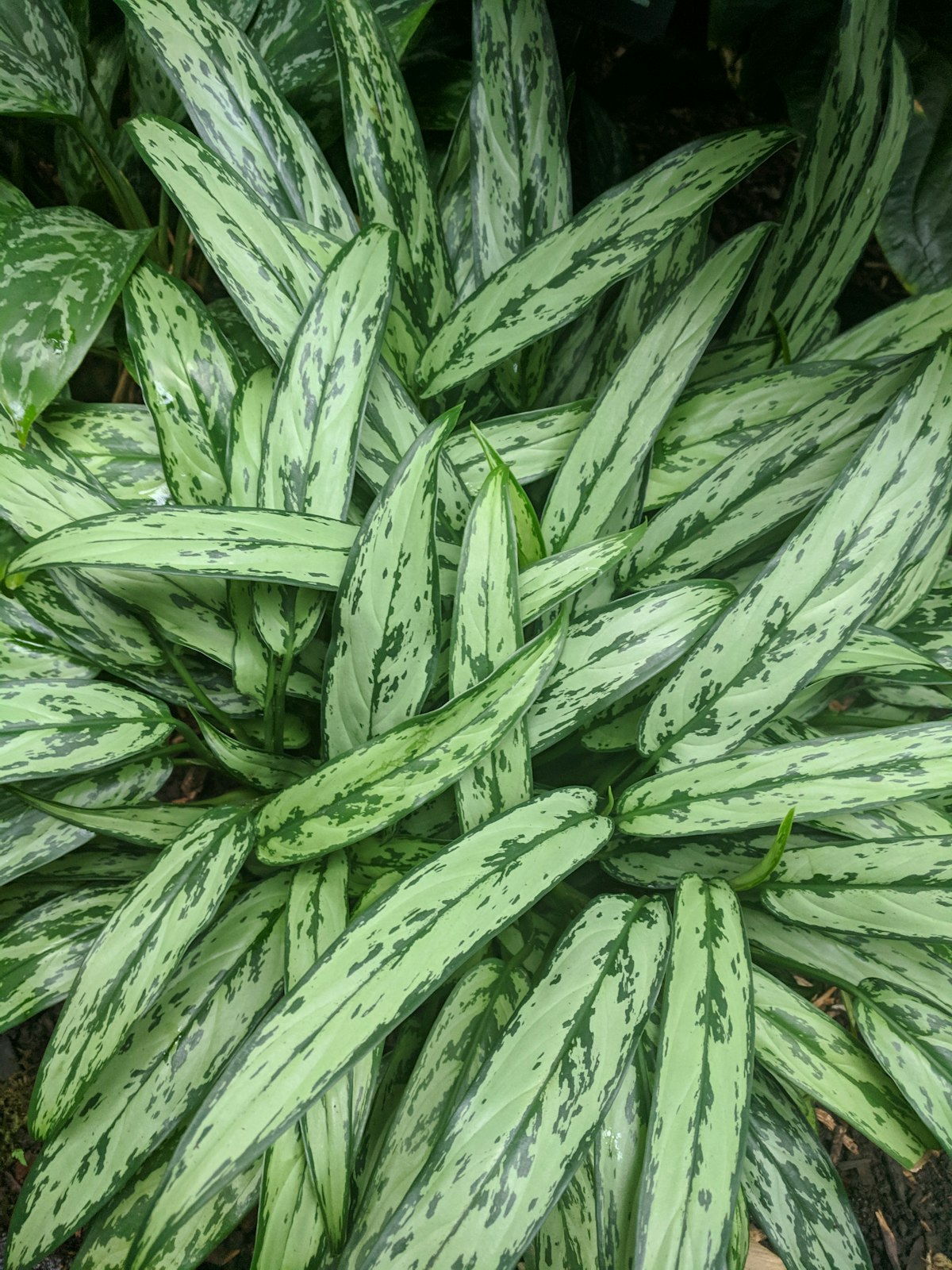
A Chinese evergreen is described by everyone as nearly impossible to kill — and then it gets left on a windowsill through a cold snap, and the leaves curl and droop within a couple of days. This plant’s reputation for toughness is mostly about tolerating low light and neglectful watering; it’s actually one of the more cold-sensitive common houseplants, and that combination catches a lot of people off guard.
Quick triage
| Symptom pattern | Likely cause |
|---|---|
| Temperature recently dropped, or near a drafty window/AC vent | Cold stress |
| Soil consistently wet, stem feels soft | Overwatering |
| Soil bone dry, leaves curling inward | Underwatering |
| New leaves less colorful in a very bright spot | Too much direct light |
Cold stress
Chinese evergreen is often marketed as one of the toughest, most forgiving houseplants around, and for low light and irregular watering, that reputation holds up. Temperature is the exception, this plant is notably more sensitive to cold than most common houseplants, and temperatures below about 60 degrees Fahrenheit can cause leaves to curl, droop, or develop dark, water-soaked patches. A spot near a drafty window, an exterior door, or an air conditioning vent is often the culprit even when the room itself feels reasonably warm. Moving the plant somewhere with more stable, warmer temperatures usually stops further damage, though already-affected leaves won’t recover.

Overwatering
Consistently wet soil causes drooping paired with yellowing lower leaves or a soft, mushy stem. Letting the top inch or two of soil dry out between waterings prevents this. If the base feels soft or mushy, root rot is worth checking for directly.
Underwatering
Letting the soil dry out completely and stay that way causes leaves to curl inward as a way of conserving moisture. A thorough watering typically restores normal leaf shape within a day or two.
Too much direct light
Chinese evergreen is one of the best houseplants for low to medium light, and direct sun can actually wash out its variegated coloring or scorch the leaves, the opposite problem from most houseplants. If new growth looks paler or less patterned than older leaves in a very bright spot, moving it a few feet back from the window usually restores more typical coloring in new leaves.
A few things people ask
Is Chinese evergreen toxic to pets? Yes, it’s considered toxic to cats and dogs and can cause mouth irritation if chewed, keep it out of reach of curious pets.
Why does my Chinese evergreen have brown leaf tips? This is often tied to sensitivity to the fluoride and minerals in ordinary tap water, switching to distilled or filtered water can reduce new leaf damage over time, similar to what happens with spider plant and dracaena.
How low light can it really tolerate? Chinese evergreen genuinely tolerates lower light than most houseplants, including spots several feet from a window, though growth slows and colorful varieties tend to lose some vibrancy the dimmer the spot gets.
Should I mist my Chinese evergreen? It appreciates above-average humidity but tolerates typical indoor conditions reasonably well, misting offers only a brief boost and isn’t a substitute for a humidifier if humidity is genuinely the issue.
For a full rundown of light, watering, soil, and choosing a variety, see our Chinese evergreen care guide. Next reads: Why Is My Chinese Money Plant Drooping?, Why Are My Calathea Leaves Curling? and Why Are My Croton Leaves Curling?.