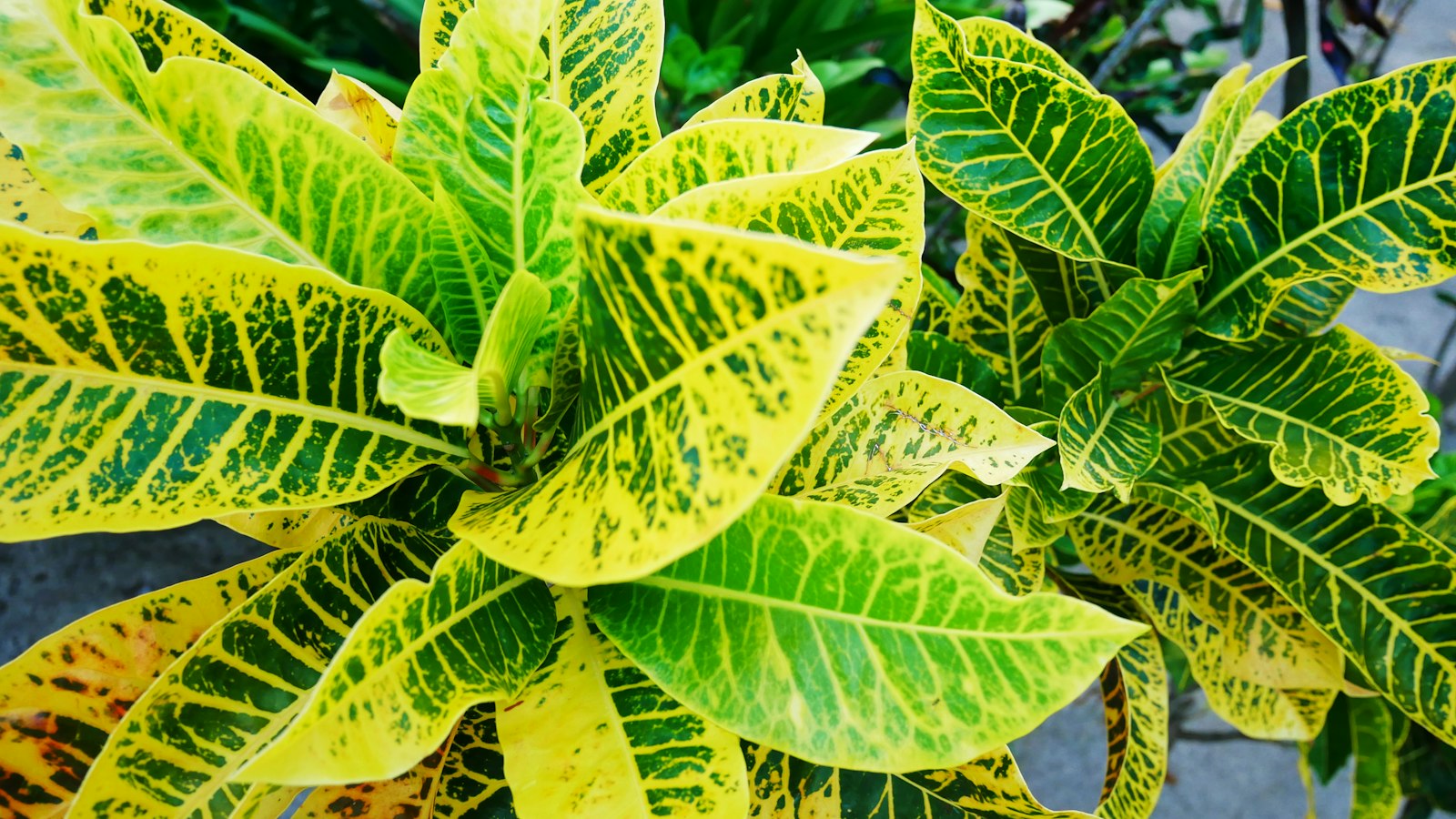
A croton bought for its color, with streaks of red, orange, and yellow across every leaf, and then set in a dim corner of a home office where it gets little actual daylight, tends to disappoint. Within a couple of months the new leaves curl slightly at the edges and come in mostly green instead of the bold color the plant was bought for. Moving it to a brighter spot doesn’t undo the leaves that have already changed, but new growth after that tends to come in vibrant again.
Quick triage
| Symptom | Likely cause |
|---|---|
| Soil dry, leaves curling inward | Underwatering (most common) |
| Fine webbing, tiny specks, or dusty stippled look on leaves | Spider mites |
| Recently moved or exposed to a draft, leaves curling or dropping | Relocation stress |
| New leaves coming in more green than colorful, slight curl | Low light |
Underwatering
Croton likes consistently moist soil and doesn’t tolerate drying out completely the way a succulent does, letting it go too long between waterings causes the leaves to curl inward as a way of reducing water loss. This is usually the fastest problem to fix, a thorough watering typically relaxes the curl within a day, and keeping the soil evenly moist going forward prevents it from recurring.
Spider mites
Croton’s thick, leathery leaves are a favorite target for spider mites, tiny pests that cause a dusty, stippled discoloration and can make leaves curl or look dried out at the edges even when watering is fine. UC IPM notes that leaves stippled with white dots or webbing should be checked on the undersides for the mites themselves, and to check along the stems for fine webbing or tiny moving specks, a magnifying glass helps since they’re easy to miss at first. Wiping leaves down with a damp cloth and treating with insecticidal soap, repeated every week or so until they’re gone, usually resolves an infestation before it spreads to nearby plants.
Relocation and temperature stress
Croton is notably sensitive to sudden changes in its environment, a move to a new room, a drafty window, or a spot near a heating or cooling vent can cause leaves to curl and sometimes drop entirely within days. Unlike some houseplants that adjust quickly, croton can sulk for weeks after a move before settling in, minimizing how often you relocate it once it seems happy somewhere is worth the effort.
Low light
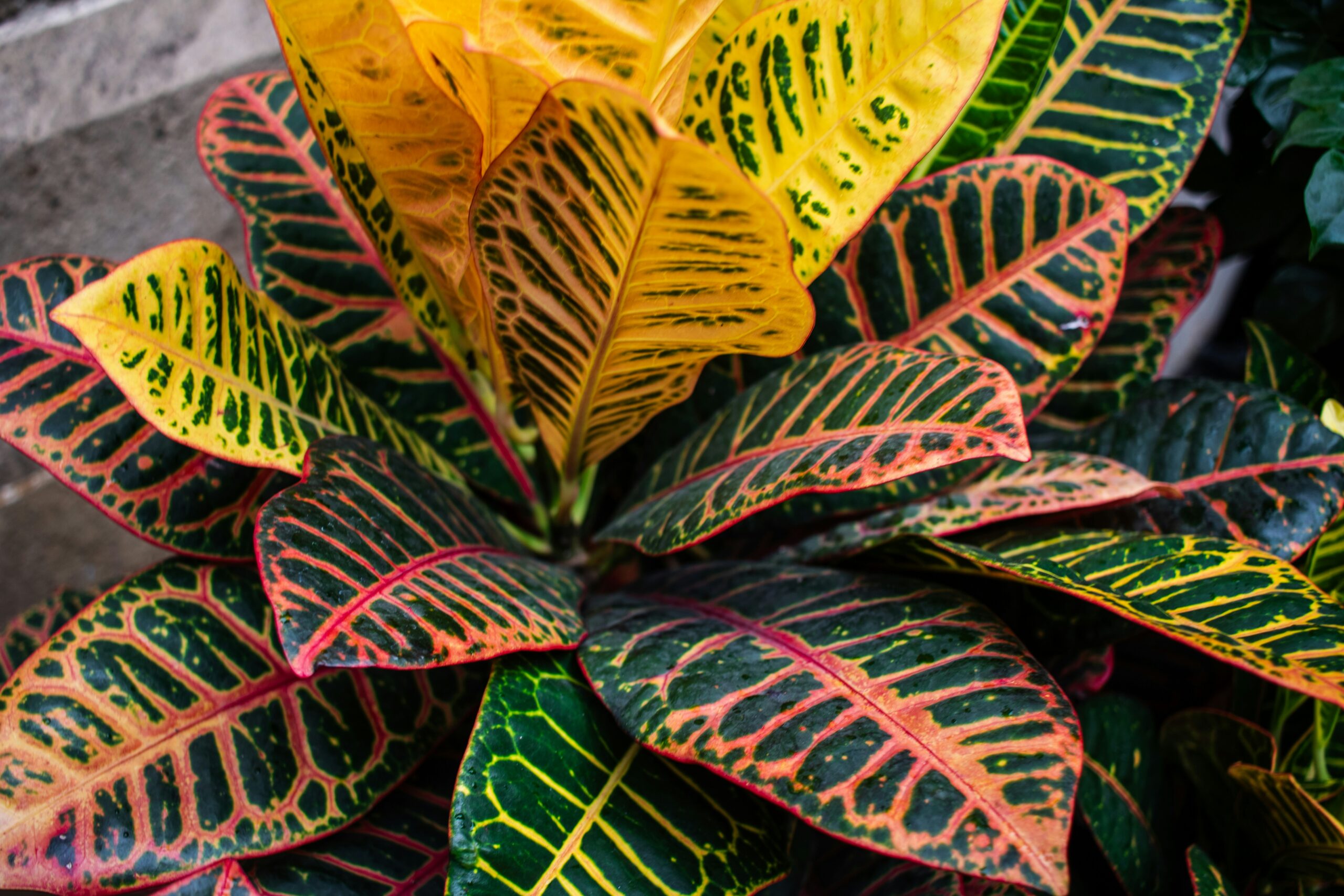
Croton needs bright light, ideally a few hours of direct sun, to produce and maintain its signature red, orange, and yellow coloring, in lower light new growth tends to come in more uniformly green with a subtle curl as the plant adjusts its leaf shape to capture more available light. Moving the plant to a brighter spot won’t recolor existing leaves, but new growth should come in more vibrant within a few weeks.
A few things people ask
Is croton toxic to pets? Yes, Pet Poison Helpline notes ingestion can cause oral and gastrointestinal irritation, drooling, and vomiting, keep it well out of reach of curious pets.
Why did my croton drop leaves right after I brought it home? This is extremely common and usually just relocation stress from the change in light, humidity, and temperature between the store or greenhouse and your home. As long as the plant is getting bright light and consistent watering, it typically stabilizes and resumes normal growth within a few weeks.
Does croton need high humidity? It appreciates more humidity than average but tolerates typical indoor conditions reasonably well, dry air is more likely to show up as crispy leaf edges than as curling on its own.
Can I cut off curled or damaged leaves? Yes, removing leaves that are fully curled, discolored, or damaged doesn’t harm the plant and lets it put energy into healthy new growth instead.
For a full rundown of light, watering, soil, and common varieties, see our croton care guide. Next reads: Why Are My Calathea Leaves Curling?, Why Are My Chinese Evergreen Leaves Curling or Drooping? and Why Are My Prayer Plant’s Leaves Curling?.