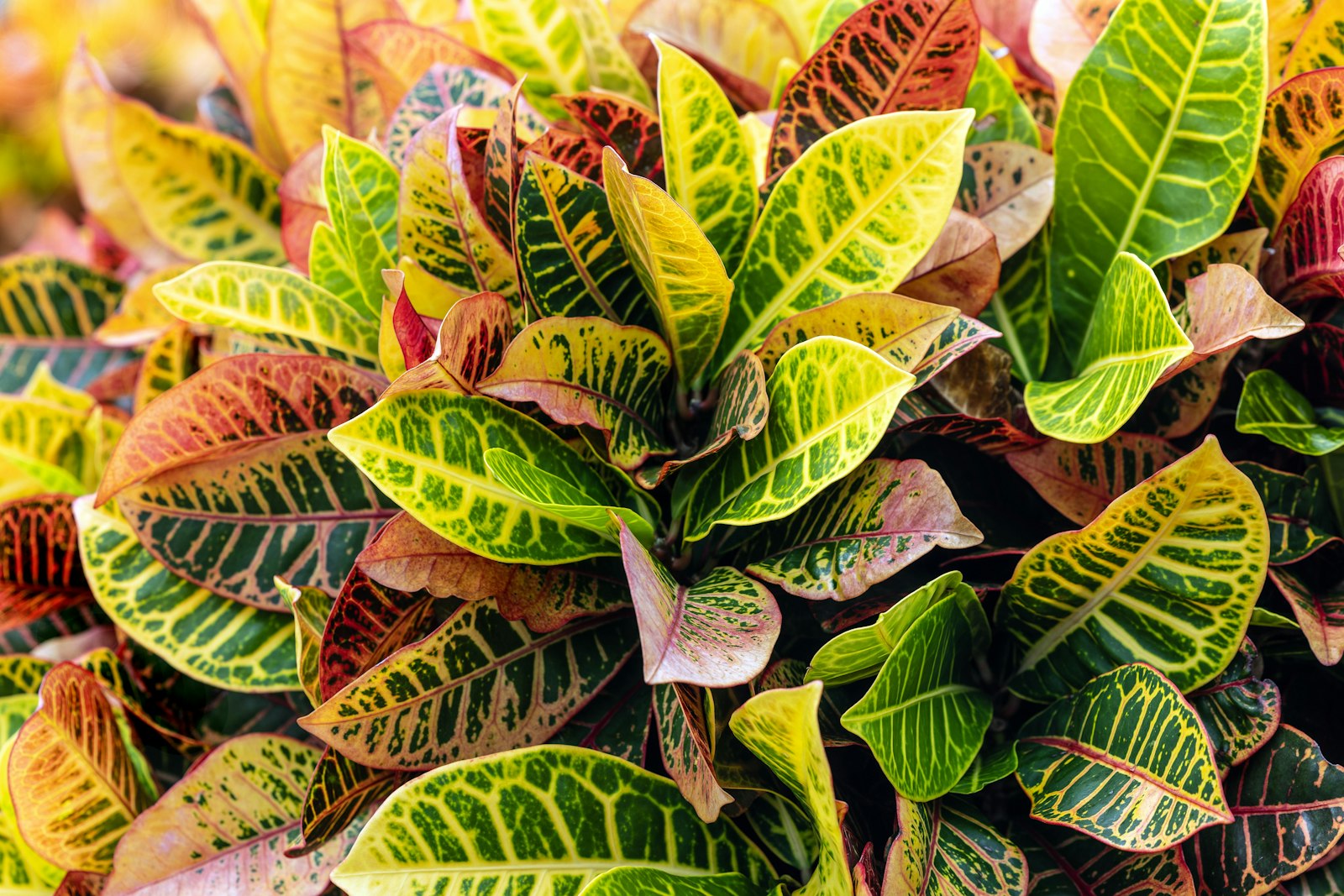
Two plants labeled croton can look completely different: one with narrow, twisted leaves splashed with yellow and red, the other with broad, oak-shaped leaves in deep burgundy. Croton comes in an enormous range of cultivars, and the care is basically the same across all of them, so picking one comes down to which leaf shape and color combination you like best rather than worrying you’ve chosen something harder to grow.
Light
Bright light, ideally a few hours of direct sun, is essential for developing and keeping croton’s signature red, orange, and yellow coloring. In lower light the plant survives but new growth comes in noticeably more green and muted, so if color is the main reason you bought it, a bright south or west-facing window makes a real difference.
Watering
Keep the soil consistently moist, watering again once the top inch has dried out rather than letting the whole pot dry completely. Croton doesn’t tolerate extended dry spells well, letting it go too long between waterings causes the leaves to curl, but it also doesn’t want to sit in soggy soil, so aim for evenly moist rather than wet or bone dry.
Soil and potting
A well-draining potting mix with good organic content works well, croton likes consistent moisture but still needs the excess water to drain away rather than pool at the roots. Repot every couple of years as the plant grows, moving up only one pot size at a time.
Humidity and temperature
Croton appreciates higher humidity than average and benefits from a humidifier or a pebble tray, especially during winter heating season when indoor air runs dry. It’s notably sensitive to temperature swings and drafts, a spot near a frequently opened door or an air vent can trigger leaf curling and drop, keeping it somewhere with stable warmth matters more for this plant than for many other houseplants.
Fertilizing
A balanced liquid fertilizer diluted to about half strength, applied monthly during spring and summer, supports the vigorous growth and coloring this plant is known for. Ease off in fall and winter when growth naturally slows.
Propagation
Croton can be propagated from stem cuttings, though it’s slower and somewhat less reliable than propagating plants like pothos or jade. Take a cutting a few inches long, and note that croton releases a milky sap when cut, rinsing the cut end under water helps stop the bleeding before you set it in soil or water to root. Cuttings often take several weeks to root and benefit from a warm spot with bright, indirect light and consistent humidity while they establish.
Common varieties
Croton cultivars vary enormously in leaf shape and coloring even though their care needs are nearly identical, all of them want the same bright light, consistent moisture, and stable temperature described above.
| Variety | Leaf appearance |
|---|---|
| ‘Petra’ | Broad, oval leaves with bold veining in red, orange, and yellow |
| ‘Mammy’ | Narrow, curled, ribbon-like leaves |
| ‘Gold Dust’ | Green leaves speckled with yellow, subtler than the bolder color-block types |
Common problems
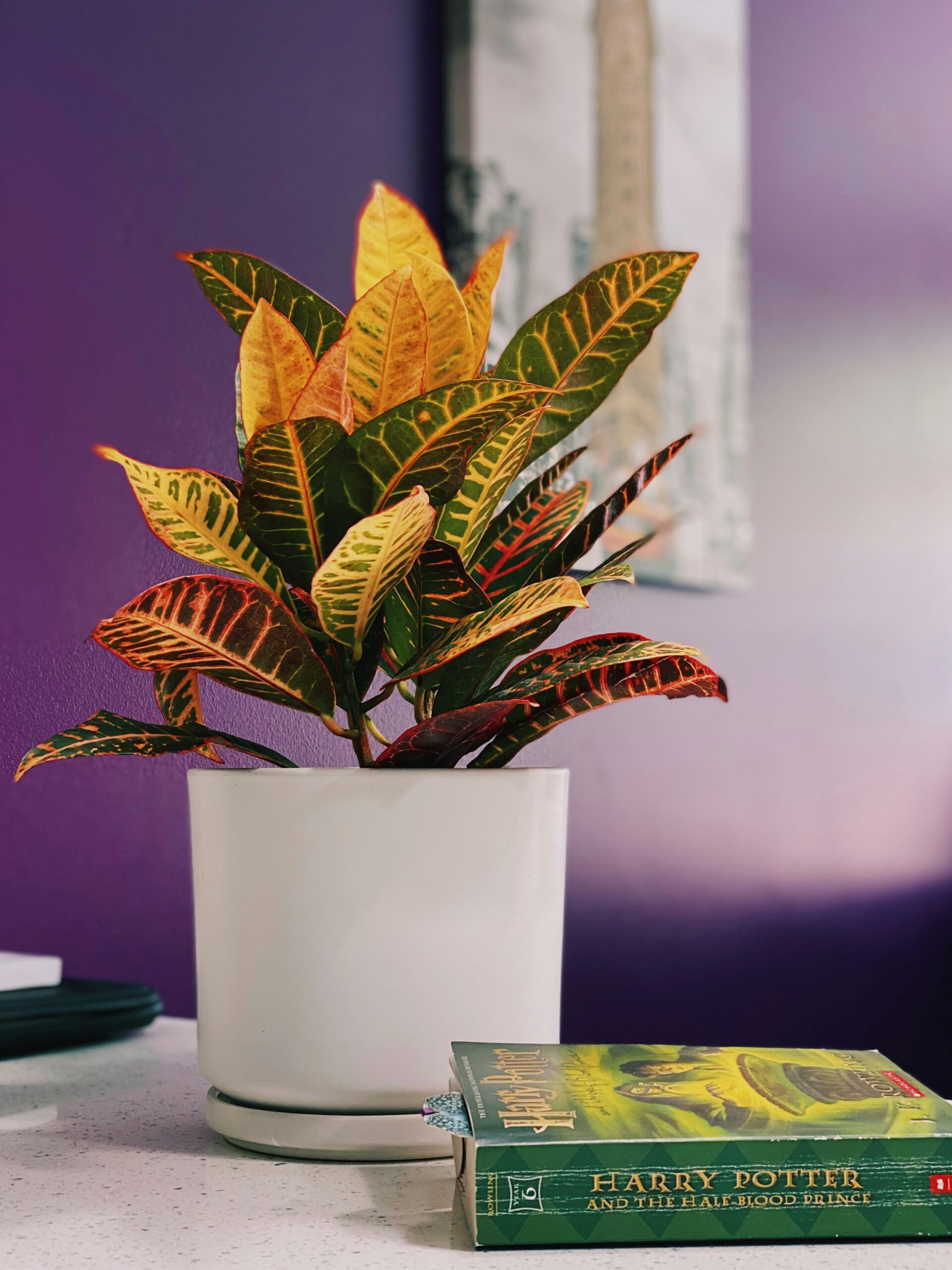
Curling leaves are usually tied to underwatering, spider mites, relocation stress, or insufficient light, our full guide on why croton leaves curl walks through how to tell these apart. Leaf drop shortly after bringing a new plant home is extremely common and usually just relocation stress, it typically resolves within a few weeks of stable care.
A few things people ask
Is croton toxic to pets? Yes, Pet Poison Helpline notes ingestion can cause oral and gastrointestinal irritation, drooling, and vomiting, keep it out of reach.
Why is my new croton dropping leaves? This is usually relocation stress from the change in light, humidity, and temperature between the store and your home, as long as care is otherwise consistent it typically stabilizes within a few weeks.
Can I grow croton outdoors? In warm, frost-free climates it can be grown outdoors year-round, elsewhere it can spend summer outside in a bright spot but should come back indoors well before temperatures drop.
Why did the sap irritate my skin? NC State Extension notes the clear sap that flows from cut leaves or stems can irritate soft tissue, causing itching and swelling, wearing gloves when pruning or taking cuttings is a reasonable precaution, and washing your hands afterward is worth doing even without gloves. Next reads: Dieffenbachia Care Guide: Light, Water, and Propagating from Cane Cuttings, Schefflera (Umbrella Plant) Care Guide: Light, Water, and Pruning for Fullness and Alocasia Care Guide: Light, Water, and Understanding Dormancy.