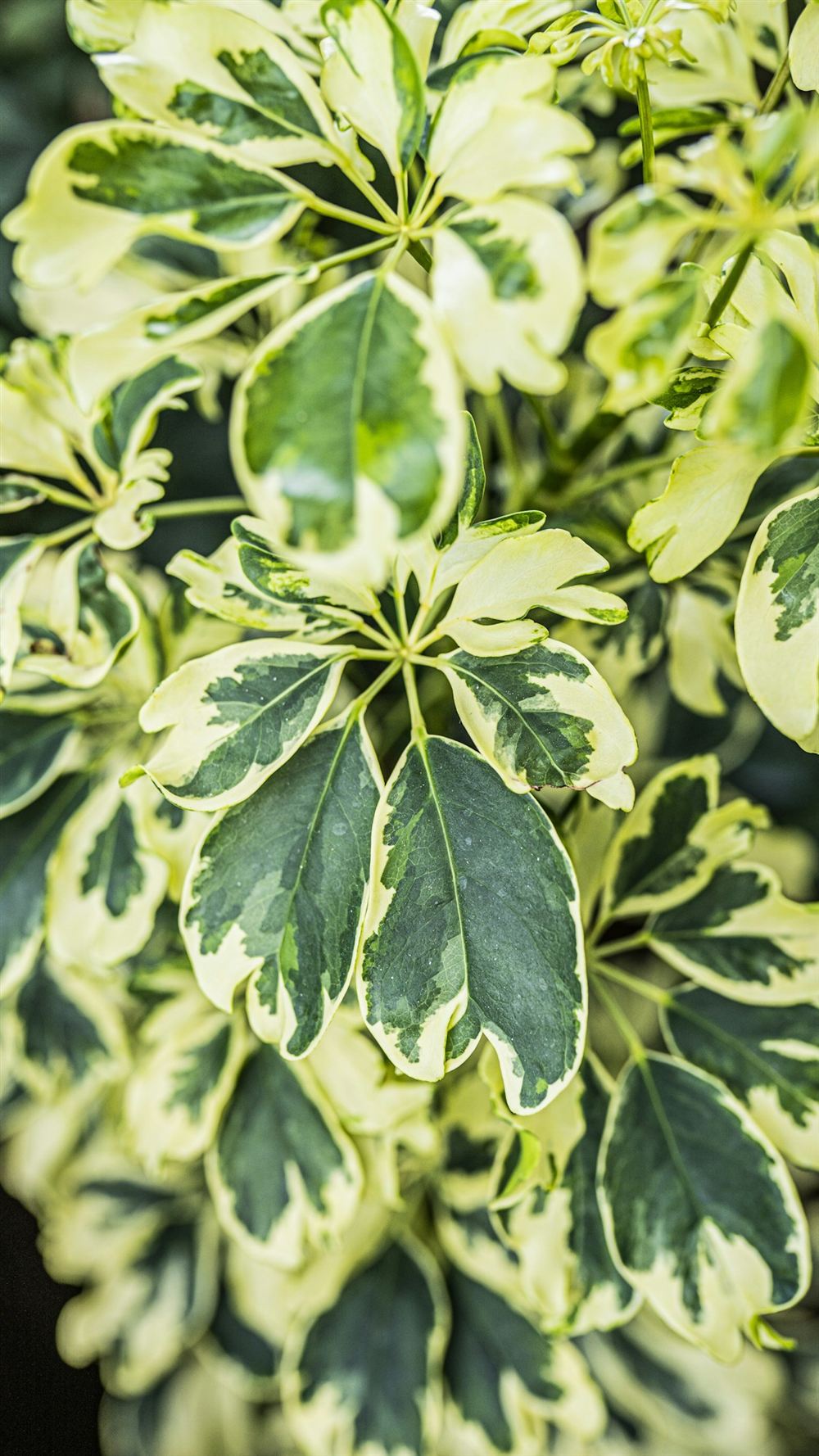
A schefflera can spend its first couple of years getting tall and thin, reaching for the ceiling while staying bare and leggy near the base. Cutting it back hard, further than seems safe, usually gets it pushing out new growth from nearly every cut point within a couple of months, turning into the full, bushy plant that was wanted all along. It handles that pruning far better than most people expect, and it’s the go-to move whenever it starts getting leggy again.
| Care area | What it needs |
|---|---|
| Light | Bright, indirect light (east/west window) |
| Water | Let top 2 inches dry, then water thoroughly |
| Soil | Well-draining mix with added perlite |
| Humidity | Average; dry air invites spider mites |
| Temperature | Average to warm, away from cold drafts |
| Fertilizing | Half strength, monthly, spring/summer only |
Light
Bright, indirect light keeps growth full and compact, a spot near an east or west-facing window works well. It tolerates lower light reasonably well but grows leggier and more sparse over time, and variegated varieties lose some of their pattern without enough brightness. Avoid harsh direct sun, which can scorch the leaves.
Watering
Water when the top couple of inches of soil have dried out, then water thoroughly until it drains from the bottom of the pot. Schefflera is fairly forgiving of missed waterings but doesn’t tolerate consistently wet soil, overwatering is the more common mistake and the more serious one.
Soil and potting
A well-draining potting mix with some added perlite works well. Schefflera grows steadily and typically needs repotting every couple of years, moving up one pot size when roots start circling the bottom of the container.
Humidity and temperature
Average indoor humidity is fine for most schefflera, though very dry air can make it more prone to spider mites, occasional wiping of the leaves helps. It prefers average to warm room temperatures and should be kept away from cold drafts near doors and windows.
Fertilizing
A balanced liquid fertilizer diluted to about half strength, applied monthly during spring and summer, supports steady growth. Skip fertilizing in fall and winter when growth naturally slows.
Propagation
Stem cuttings with a couple of leaf nodes root reasonably well in water or moist soil, though schefflera is slower to root than many houseplants on this site, patience helps. Older, leggy stems can also be air layered if a cutting alone isn’t taking well, wrapping a wounded section of stem in moist moss until roots form before cutting it free.
Pruning for a fuller, bushier plant
Schefflera responds to hard pruning better than most plants in this guide series, cutting stems back significantly, even to bare wood, typically triggers new growth from multiple points along the cut stem rather than just the tip. This makes it one of the more effective options here for reversing a leggy, top-heavy shape, rather than just slowing further legginess. Prune during spring or summer when the plant is actively growing for the fastest recovery, and don’t be afraid to cut back further than feels comfortable, it tends to reward a hard prune with denser growth than a light trim does.

Common problems
Leaf drop is most often tied to overwatering, or a temporary acclimation response after a move or repot, our full guide on why schefflera drops leaves walks through how to tell those apart from underwatering and low light. If the base of the stems feels soft or dark, root rot is worth checking for directly.
A few things people ask
Is schefflera toxic to pets? Yes, it contains calcium oxalate crystals that are toxic to cats and dogs if chewed, typically causing oral irritation and digestive upset, keep it out of reach.
What’s the difference between regular and dwarf schefflera? Dwarf schefflera (Schefflera arboricola) has smaller leaves and a more compact growth habit, while regular schefflera (Schefflera actinophylla) grows larger overall with bigger leaflets, care is nearly identical between the two.
How hard can I really cut it back? Harder than feels intuitive, cutting a leggy stem back to just a few inches of bare wood is generally safe on an otherwise healthy plant and tends to produce the fullest regrowth.
Why does mine have plain green leaves when I bought a variegated one? Variegation can fade or revert to solid green in lower light, moving the plant somewhere brighter often helps new growth come in with more pattern again. Next reads: Ming Aralia Care Guide: Light, Water, and Finding a Permanent Spot, Croton Care Guide: Light, Water, and Common Varieties and Monstera Care Guide: Light, Water, and Fenestration.