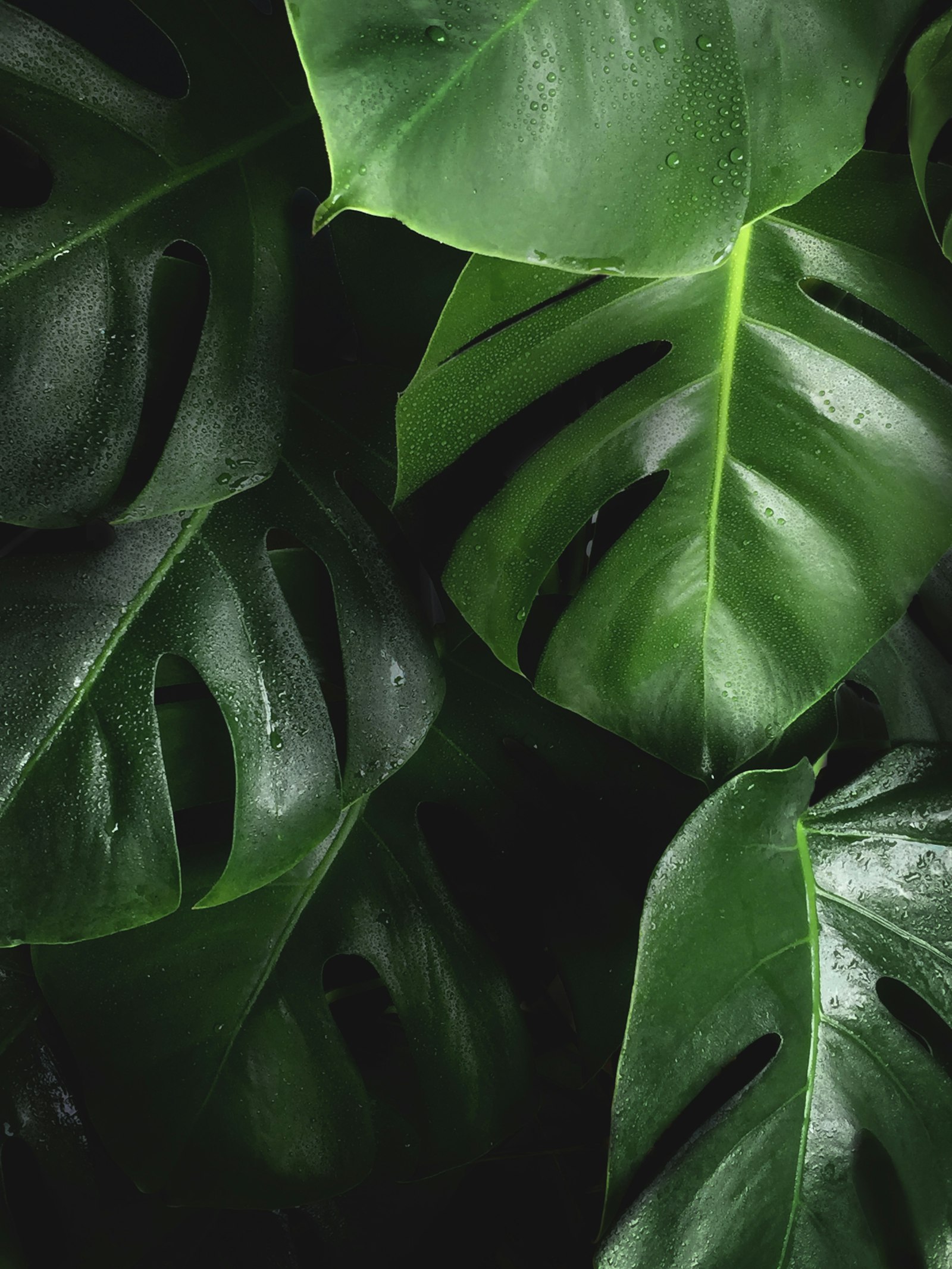
Monstera has a reputation as a finicky, demanding plant that needs a whole setup to keep alive. In practice, a small deliciosa with maybe two leaves and no fenestrations yet turns out to be one of the easier houseplants. The reputation for being demanding mostly comes from people wanting the dramatic split-leaf look fast, which does take some specific conditions, rather than the plant itself being hard to keep alive.
Light
Bright, indirect light is what monstera wants, and it’s also the main factor behind whether new leaves develop the characteristic splits and holes, called fenestrations. In lower light, a monstera will survive and still grow, but new leaves tend to come in smaller and without much fenestration. A spot a few feet from an east, west, or south-facing window, out of direct hot sun, tends to work well.
Direct afternoon sun, especially through south or west glass in summer, can scorch the leaves. Morning sun is generally gentler and fine for most monsteras to tolerate directly.
Watering
Let the top two inches or so of soil dry out before watering again, then water thoroughly until it drains from the bottom. Monstera doesn’t like sitting in soggy soil for extended periods, and overwatering is the most common way people run into trouble with this plant.
If you’re seeing yellowing leaves, figuring out the specific cause usually starts with checking whether it’s an overwatering issue, and if things have progressed to soft, mushy stems, root rot is worth ruling out. The general overwatered versus underwatered breakdown is a good first step whenever something looks off and you’re not sure which direction the problem points.
Soil and potting
Monstera does best in a chunky, well-draining aroid mix, something like a standard potting mix amended with perlite, orchid bark, or coco coir to improve drainage and airflow around the roots. Straight dense potting soil retains too much moisture for its taste.
Monstera grows fairly quickly and will need repotting every year or two as it matures, sizing up gradually rather than jumping to a dramatically larger pot, which can hold more water than the roots can use and increase the risk of overwatering issues.
Humidity and temperature
Average household humidity is fine for monstera, though it’ll appreciate higher humidity if you have it, especially for larger, more mature leaves. Normal indoor temperatures, roughly 65 to 85°F, work well. It doesn’t tolerate cold drafts or temperatures much below 50°F.
Fertilizing
A balanced liquid fertilizer, diluted to about half strength, every four to six weeks during spring and summer supports steady growth. Monstera is a fairly vigorous grower when conditions are good, and consistent light feeding during the growing season helps it keep that pace. Hold off in fall and winter.
Support and climbing
In the wild, UConn’s Home & Garden Education Center describes monstera as a climbing vine that roots aggressively both in soil and aerially, using those aerial roots to attach to trees, and giving it something to climb, a moss pole or coir totem, tends to produce larger, more mature-looking leaves with more fenestration than letting it sprawl unsupported. It’s not strictly necessary, an unsupported monstera will still grow, but if you want the biggest, most dramatically split leaves, a climbing structure genuinely makes a difference over time.
Propagation
Monstera propagates readily from stem cuttings that include at least one node and, ideally, an aerial root. Place the cutting in water or moist sphagnum moss, and roots typically develop within a few weeks. Once roots are a couple inches long, it can go into soil.

Common varieties
Monstera deliciosa is the classic large-leaf variety most people picture. Monstera adansonii, often called the Swiss cheese vine, has smaller leaves with more numerous, smaller holes and a trailing growth habit rather than deliciosa’s more upright climb. Monstera “Thai Constellation” is a deliciosa cultivar with creamy white variegation and a notably higher price tag. Monstera minima isn’t a true monstera at all, it’s actually Rhaphidophora tetrasperma, but shares a similar look and care profile on a smaller scale.
| Variety | Leaf pattern | Growth habit | Notes |
|---|---|---|---|
| Monstera deliciosa | Large leaves, prominent splits and holes | Upright climber | The classic variety most people picture |
| Monstera adansonii | Smaller leaves, more numerous holes | Trailing vine | Often called the Swiss cheese vine |
| Monstera “Thai Constellation” | Creamy white variegation | Upright climber | A deliciosa cultivar with a notably higher price tag |
| Monstera minima | Small, deeply split leaves | Trailing/climbing | Not a true monstera, it’s actually Rhaphidophora tetrasperma |
Common problems
Two issues come up often enough with monstera to be worth linking out to in more depth:
- Yellowing leaves, most often overwatering, but with several other possible causes worth ruling out
- Brown spots, a completely different symptom from yellowing that points toward its own separate set of causes, including bacterial or fungal leaf spot
A few things people ask
Why doesn’t my monstera have any holes in its leaves? Fenestration develops with maturity and adequate light, young plants and low-light conditions both tend to produce solid, unfenestrated leaves. Patience and brighter indirect light are the main levers here.
Is monstera toxic to pets? Yes, like many aroids, the ASPCA lists monstera as toxic to cats and dogs due to insoluble calcium oxalates, typically causing oral irritation and drooling rather than anything severe, but it’s worth keeping out of reach.
Should I mist my monstera? Misting provides only brief, minor humidity benefits and doesn’t meaningfully change the plant’s overall environment. A humidifier is more effective if you’re specifically trying to raise ambient humidity.
How big does a monstera get indoors? Given enough time, light, and a climbing support, indoor monsteras can reach six feet or more with leaves well over a foot across. Growth is gradual, expect it to take a few years to reach an impressively large size. Next reads: Bird of Paradise Care Guide: Light, Water, and Growing It Indoors, Ficus Care Guide: Fiddle Leaf Fig, Rubber Plant, and Weeping Fig and Schefflera (Umbrella Plant) Care Guide: Light, Water, and Pruning for Fullness.