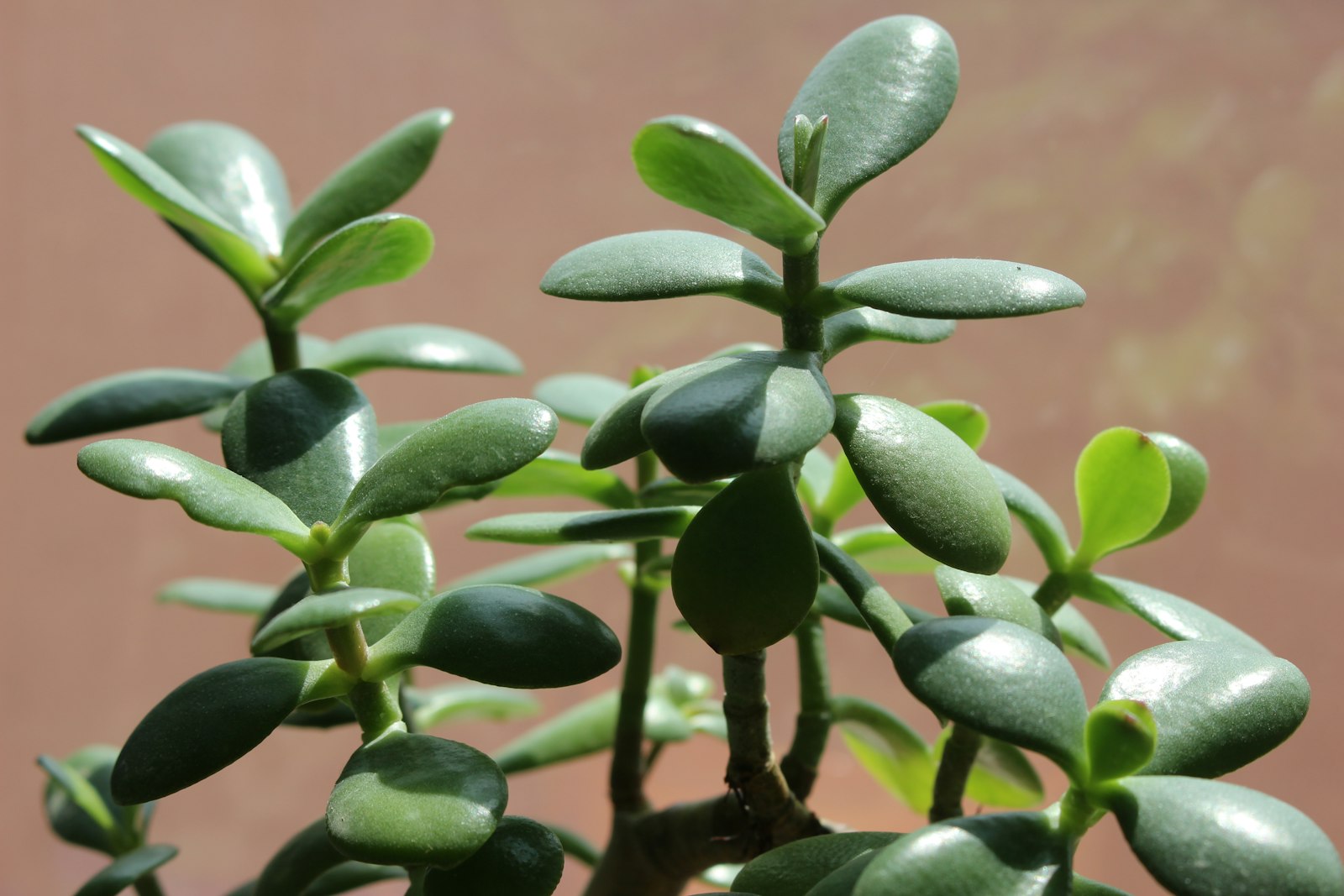
A jade plant can live on a kitchen windowsill for decades, and by then the trunk has gone thick and woody, more like a miniature tree than the soft little succulent most people picture. The usual way to kill a young one is by babying it with too much water, treating it like a delicate houseplant instead of the tough, slow-growing survivor it actually is. Let it dry out properly between waterings and it settles in and starts putting on that same sturdy, tree-like shape.
| Care area | What it needs |
|---|---|
| Light | Bright light, several hours of direct sun |
| Water | Let soil dry out completely, then water thoroughly (roughly every 2–3 weeks) |
| Soil | Fast-draining succulent or cactus mix |
| Humidity | Average room humidity, no special needs |
| Temperature | Average room temperature, away from cold drafts |
| Fertilizing | Balanced fertilizer at half strength, monthly in spring/summer only |
Light
Jade plant wants as much bright light as you can give it, several hours of direct sun is ideal and helps the leaves develop the reddish tint along their edges that many growers consider a sign of a happy plant. A south or west-facing window works well indoors, and the plant can also spend summer outdoors in a spot with morning sun, though it should be introduced to stronger outdoor light gradually to avoid scorching.
Watering
Let the soil dry out completely between waterings, then water thoroughly until it drains from the bottom of the pot. As a true succulent, jade plant stores water in its thick leaves and stems and is far more likely to suffer from overwatering than from neglect, soft or mushy leaves and stems are a clear sign of too much water. Watering roughly every two to three weeks is a reasonable starting point, adjusted down further in winter when growth slows.
Soil and potting
A fast-draining succulent or cactus mix is essential, regular potting soil holds too much moisture and significantly raises the risk of root rot. Jade plant also does best in a pot that’s only modestly larger than its root ball, since the top-heavy growth of an older plant can otherwise become unstable, and a heavier terracotta or ceramic pot helps keep a mature plant from tipping over.
Humidity and temperature
Typical indoor humidity is fine, this plant doesn’t need any special humidity accommodations. It prefers average room temperatures and should be kept away from cold drafts and frequently opened doors, sudden temperature swings can trigger stress-related leaf drop even when watering and light are otherwise correct.
Fertilizing
A balanced liquid fertilizer diluted to about half strength, applied once a month during spring and summer, supports steady growth without pushing the plant faster than its naturally slow pace. Skip fertilizing entirely in fall and winter when growth slows or stops.
Propagation
Jade plant is one of the easiest houseplants to propagate from either a leaf or a stem cutting. Let the cutting callous over for a day or two so the cut end dries out, then set it on top of or partially into slightly moist succulent soil. Roots typically develop within a few weeks without any rooting hormone needed, a single fallen leaf can grow into an entirely new plant this way.
Growing it as a miniature tree
Part of jade plant’s appeal is how naturally tree-like it becomes with age, thick, woody stems and a branching structure that many growers shape further with light pruning to encourage a more deliberate trunk and canopy, sometimes styled loosely in the manner of a bonsai. Pruning back leggy growth in spring encourages bushier branching, and because the plant is so slow-growing, a well-shaped jade plant can look essentially the same for years with only minimal upkeep.
Common problems
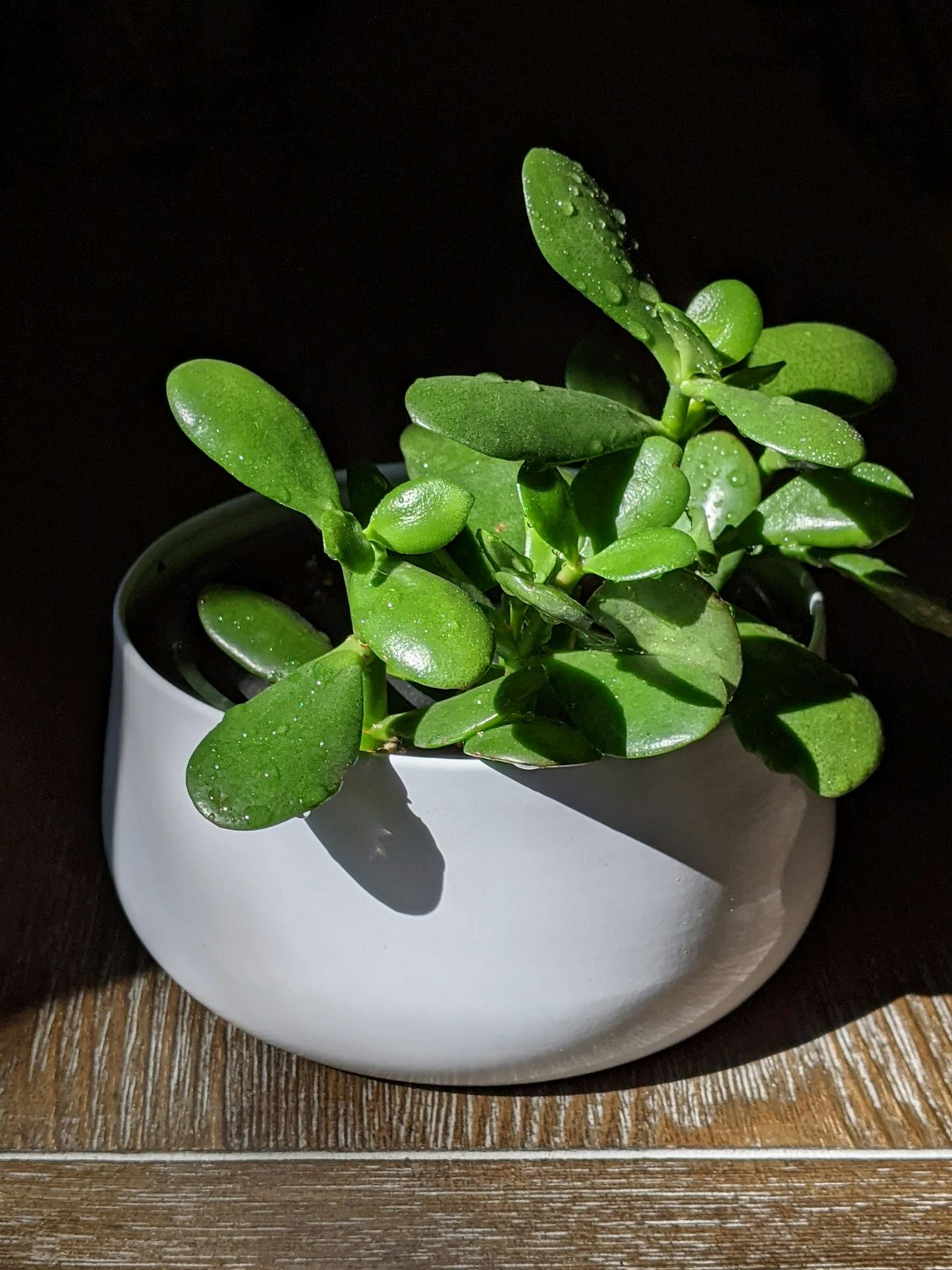
Leaves that suddenly droop or fall are usually tied to overwatering, underwatering, or a recent move or temperature change, our full guide on why jade plant leaves drop walks through how to tell these apart. Soft, mushy stems point toward root rot from consistently wet soil, letting the plant dry out fully and repotting into fresh, fast-draining soil is the standard fix.
A few things people ask
Is jade plant toxic to pets? Yes, it’s considered mildly toxic to cats and dogs and can cause vomiting or lethargy if chewed, keep it away from curious pets.
Why won’t my jade plant develop the reddish leaf edges I’ve seen on others? That coloring develops in response to strong light, often direct sun, a plant kept in lower light will stay uniformly green even if it’s otherwise perfectly healthy.
How old do jade plants get? With consistent care, jade plants commonly live for decades and are often passed down between family members as cuttings, a well-cared-for plant can easily outlast the person who first potted it.
Does jade plant flower? Mature plants can produce small clusters of white or pale pink star-shaped flowers, typically in winter, though indoor plants flower less reliably than those grown outdoors with more direct light and a cooler winter rest period. Next reads: Haworthia Care Guide: Light, Water, and Propagation, Ponytail Palm Care Guide: Light, Water, and the Water-Storing Trunk and Kalanchoe Care Guide: Light, Water, and Getting It to Rebloom.