
It’s easy to assume haworthia wants the same blazing windowsill spot as a cactus or jade plant, since they’re all succulents — and that assumption is wrong. Moved somewhere brighter but shaded from direct sun, haworthia fills out into the tight, compact rosette seen in photos instead of the sunburned, stretched thing it becomes in full sun.
Light
Bright, indirect or filtered light suits it best, an east-facing window or a spot a few feet back from a south or west window works well. Direct, intense sun, especially in the afternoon, causes the leaves to turn reddish, orange, or brown.
Watering
Let the soil dry out completely between waterings, then water thoroughly. For most homes this means roughly every two to three weeks, and erring toward underwatering is far safer than overwatering, which quickly leads to rot in this plant.
Soil and potting
A well-draining succulent or cactus mix is essential, regular potting soil holds too much moisture around the roots. It’s a slow grower and comfortable being slightly underpotted, it can stay in the same small container for a couple of years before needing to size up.
Humidity and temperature
Average indoor humidity is fine, this plant doesn’t need any special humidity accommodation. It prefers warm to moderate temperatures and should be kept away from frost and cold drafts, though typical indoor temperature swings don’t bother it.
Fertilizing
A balanced liquid fertilizer diluted to half strength, applied once or twice during spring and summer, is plenty for this slow-growing plant. Skip fertilizing entirely in fall and winter.
Propagation
This plant readily produces offsets, or pups, around the base of the rosette. Once a pup has a few of its own leaves, separate it with a clean cut, let the cut end callus over for a day or two, then pot it in dry succulent mix and wait about a week before the first watering.
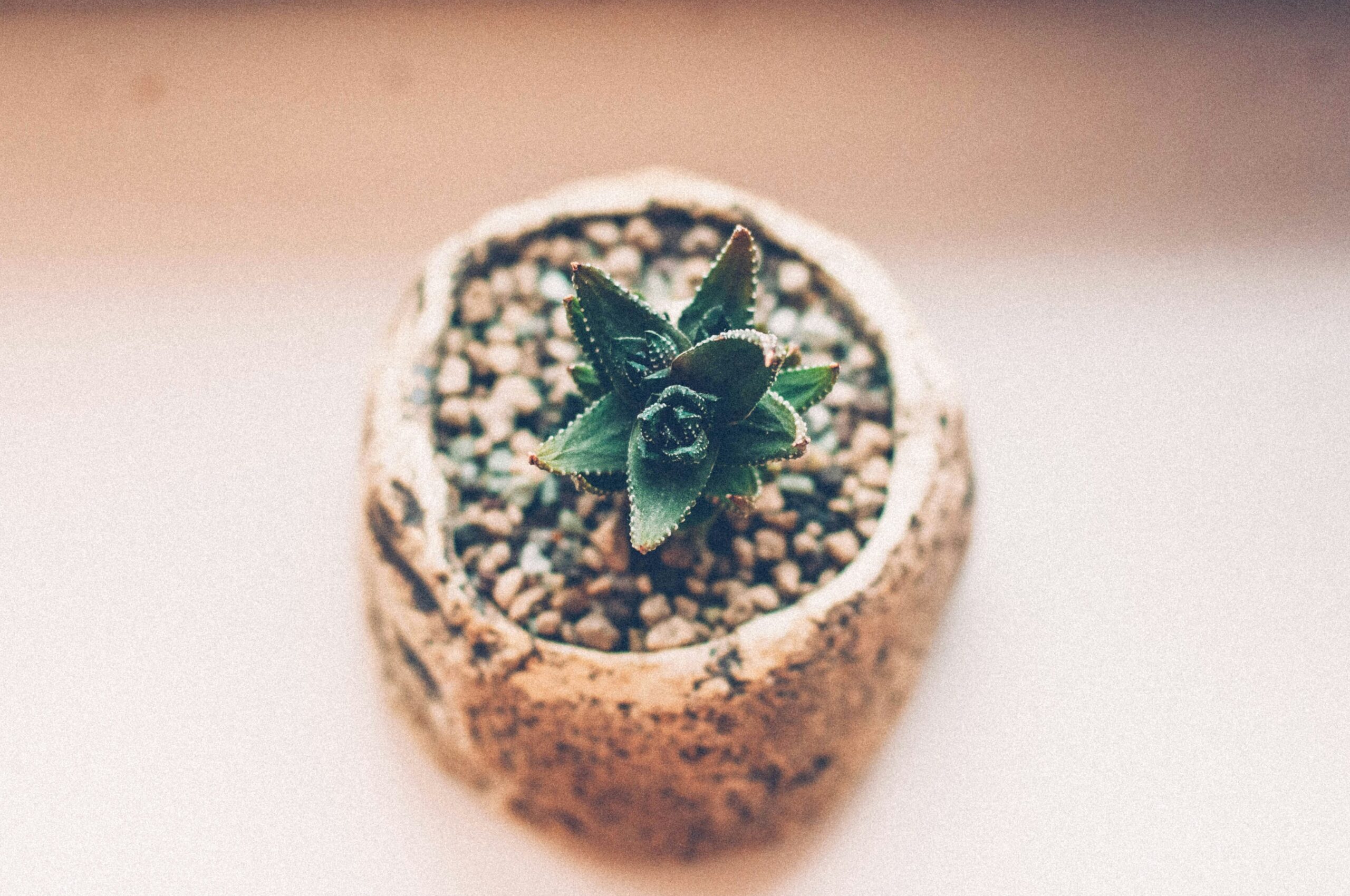
Why this succulent wants less light than most
Unlike most succulents in this guide series, which come from sun-blasted desert conditions, this one grows in the wild tucked into rock crevices and the partial shade of larger plants, which is why it scorches under the same intense direct sun that a cactus or jade plant would thrive in. Many varieties also have translucent “windows” at the leaf tips, a genuine adaptation that lets light reach the photosynthetic tissue even when most of the leaf is buried in sand or shaded by rocks in habitat — Indiana University Bloomington’s Biology Greenhouse notes that this leaf window lets a plant grow half submerged in the ground while still absorbing light.
Common problems
Reddish or brown discoloration is almost always sunburn rather than disease, our full guide on why haworthia is turning brown or mushy walks through how to tell that apart from overwatering, underwatering, and low light.
A few things people ask
Is haworthia toxic to pets? No, the ASPCA lists haworthia as non-toxic to cats and dogs, one of the safer choices in this guide series for households with curious pets.
Does it ever flower? Occasionally, a tall thin stalk with small white flowers can appear, it’s fine to leave it or trim it off since the flowers aren’t the plant’s main appeal.
Why do the leaves have translucent tips? Those are natural “windows” found in many varieties, an adaptation for the low-light, partially buried conditions it grows in in the wild, not a sign of a problem.
How big does it get? Quite small, most varieties stay under a few inches across, making it a good choice for windowsills and desks with limited space. Next reads: Succulent Care Guide: Light, Watering, and Propagation, Ponytail Palm Care Guide: Light, Water, and the Water-Storing Trunk and Jade Plant Care Guide: Light, Water, and Growing It as a Tree.