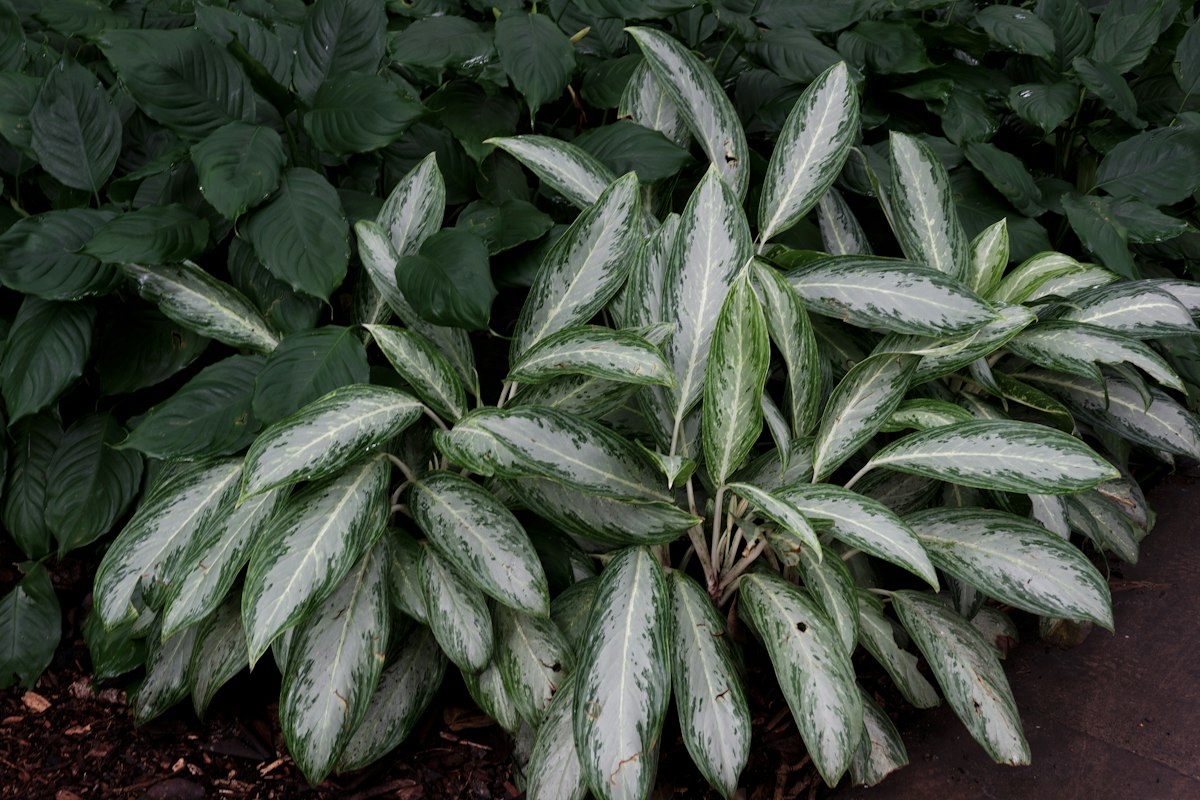
A Chinese evergreen is a good pick for the darkest corner of an apartment, a spot where nearly everything else tends to give up and get leggy or die outright. It’s slow growing but consistently healthy there, which is exactly the reputation that makes it a go-to choice for low-light spots.
Light
Chinese evergreen tolerates low to medium light better than almost any other common houseplant, making it a genuinely good choice for dim corners and rooms with only a small window. It also does fine in brighter indirect light, but direct sun should be avoided, it can bleach or scorch the leaves and wash out variegated coloring.
Watering
Water when the top inch or two of soil has dried out, then water thoroughly until it drains from the bottom of the pot. This plant tolerates occasional missed waterings reasonably well, consistently wet soil is the bigger risk and shows up as yellowing or drooping.
Soil and potting
A well-draining potting mix with some added perlite works well. Repot every couple of years as the plant grows, this is a slow grower overall so frequent repotting isn’t necessary.
Humidity and temperature
This is the one area where Chinese evergreen is genuinely more demanding than its easygoing reputation suggests. Keep it in stable, warm room temperatures, ideally above 60 degrees Fahrenheit, and away from drafty windows, exterior doors, and air conditioning vents, cold exposure causes leaf curling and drooping faster than almost any other common care mistake with this plant — University of Florida IFAS research found chilling injury occurs in Aglaonema at temperatures from just above 32°F up to 59°F. Above-average humidity is appreciated but not essential, typical indoor conditions are tolerated reasonably well.
Fertilizing
A balanced liquid fertilizer diluted to about half strength, applied monthly during spring and summer, supports steady growth. Skip fertilizing in fall and winter when growth naturally slows.
Propagation
Chinese evergreen can be propagated from stem cuttings rooted in water or moist soil, and mature plants often produce offsets, small new growths at the base, that can be separated and potted individually once they have their own roots. Division at repotting time is often the easiest method for an established plant.

Choosing a variety for low light
Darker green, less variegated varieties generally tolerate lower light better than the pink, red, or heavily silver-patterned cultivars, which need somewhat brighter conditions to maintain their coloring. If the plant is going in a genuinely dim spot, a solid or subtly patterned green variety is a more reliable choice than a showy colorful one that may fade or grow leggy without more light.
Type Light needed Notes Darker green, less variegated Tolerates true low light Most reliable for dim corners Pink, red, or heavily silver-patterned Needs brighter indirect light May fade or grow leggy in low light
Common problems
Curling or drooping leaves are most often tied to cold stress, which catches people off guard given this plant’s tough reputation, our full guide on why Chinese evergreen leaves curl or droop walks through how to tell this apart from overwatering, underwatering, and too much light. If the base feels soft or mushy, root rot is worth checking for directly.
A few things people ask
Is Chinese evergreen toxic to pets? Yes, the ASPCA lists Chinese evergreen as toxic to cats and dogs due to insoluble calcium oxalates and can cause mouth irritation if chewed, keep it out of reach of curious pets.
Is Chinese evergreen really as low-maintenance as people say? For light and watering flexibility, yes, genuinely. Temperature stability is the exception, keep it away from cold drafts and it lives up to its easygoing reputation.
Does it clean the air? It’s sometimes listed among houseplants studied for air-purifying qualities, though the effect in a typical home is modest, it’s best grown for its foliage and tolerance of low light rather than as a meaningful air filter.
Why does my plant look leggy with widely spaced leaves? This usually means it’s not getting quite enough light even by this plant’s tolerant standards, moving it a bit closer to a window, without direct sun, typically produces more compact new growth. Next reads: Chinese Money Plant Care Guide: Light, Water, and Propagating Pups, Dieffenbachia Care Guide: Light, Water, and Propagating from Cane Cuttings and Snake Plant Care Guide: Light, Water, and Propagation.