
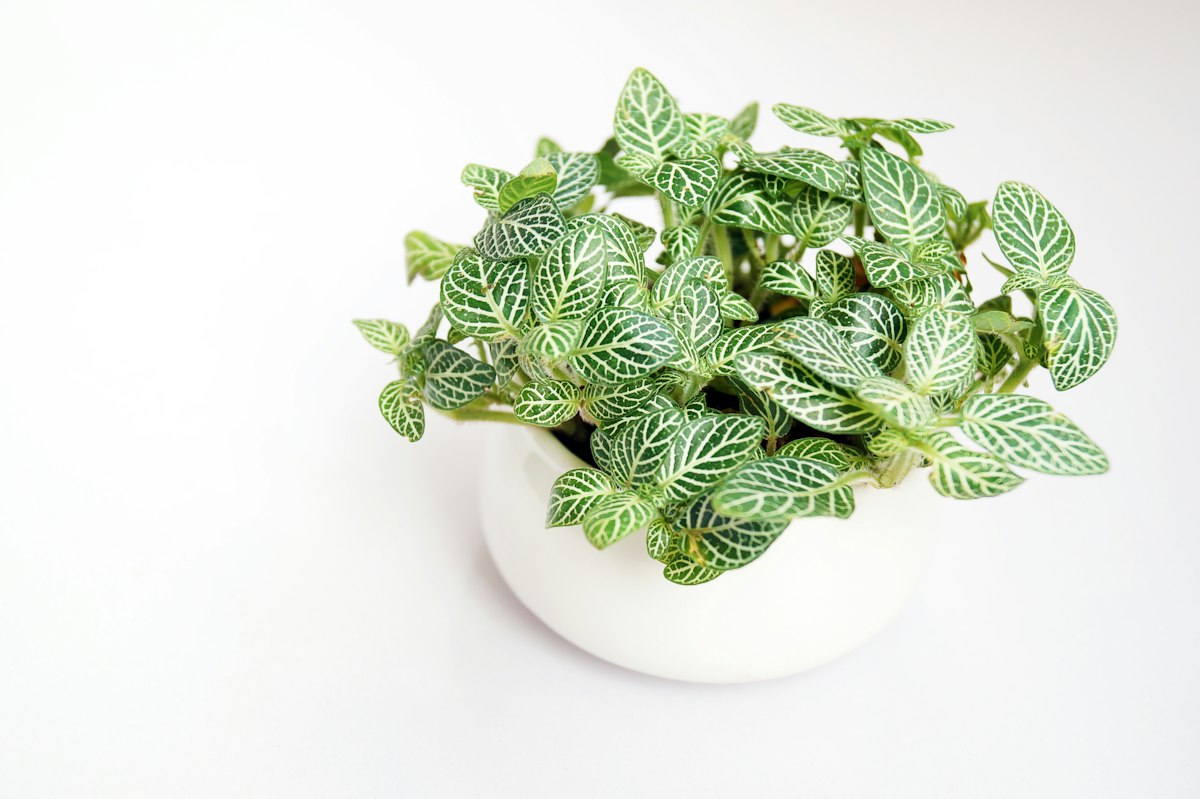
Fittonia is small enough to fit inside a glass terrarium, and it’s the kind of plant people don’t expect much from — until it keeps going and outgrows its container. It’s an easy recommendation for anyone who wants something colorful but is nervous about killing it. The vivid vein patterns do most of the work, and the actual care is fairly forgiving once you get the watering rhythm down.
| Care factor | What it needs |
|---|---|
| Light | Bright, indirect; avoid direct sun |
| Water | Keep soil consistently moist, don’t let it fully dry out |
| Humidity | High, thrives in terrariums and struggles in dry rooms |
| Soil | Standard well-draining mix, shallow pot |
| Toxicity | Non-toxic to cats and dogs |
Light
Bright, indirect light keeps the pink, red, or white vein patterns the most vivid, a spot a few feet back from an east or north-facing window works well. Fittonia also tolerates lower light better than a lot of colorful houseplants, though the coloring is usually a bit less intense. Avoid direct sun, which fades the patterning and can scorch the thin leaves.
Watering
Keep the soil consistently moist, fittonia is far less forgiving of dryness than most houseplants on this site and will wilt dramatically within hours of the soil drying out. Water before it gets to that point if you can, checking every couple of days rather than waiting for visible signs of thirst. It doesn’t tolerate standing water either, so make sure the pot drains well.
Soil and potting
A standard well-draining potting mix works fine, fittonia has a shallow, compact root system and does well in a relatively small pot. It rarely needs repotting more than once every year or two, moving up one size when roots start to crowd the container.
Humidity and temperature
Fittonia is one of the more humidity-demanding plants in this guide series, its thin leaves lose moisture quickly in dry air, leading to crispy brown edges. It’s part of why this plant does so well in terrariums and closed containers, the enclosed humidity suits it better than the average living room. A humidifier, a bathroom with a window, or a pebble tray all help outside of a terrarium setup. It prefers warm, stable temperatures and dislikes cold drafts.
Fertilizing
A balanced liquid fertilizer diluted to about half strength, applied monthly during spring and summer, supports steady growth. Skip fertilizing in fall and winter when growth naturally slows.
Propagation
Fittonia roots easily from stem cuttings, a few inches of stem with a couple of leaf nodes, placed in water or moist soil, typically roots within a couple of weeks. This makes it simple to fill out a sparse pot or start a new one, and it’s a forgiving plant to practice propagating with.
Why it thrives in terrariums
Fittonia’s combination of high humidity needs, tolerance for lower light, and naturally compact, low-growing habit makes it one of the best houseplants for closed terrariums and bottle gardens, better suited to that environment than most other plants in this guide series. The enclosed humidity solves its biggest care challenge automatically, and its spreading growth habit fills in ground cover nicely without quickly outgrowing the space. If you’ve struggled to keep fittonia happy on an open shelf, moving it into a terrarium or under a cloche is worth trying before giving up on the plant.
Common problems
The most recognizable sign of trouble is the dramatic, sudden wilt that happens when the soil dries out, our full guide on why fittonia droops or wilts walks through how to tell that apart from overwatering, low humidity, and too much light. If the base of the stems feels soft or dark, root rot is worth checking for directly.
A few things people ask
Is fittonia toxic to pets? No, it’s considered non-toxic to cats and dogs, one of the safer choices in this guide series for households with curious pets.
Does fittonia do well in low light? It tolerates lower light better than many colorful houseplants, but the vein patterning is usually more muted, brighter indirect light gives the best color.
Why do people call it a nerve plant? The name comes from the prominent, vein-like patterning across the leaves, which resembles a network of nerves, it’s the plant’s most distinctive feature.
Can I keep fittonia outside of a terrarium? Yes, plenty of people grow it successfully in an open pot, it just needs more consistent attention to humidity and watering than it would inside an enclosed space. Next reads: Polka Dot Plant Care Guide: Light, Water, and Keeping It Bushy, Chinese Money Plant Care Guide: Light, Water, and Propagating Pups and Prayer Plant Care Guide: Light, Water, and Humidity.