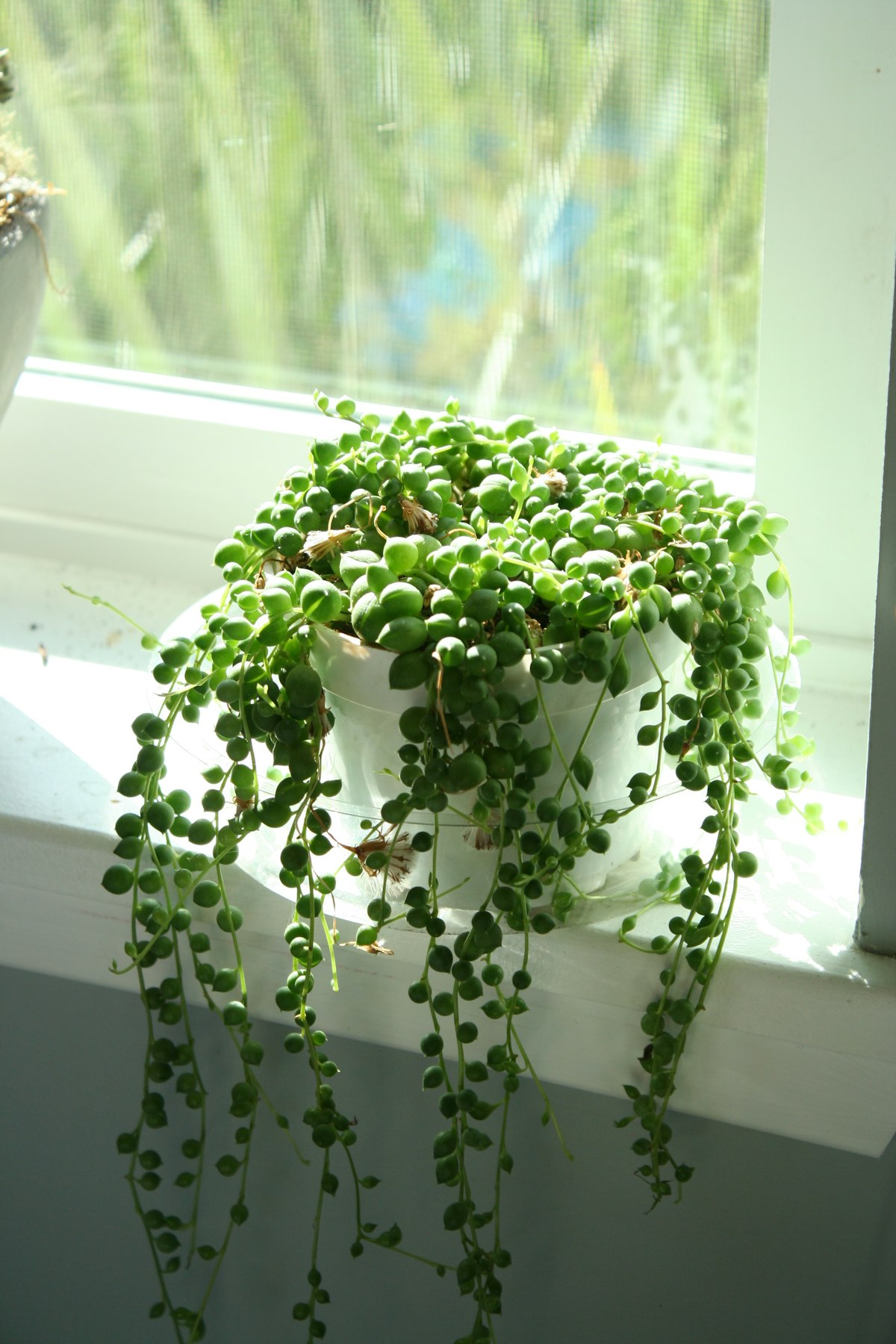
Rearranging a string of pearls on its shelf can end with a dozen loose pearls rolling around instead of a neatly repositioned plant. It’s a reminder to treat the trailing strands more like delicate jewelry than a sturdy vine — this is a plant that rewards a light touch more than almost any other.
| Care area | What it needs |
|---|---|
| Light | Bright light, a few hours of direct morning sun |
| Water | Let soil dry out completely (every 2–3 weeks) |
| Soil | Well-draining succulent or cactus mix |
| Humidity | Average indoor humidity, no special needs |
| Handling | Lift by the pot base, not the trailing strands |
| Fertilizing | Half strength, 1–2 times in spring/summer only |
Light
Bright light is essential, including a few hours of direct sun, ideally in the morning, a south or east-facing window works well. In too little light, the pearls grow small and spaced far apart on stretched-out stems instead of staying full and tightly packed.
Watering
Let the soil dry out completely between waterings, this plant is a true succulent and each pearl stores water the way a cactus stores water in its stem. For most homes this means watering roughly every two to three weeks, and erring toward underwatering is far safer than overwatering.
Soil and potting
A well-draining succulent or cactus mix is essential, regular potting soil holds too much moisture around the roots. A hanging pot or one placed on a raised shelf works best, giving the trailing strands room to drape down without dragging on a surface where they’ll get knocked around.
Humidity and temperature
Average indoor humidity is fine, this plant doesn’t need any special humidity accommodation. It prefers warm temperatures during the growing season and tolerates cooler conditions in winter, when it naturally slows down and needs even less water.
Fertilizing
A balanced liquid fertilizer diluted to half strength, applied once or twice during spring and summer, is plenty. Skip fertilizing entirely in fall and winter.
Propagation
This is one of the easiest plants in this guide series to propagate, a cut strand laid across the surface of moist succulent soil roots readily at the nodes within a few weeks, no rooting hormone needed. Several strands laid in a spiral in one pot quickly fill it out into a fuller-looking plant.
Handle it gently
Unlike most trailing plants in this guide series, the individual pearls detach from the stem with very little pressure, so moving the pot, brushing strands against furniture, or letting a pet play with them can knock off a noticeable number. It’s worth choosing a spot where the trailing strands can hang freely without rubbing against anything, and lifting the pot by its base rather than the vines whenever you need to move it.
Common problems
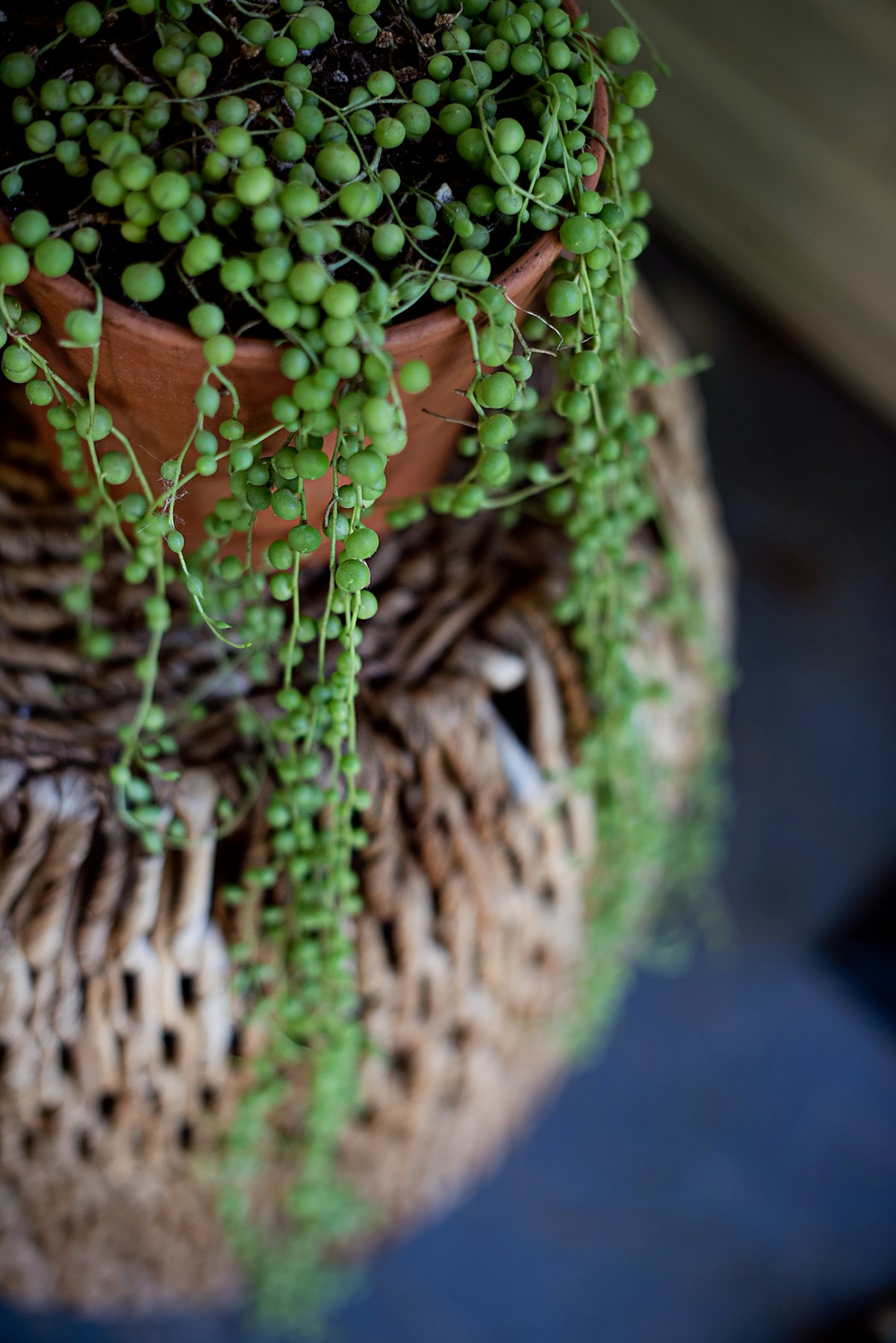
Shriveled or mushy pearls point to watering issues rather than anything more serious, our full guide on why string of pearls is shriveling or turning mushy walks through how to tell underwatering apart from rot, low light, and normal physical damage from handling.
A few things people ask
Is string of pearls toxic to pets? Yes, it’s considered mildly toxic to cats and dogs if eaten, worth keeping out of reach in pet households.
Does it ever flower? Occasionally, small white flowers with a faint cinnamon-like scent can appear in fall under good light, though many indoor plants never bloom and that’s completely normal.
Why does it look sparse compared to photos online? Usually insufficient light, this plant needs more direct sun than most people expect to grow full and tightly packed.
Can I regrow it if most of the pearls fall off? Yes, as long as the stems themselves are healthy, new pearls will fill back in with consistent bright light and correct watering. Next reads: String of Hearts Care Guide: Light, Water, and Propagation, Haworthia Care Guide: Light, Water, and Propagation and Why Does My String of Hearts Have Long Bare Vines?.