A bird of paradise from the garden center can look perfectly clean and glossy in the store, and within a few weeks the edges of a couple of leaves go crispy and brown. The instinct is to water it more, figuring that is the obvious fix — but the browning just keeps spreading along the same leaves instead of getting better. More water is often not the answer.
Brown edges on this plant almost always trace back to one of a handful of specific things, and more water is rarely the actual answer even though it feels like the safest guess.
Quick triage: thin, crispy brown edges or tips, rest of the leaf still green and firm? Low humidity or tap water sensitivity, most likely, keep reading. Whole leaf turning yellow before browning, soil stayed wet for a while? Overwatering, check the roots. Browning concentrated on one side or on leaves nearest a window? Sun scorch. Lower, older leaves slowly browning while new growth looks fine? Probably just normal aging, nothing to fix.
Low humidity and tap water sensitivity
Bird of paradise comes from a genuinely humid native habitat, and the dry air in a heated or air-conditioned home, especially in winter, pulls moisture out through the leaf edges faster than the plant can replace it. Thin crispy browning along the margins, while the rest of the leaf stays green, is the classic sign.
Tap water can compound this. Fluoride and the salts that build up from regular fertilizing both tend to accumulate right at the leaf tips and edges, since that’s the last stop for water moving through the leaf, which is why the damage shows up there specifically rather than as random spots.
A humidifier nearby or grouping it with other plants helps with the air side. For the water side, switching to distilled or filtered water, or flushing the soil thoroughly every couple of months to clear built-up salts, usually stops new browning within a few weeks even though existing brown edges won’t turn green again.
Overwatering
This one looks different from the humidity issue. Instead of crispy edges on an otherwise healthy leaf, overwatered leaves tend to yellow first, sometimes with a slightly soft or limp feel, before the yellowing progresses into brown. It’s often the older, lower leaves first.
Slide the plant out of its pot if you suspect this. Healthy roots are firm and pale; roots that are dark, mushy, or have a sour smell mean rot has set in. Let the soil dry out most of the way between waterings going forward, and repot into fresh, well-draining soil if the roots look compromised.
Direct sun scorch
Bird of paradise tolerates more direct sun than a lot of houseplants, which is part of why this one catches people off guard. A plant that was fine in moderate light can still scorch if it’s suddenly moved into hours of intense afternoon sun through unfiltered glass, especially if the move happened quickly rather than gradually.
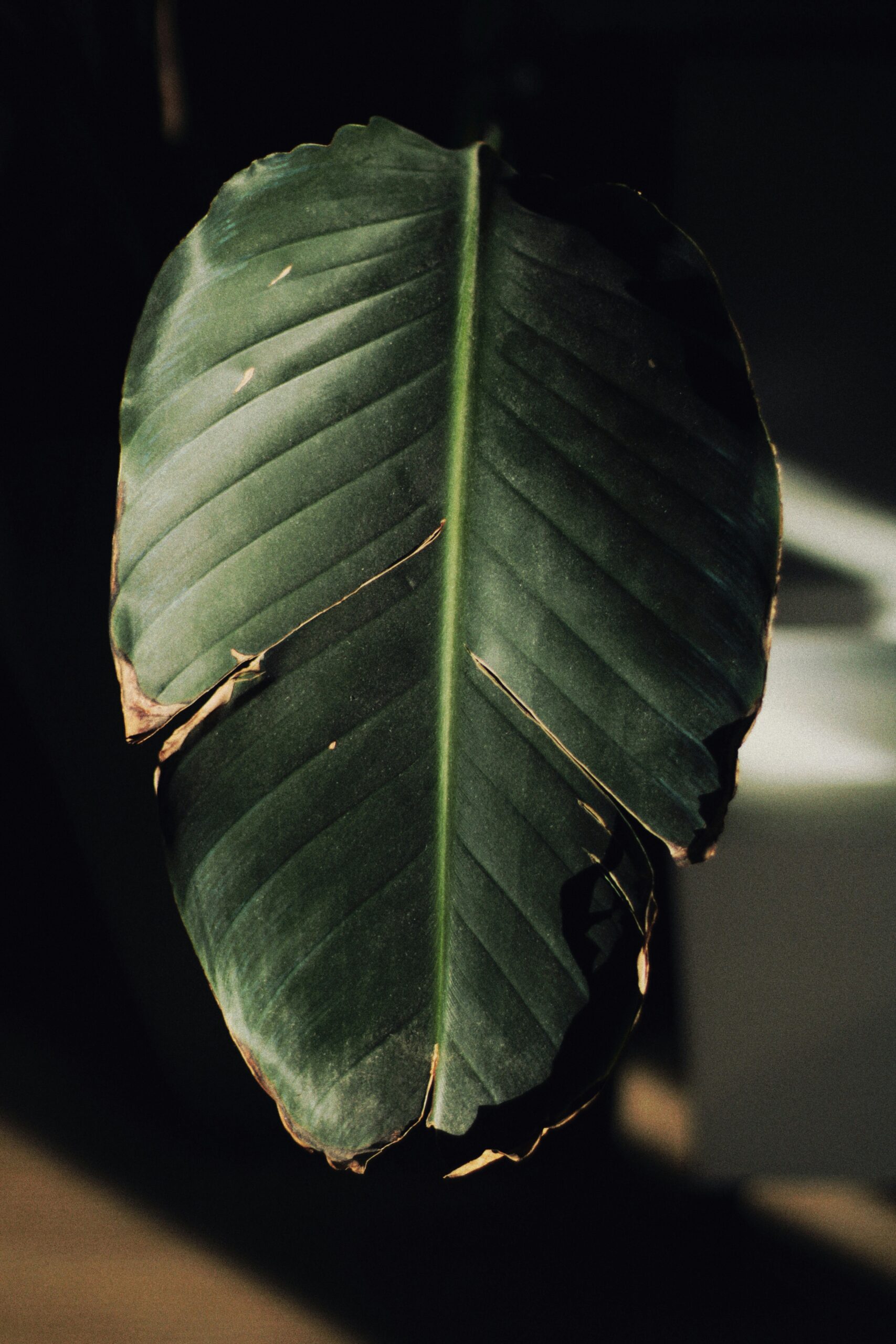
The tell is that the browning is heaviest on whichever side faces the light source, rather than spread evenly across the plant. Moving it back a few feet or adding a sheer curtain during the brightest part of the day resolves it going forward.
A few things people ask
Should I trim off the brown parts? Yes, if the look bothers you. Trim following the natural shape of the leaf tip rather than cutting straight across, using clean scissors. It’s cosmetic only and won’t affect the plant’s health either way.
My leaves have splits and slits in them. Is that the same problem? No, and this is worth knowing on its own. Splitting along the veins is a completely normal trait of this plant, not damage, and tends to show up more as the plant matures and the leaves get larger. It’s unrelated to the browning causes above.
How much water does it actually need? Water thoroughly when the top inch or two of soil has dried out, then let it drain completely. This plant likes consistent moisture more than most succulents but still needs to dry out somewhat between waterings, it’s not a bog plant.
Is one brown leaf a sign the whole plant is struggling? Not necessarily. If it’s isolated to one leaf, especially an older lower one, and the rest of the plant is putting out normal new growth, it’s likely just that leaf reaching the end of its life rather than a sign of a bigger problem.
For the full rundown on keeping bird of paradise happy long-term, light, watering, soil, and propagation, see the Bird of Paradise Care Guide. Next reads: Why Does My Monstera Have Brown Spots?, Why Does My Peace Lily Have Brown Tips? and Why Does My Fiddle Leaf Fig Have Brown Spots?.