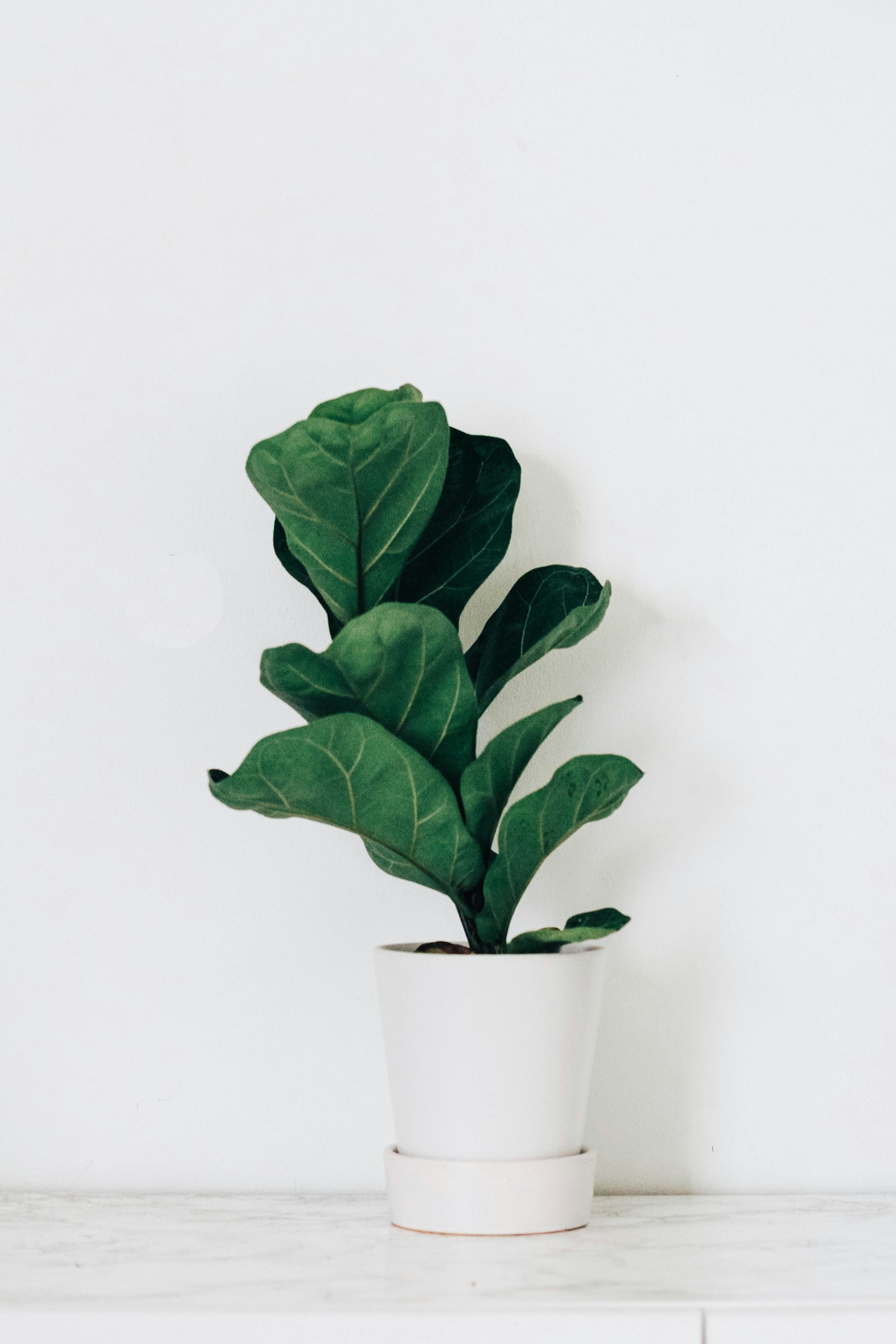
A handful of brown marks on a fiddle leaf fig can send a person on a stressful evening of googling “fiddle leaf fig bacterial infection,” and every forum thread makes it sound like a death sentence involving isolating the plant and throwing out the soil. Looking closely and comparing photos often shows it isn’t bacterial at all: watering on a fixed Sunday schedule regardless of how the soil actually looks leaves the plant sitting in wet soil more often than not. Cut back on watering, and the new growth usually comes in clean.
Fiddle leaf figs have a reputation for being dramatic, and brown spots are probably the single most searched fiddle leaf fig problem, which means the internet is full of alarming diagnoses. The truth is more mundane most of the time. There are really four distinct things that cause this, one of which is genuinely a disease and the other three of which are common care issues that just look scarier than they are.
| Symptom | Likely cause |
|---|---|
| Spots at leaf edges or tips, slightly water-soaked or dark, soil often damp | Overwatering (most common) |
| Crispy, dry brown spots or edges; soil has been dry for a while | Underwatering |
| Small, raised, corky brown bumps (texture, not flat spots), mostly on leaf undersides | Edema (not a disease) |
| Concentric ring “target” pattern, spreading to new leaves | Bacterial leaf spot |
Overwatering (the most common actual cause)
Fiddle leaf figs are genuinely sensitive to overwatering, more so than a lot of other popular houseplants, and it’s also the most common mistake with them because people tend to baby a plant this expensive and end up watering more out of anxiety than the plant actually needs.
The spots from overwatering typically start at the leaf margins or tips and can look slightly darker or water-soaked rather than uniformly brown, sometimes with a bit of yellowing around them. It often comes along with some leaf drop, since a stressed root system can’t support all the foliage the plant’s grown. If you’re not certain whether you’re dealing with too much or too little water, the overwatered vs. underwatered piece covers the actual soil test in detail, and for fiddle leaf figs specifically it’s worth being extra conservative, since these roots punish overwatering faster than something like a pothos would.
Let the soil dry out significantly between waterings, more than feels intuitive if you’re used to other houseplants, and make sure the pot actually drains. If the roots have gone mushy or dark, that’s root rot at that point, and the root rot piece covers the repotting and trimming process needed to recover from it.
Underwatering
Less common with fiddle leaf figs than overwatering, but it happens, especially with a plant in a smaller pot during a hot stretch, or if you’ve been traveling.
The spots here tend to be drier and more uniformly brown or tan, often starting at the tips and edges and working inward, with the leaf sometimes feeling crispy or brittle rather than soft. The soil, obviously, checks out bone dry. The fix is straightforward: a thorough, deep watering, and then getting on a schedule of actually checking the soil before each future watering instead of watering by the calendar.
Edema
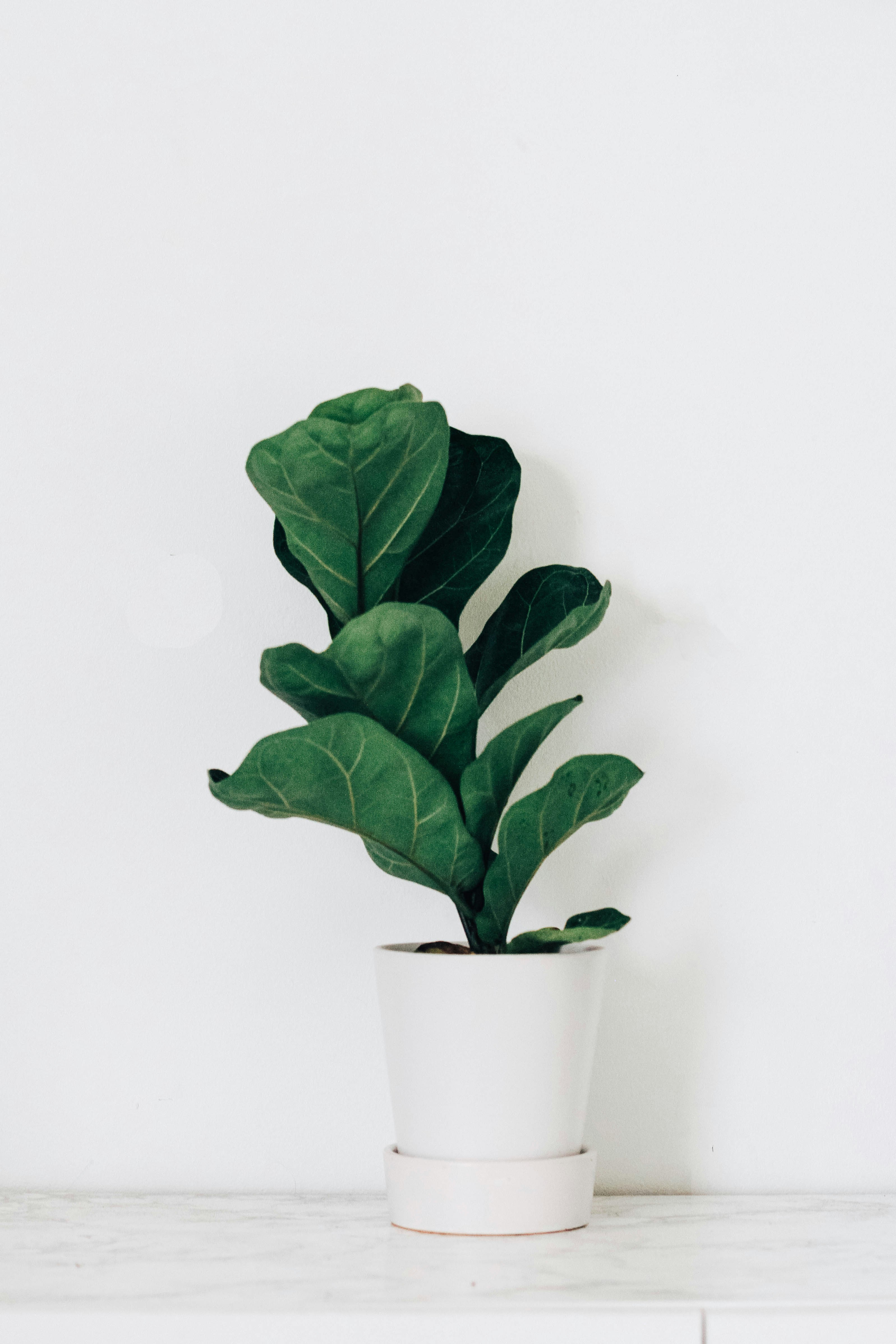
The one nobody expects, and it’s not a disease, a pest, or a watering mistake in the usual sense, which is exactly why it confuses people. Edema happens when the roots take up water faster than the leaves can release it through transpiration, usually in conditions of high soil moisture combined with lower light or humid, still air that slows evaporation from the leaf surface. Excess water pressure inside the leaf cells causes them to rupture in small spots, which then callous over into small, raised, corky brown bumps, most often on the undersides of leaves.
The tell is texture: these are genuinely raised and rough to the touch, not flat discoloration, and they don’t spread the way a disease would, and don’t come with any yellowing halo or wilting elsewhere on the plant. It looks alarming up close but it’s essentially a plumbing mismatch inside the plant rather than anything actually wrong with its health.
Improving airflow around the plant, being a little more careful not to overwater during lower-light stretches (like winter), and making sure the plant gets bright enough light to keep transpiration moving all help prevent new edema from forming. The existing bumps are permanent on that leaf, but they’re cosmetic and don’t affect the plant otherwise.
Bacterial leaf spot
The one people worry about most, and it does happen, though less often than the panicked search results suggest. Bacterial infection in fiddle leaf figs shows up as spots with a distinctive concentric ring pattern, sometimes described as looking like a target or a tree’s growth rings, and unlike the other causes here, it genuinely spreads from leaf to leaf over time, particularly in humid conditions with water sitting on the leaf surface, since UF/IFAS notes that infected lesions on ficus leaves exude bacteria that are easily splashed from plant to plant.
If you’re seeing that specific ringed pattern, and especially if it’s showing up on multiple leaves and progressing rather than staying fixed, remove the affected leaves, improve airflow, avoid getting water on the foliage when you water, and keep the plant away from other plants temporarily to reduce spread risk. Severe or persistent cases sometimes need a copper-based bactericide, though for most home situations, isolating the plant and fixing the humidity and watering situation is enough.
A few things people ask
How do I tell edema apart from bacterial spot for sure? Texture and pattern. Edema bumps are raised and corky with no particular shape or ring pattern, and they don’t spread to new leaves. Bacterial spots are flat or slightly sunken with that concentric ring look, and new leaves keep getting affected if the underlying humidity and airflow issue isn’t fixed.
Should I remove all the spotted leaves? Not necessarily. For overwatering, underwatering, or edema, the spots are cosmetic at that point and removing every affected leaf just stresses the plant further for no real benefit. For actual bacterial infection, removing clearly affected leaves does help slow the spread, but there’s no need to strip the whole plant unless it’s severely affected.
My fiddle leaf fig is dropping leaves along with the brown spots. Is that normal? Some leaf drop alongside brown spotting usually points toward overwatering rather than the other causes, since a stressed root system triggers the plant to shed leaves it can no longer support. It’s worth checking the soil and roots directly if this is happening.
Is fiddle leaf fig really harder to keep than other houseplants? It’s more sensitive to watering mistakes specifically, yes, which is most of why it has a fussy reputation. Light and temperature needs are honestly not that different from a lot of other tropical houseplants, it’s the watering margin for error that’s narrower.
For the full rundown on keeping ficus happy long-term, light, watering, soil, and propagation, see the Ficus Care Guide. Next reads: Why Does My Monstera Have Brown Spots?, Why Does My Philodendron Have Brown Spots? and Why Are My Bird of Paradise’s Leaves Turning Brown?.