
A heartleaf philodendron trailing along a shelf directly above a heating vent shows a pattern that is easy to miss for weeks. Every winter the leaves start curling in on themselves, almost rolling into little tubes lengthwise, and every spring the plant snaps back to normal once the heat stops running. It’s easy to blame underwatering and dump more water on it, which doesn’t really fix anything, since the actual problem is hot, bone-dry air blasting it for a few hours a day, not the soil.
Curling is one of those symptoms that has a genuinely short list of causes for heartleaf philodendron specifically, which makes it easier to work through than something like yellowing, but the causes overlap enough in how they look that it’s still worth going through them in order rather than guessing.
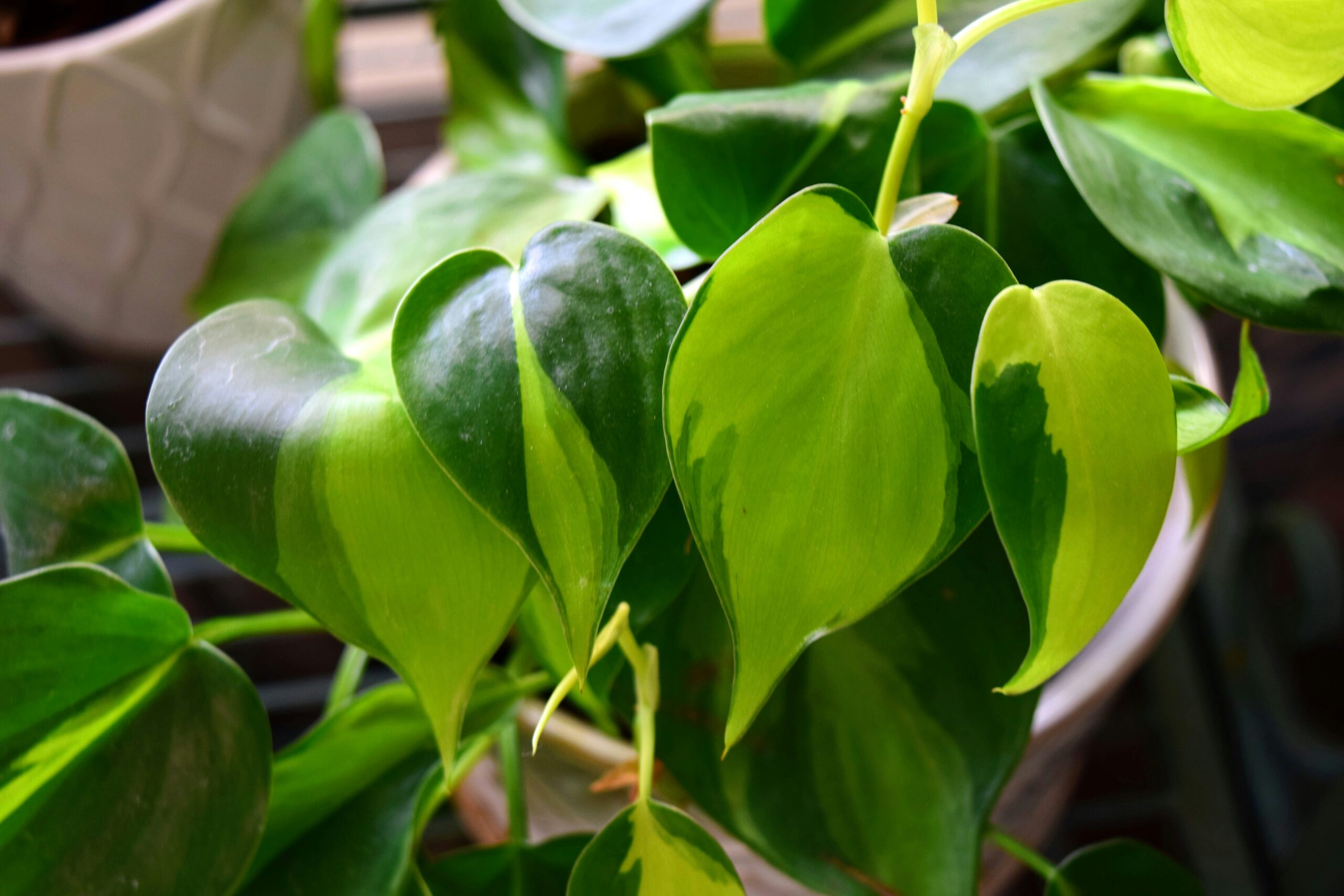
Quick triage: soil dry and leaves curling inward along their length, almost like a taco? Underwatering, most likely, check the section below. Soil is fine but the air feels dry, especially near heating or AC vents? Low humidity. Curling plus some crispy or bleached patches, and the plant’s gotten more light recently? Sun stress. Curling with tiny webbing, speckling, or visible bugs on the undersides? Pests, and that needs a different response entirely.
| Cause | Symptom | What to do |
|---|---|---|
| Underwatering | Leaves curling inward lengthwise like a taco; soil dry | Water thoroughly; check soil before watering rather than on a schedule |
| Low humidity | Soil is fine, but air feels dry, especially near vents | Move away from airflow; use a humidifier or group plants |
| Sun stress | Curling plus crispy or bleached patches after more light | Move back from window or soften direct sun |
| Pests | Curling with webbing, speckling, or visible bugs underneath | Treat with insecticidal soap or neem oil, repeated over weeks |
Underwatering
This is the most common cause, and it makes sense biologically: a plant that’s losing more water through its leaves than its roots can currently take up curls its leaves to reduce the surface area exposed to air, which cuts down on water loss. It’s a genuine survival response, not damage in itself, though it obviously means the plant needs water.
The tell is straightforward: check the soil, and if it’s dry an inch or two down, that’s your answer. The curling tends to affect the whole plant fairly evenly rather than just one section, and leaves usually uncurl within a day of a thorough watering, which is actually a pretty satisfying way to confirm the diagnosis. If you’re not fully sure whether you’re dealing with too little water or something else entirely, the overwatered vs. underwatered piece walks through the soil check in more detail, since both extremes can technically cause leaf stress even though curling specifically points more toward dry.
Water thoroughly until it runs from the drainage holes, and get in the habit of checking the soil before watering rather than sticking to a fixed schedule, since how fast a pot dries out changes a lot with the season and how much light the plant’s getting.
Low humidity
This is the situation described above, and it’s an easy one to miss because it’s not really about watering at all, even though the visual result can look similar to underwatering at first glance.
Heartleaf philodendron isn’t as humidity-demanding as some tropical houseplants, but consistently dry air, especially the kind that comes from forced-air heating in winter or air conditioning in summer, pulls moisture out of the leaves faster than the plant can replace it, and curling is one response to that stress. The giveaway that separates this from underwatering is that the soil checks out fine, sometimes even a little damp, while the leaves are still curling, particularly if the plant sits near a vent, radiator, or a drafty spot with moving dry air.
Moving the plant away from direct airflow from vents helps immediately. A humidifier nearby, or grouping it with other plants to raise the local humidity a bit, can help in persistently dry rooms, though for a plant this tolerant it’s often enough to just relocate it a few feet from whatever’s drying out the air.
Too much direct light
Philodendrons generally prefer bright indirect light, and while heartleaf varieties are fairly adaptable, sudden or sustained direct sun, particularly through south or west-facing glass, stresses the leaves enough to cause curling as a defensive response, similar to how underwatering works but triggered by light exposure rather than water loss.
This one’s usually accompanied by other light-stress signs if you look closely, like some paling or bleaching of the leaf color, or crispy patches specifically on the side facing the light source, rather than the more uniform curl you get from simple underwatering. It also tends to be worse on whichever side of the plant actually faces the window.
Moving the plant back from the window, or adding a sheer curtain to soften direct sun during the brightest hours, resolves this going forward, though like most light damage, the already-affected leaves won’t fully uncurl even after the cause is fixed.
Pests
Less common as a first guess but worth ruling out, especially if the curling has been getting gradually worse over a couple of weeks rather than showing up suddenly. Spider mites and thrips both feed on leaf tissue in ways that can cause curling, distortion, or a stippled, mottled look to the leaf surface.
Check the undersides of curled leaves closely, ideally with a phone camera zoomed in, for fine webbing, tiny moving specks, or a dusty, stippled discoloration. If you find any of that, the curling is a symptom of the infestation rather than a watering or environment issue, and it needs treating directly, typically with insecticidal soap or neem oil applied thoroughly to both sides of the leaves, repeated over a couple of weeks to catch new hatchlings.
A few things people ask
How fast should curled leaves uncurl once I fix the cause? For underwatering, often within a day of a thorough soak. For humidity and light issues, it’s slower, sometimes a week or more, and severely affected leaves may not fully flatten back out even once the underlying cause is resolved.
Is it normal for new leaves to look a little curled before they open? Yes, completely normal. New philodendron leaves emerge rolled up and unfurl over a few days as they mature, which is a different thing entirely from an established, already-open leaf curling due to stress. Don’t count new growth in your diagnosis.
Can cold temperatures cause curling too? Yes, though it’s less common than the causes above. A cold draft or a plant left somewhere below the mid-50s Fahrenheit can cause curling along with a slightly duller or darker leaf color. Moving it somewhere warmer and away from drafts resolves it, similar to the fix for low humidity.
My pothos does something similar sometimes. Same causes? The environmental logic carries over, yes, even though pothos tends to show stress differently, more often through yellowing than curling. Underwatering, dry air, and too much light are common stressors across most vining tropical houseplants, but each species tends to have its own preferred way of visibly complaining about it.
For the full rundown on keeping philodendron happy long-term, light, watering, soil, and propagation, see the Philodendron Care Guide. Next reads: Why Are My Pothos Leaves Curling?, Why Are My Hoya’s Leaves Curling? and Why Are My Prayer Plant’s Leaves Curling?.