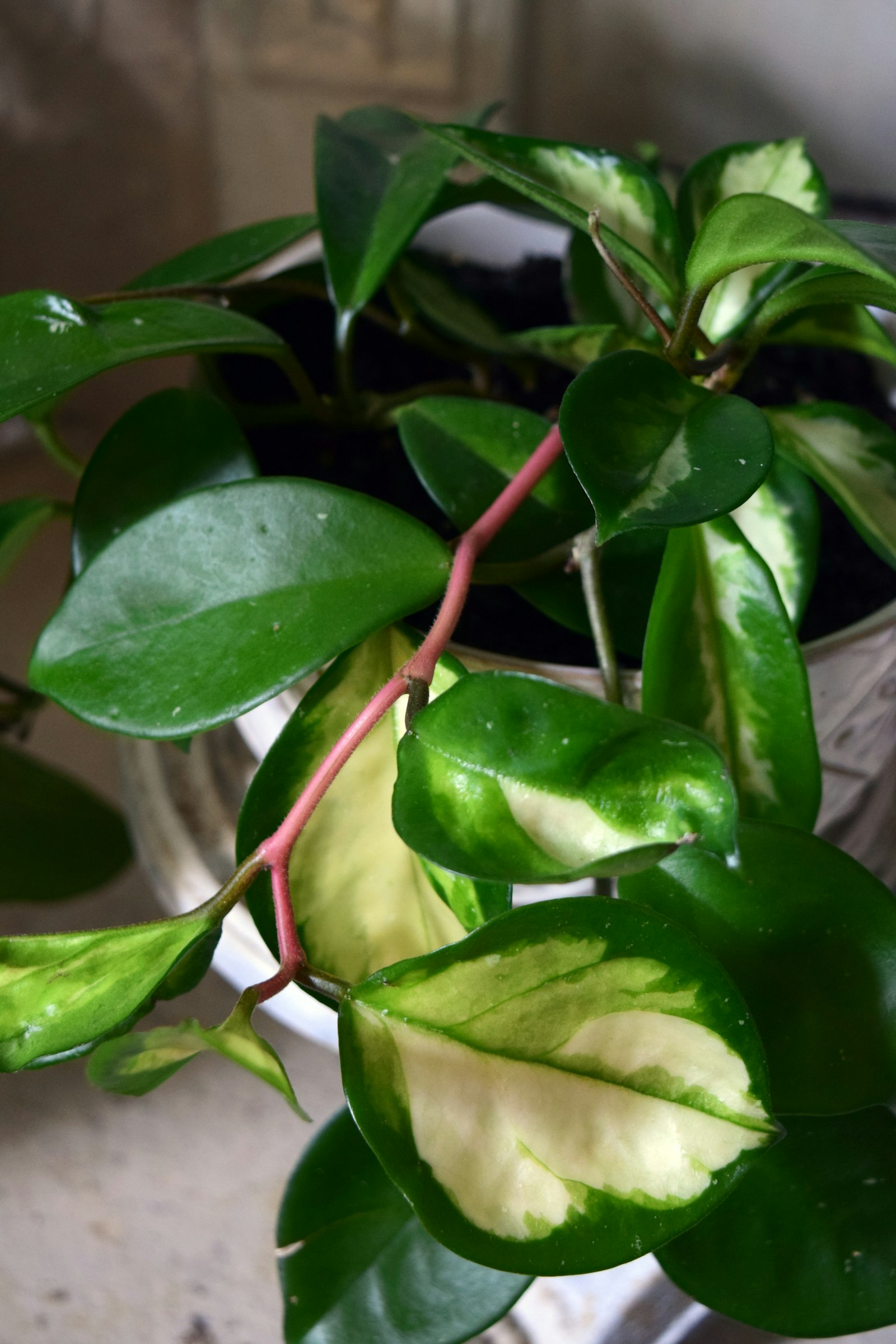
A hoya cutting from a plant swap can leave you waiting for weeks for the leaves to “flatten out” the way healthy leaves are supposed to. Some varieties just grow slightly cupped and a little rippled at the edges, and it’s easy to spend too long assuming something is wrong before looking up the specific variety. Meanwhile, another hoya whose leaves start curling in a way that actually is a problem can look similar enough at a glance that it’s easy to understand why people mix them up.
Hoya leaf curling splits into one situation that’s just how the plant is built, and three that are genuine stress signals: underwatering, low humidity or heat stress, and pests. The trick is that hoyas have thick, semi-succulent leaves, so the same curling response that other houseplants show with dramatic drooping shows up here as a subtler cupping or rippling, which is part of why it’s easy to second-guess yourself.
| What you see | Likely cause |
|---|---|
| Cupped/wavy since day one, new growth matches | Natural leaf shape for the variety |
| Used-to-be-flatter leaves curling inward, dry soil | Underwatering |
| Curling with crispy tips/edges, near a heat vent | Low humidity or heat stress |
| Curling with sticky residue, webbing, or visible bugs | Pests (mealybugs or spider mites) |
It might just be the variety’s natural leaf shape
This is the one cause that isn’t a problem at all, and it catches a lot of people off guard because most houseplant advice assumes curling always means something’s wrong. Several popular hoya varieties naturally grow with cupped, rippled, or twisted leaves as a genetic trait, not a stress response. Hoya compacta, commonly sold as “Hindu rope,” is probably the most extreme example, its leaves are tightly curled and crinkled by design. Some Hoya carnosa cultivars and a handful of other varieties show a milder version of the same thing.
The tell here is consistency: if the leaves have looked this way since you brought the plant home, if new leaves emerge already curled rather than curling after starting out flat, and if the plant otherwise looks healthy, thick, and well-colored, this is very likely just its natural form. Looking up the specific variety name, if you know it, usually confirms this quickly.

No action needed if this matches what you’re seeing. If you’re not sure which variety you have, the other three causes below all involve some kind of change over time, leaves that used to look different now curling, which is the clearest way to rule this one out.
Underwatering
This is the most common actual cause of new curling in hoyas. Their thick, semi-succulent leaves store water, and one of the first visible signs they’re running low is the leaves cupping or curling inward, a way of reducing surface area and water loss, rather than the more dramatic wilting you’d see on a thinner-leaved plant. If you check the soil and it’s been dry for a while, or you’re on a stretch of forgetting to water, this is the likely explanation.
Water thoroughly and the leaves typically firm back up and relax within several days to a week. Hoyas actually prefer to dry out somewhat between waterings, more than many other houseplants, so this isn’t a case of needing to water constantly, just not letting the soil go completely dry for extended stretches. If overwatering and root rot feels more likely instead, soft or mushy stems and a sour smell from the soil are the signs to look for there.
Low humidity or heat stress
Hoyas are epiphytic in the wild, growing on trees in humid tropical conditions, and they tend to prefer higher humidity than a lot of common houseplants. In a dry indoor environment, especially near a heating vent, radiator, or in a room that runs hot and dry in general, leaves can curl as a response to moisture loss through the leaf surface, sometimes paired with crispy or browning tips or edges.
Moving the plant away from direct heat sources, grouping it with other plants, or running a humidifier nearby can help. This cause is often confused with underwatering since both involve moisture stress, but the soil moisture is the differentiator, if the soil is still damp and the plant is curling anyway, humidity or heat is the more likely explanation.
Pests
Hoyas are somewhat prone to mealybugs and spider mites, both of which feed by piercing leaf tissue and extracting sap, and both of which can cause curling as a plant-level response to that damage. Mealybugs show up as small white cottony clusters, often tucked into leaf joints or along stems, sometimes accompanied by a sticky residue on the leaves. Spider mites are harder to spot directly but often leave fine webbing and tiny stippled or speckled discoloration on the leaf surface.
Check closely along stems and leaf joints, and on the undersides of leaves, since both pests tend to hide there. Isolate the plant from others if you find an infestation, and treat with insecticidal soap or neem oil, repeating every week or so for several weeks since these pests are persistent and eggs can survive an initial treatment.
A few things people ask
How do I find out what hoya variety I have? A photo search or a plant identification app can help, and there are large hoya-specific communities online where people are generally happy to help identify a variety from a clear photo of the leaves and, if you have them, the flowers.
Should hoya leaves feel firm or soft? Healthy hoya leaves should feel firm and somewhat thick, similar to a succulent. Soft, squishy, or deflated-feeling leaves point toward either underwatering that’s gone on too long or, less commonly, root rot from overwatering.
Do all hoyas need the same amount of light? Most hoyas want bright, indirect light and can handle some direct morning sun, though tolerance varies by variety. Too little light won’t typically cause curling specifically, but it can slow growth and reduce flowering.
Is it normal for hoya leaves to curl slightly as they age? Some minor curling on the oldest leaves as part of natural aging can happen, similar to other houseplants, and is distinct from the more uniform curling seen with underwatering or humidity stress across newer growth.
For the full rundown on keeping hoya happy long-term, light, watering, soil, and propagation, see the Hoya Care Guide. Next reads: Why Are My Heartleaf Philodendron’s Leaves Curling?, Why Are My Pothos Leaves Curling? and Why Are My African Violet’s Leaves Curling?.