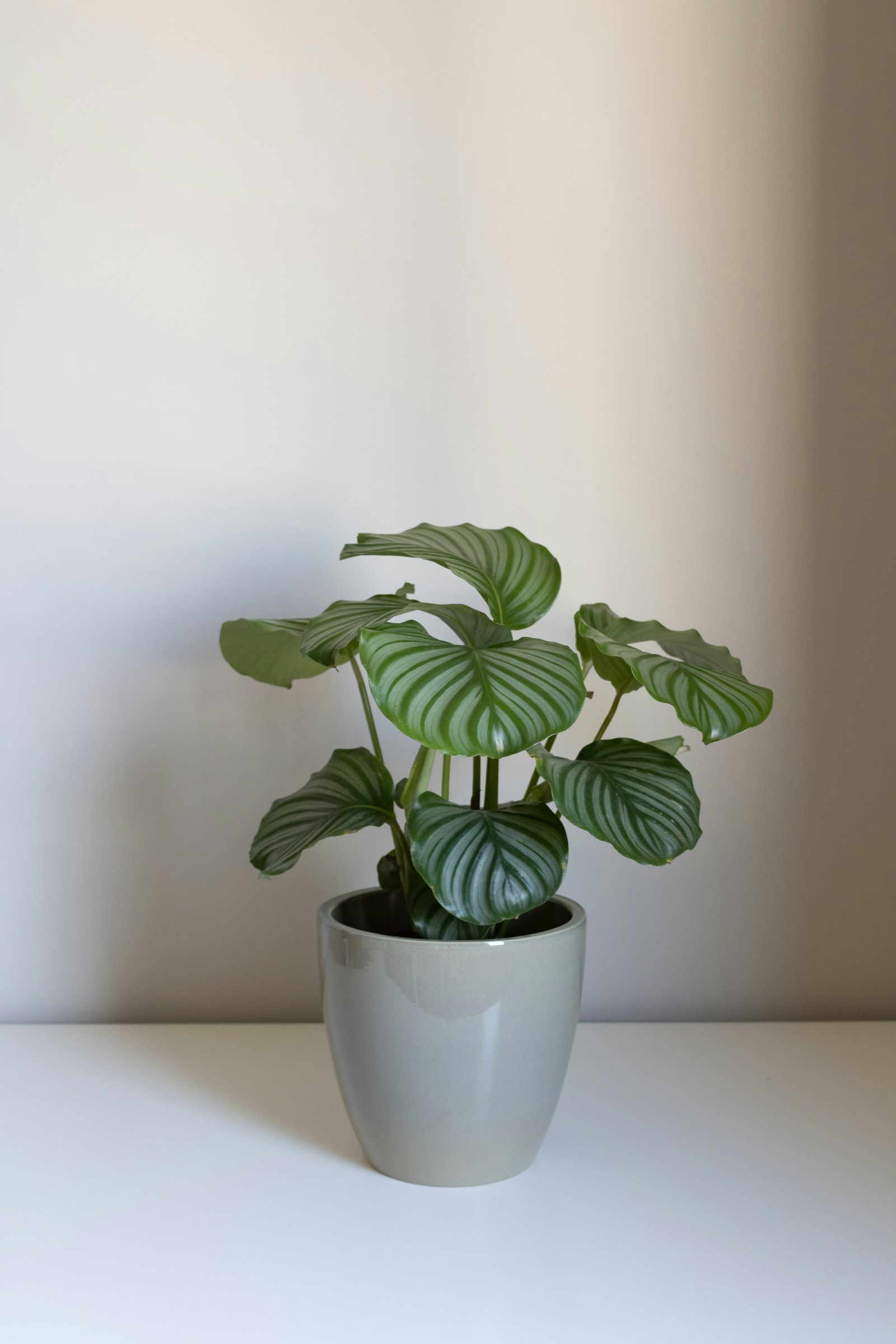
Moving into an apartment with genuinely dry air, the kind where you can feel it on your skin within an hour of the heat kicking on, can leave a calathea’s leaves rolled into tight little tubes within about a week. It’s natural to assume the plant is dying and water it more, which does nothing since the soil isn’t actually the problem. The humidity is. A small humidifier running nearby can let the leaves relax back to flat within days.
Prayer plants (Maranta) and their close relatives, calatheas and ctenanthes, are all in the same family and share the same reputation for being humidity-obsessed in a way that most common houseplants simply aren’t. Curling leaves are close to the signature symptom of this whole plant family being unhappy, and while there are a few different causes, humidity dominates the list more heavily here than with almost any other houseplant category.
One thing worth ruling out before anything else: these plants fold their leaves upward in the evening and open back up in the morning as part of a completely normal daily rhythm called nyctinasty, which is covered more generally in the drooping plants piece. If your leaves curl every evening and look totally normal every morning on a repeating cycle, that’s just the plant doing its thing, not a problem. What follows here is about leaves that stay curled, tightly rolled, or crispy regardless of time of day.
| Symptom pattern | Likely cause |
|---|---|
| Leaves curl inward lengthwise, dry/papery, room air is dry | Low humidity (by far the most common) |
| Curling plus crispy brown edges despite reasonable watering | Water quality |
| Curling concentrated on the window-facing side | Too much light |
| Soil bone dry, plant clearly stressed | Underwatering (usually alongside humidity) |
Low humidity (the main cause for this plant family)
Prayer plants and calatheas are native to tropical forest floors, where humidity regularly sits well above what most homes maintain, especially in winter with heating running. When the air is too dry, these plants curl their leaves inward to reduce the surface area exposed to that dry air, cutting down on water loss through the leaf surface, similar to the logic behind curling in other plants but happening at a noticeably lower humidity threshold than something like a pothos would tolerate.
The tell is that curling develops regardless of how consistently you’re watering, often getting worse specifically during dry stretches like winter heating season, and it tends to affect the whole plant rather than one isolated section. A humidifier running nearby is genuinely the most effective fix for this plant family specifically, more impactful than it would be for most other houseplants. Grouping plants together, using a pebble tray with water beneath the pot, or relocating to a naturally more humid room (bathrooms with good light, for instance) all help too, though a humidifier tends to make the biggest difference if the room is persistently dry.
Water quality sensitivity
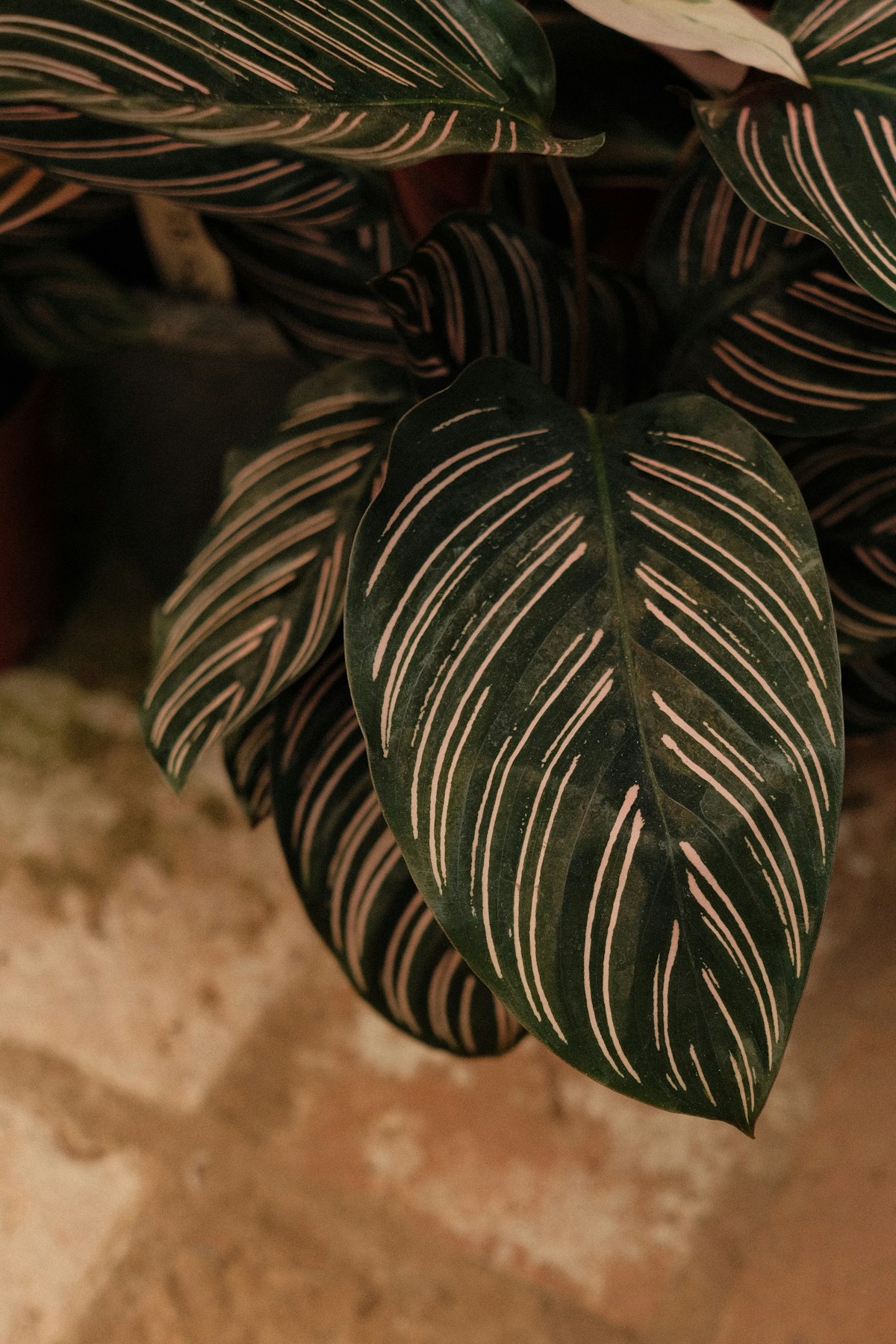
This plant family has a reputation, alongside peace lilies and spider plants, for reacting poorly to the fluoride, chlorine, and mineral content in a lot of tap water supplies, similar to what’s covered in the peace lily piece on the same topic. With prayer plants and calatheas specifically, this sensitivity tends to show up as crispy brown edges combined with curling, rather than curling alone.
If your tips and edges are browning and curling despite otherwise good humidity and watering habits, switching to distilled water, filtered water, or rainwater for a few weeks is worth trying before assuming something else is wrong. It’s a genuinely common culprit with this particular plant family even when every other care detail is right.
Too much direct light
Calatheas and prayer plants are understory plants by nature, adapted to filtered light beneath a forest canopy rather than direct sun, and unfiltered sunlight, especially through south or west-facing glass, stresses the leaves and can cause curling as a defensive response, sometimes along with fading or bleaching of the leaf’s typically bold patterning.
This tends to be worse on whichever side of the plant faces the light source, and it’s often accompanied by some color loss in the leaf pattern, which is a good secondary clue if you’re not sure whether light or humidity is the bigger factor. Moving the plant to bright, indirect light, further from direct sun exposure, resolves it going forward, though the already-affected leaves won’t fully uncurl or regain their color.
Underwatering
Straightforward underwatering causes curling in this plant family too, through the same general water-conservation response most plants show, though in practice it’s rare to see underwatering as the sole cause without low humidity also being a factor, since the two tend to go hand in hand, especially in winter.
Check the soil, and if it’s dry beyond the top inch or so, water thoroughly. These plants generally prefer soil that stays lightly moist rather than fully drying out between waterings, which is a bit different from the drier routine that suits succulent-type houseplants.
A few things people ask
How do I know if it’s nyctinasty or an actual problem? Check it at two different times of day, morning and evening, over a couple of days. If it’s consistently curled in the evening and consistently flat in the morning, that’s normal nyctinasty. If it stays curled regardless of time of day, that’s an actual issue worth addressing.
Will curled leaves flatten back out once I fix the humidity? Sometimes partially, especially if you catch it early, but severely curled or already-crispy leaves usually won’t fully recover their original shape. New growth that emerges after the humidity improves should come in normal, which is really the goal.
Do I really need a humidifier, or can I get away with misting? Misting gives a very brief humidity bump that fades within minutes, so it’s not a reliable long-term fix for a plant this humidity-sensitive. A humidifier, a pebble tray, or grouping plants together all provide more sustained humidity than misting alone.
My calathea’s pattern looks faded, not just curled. Same cause? Often yes, both curling and pattern fading tend to trace back to the same underlying stressors in this plant family, most commonly too much light or persistently low humidity, so it’s worth checking both factors together rather than treating them as separate problems.
For the full rundown on keeping prayer plant happy long-term, light, watering, soil, and humidity, see the Prayer Plant Care Guide. Next reads: Why Are My Calathea Leaves Curling?, Why Are My Heartleaf Philodendron’s Leaves Curling? and Why Are My Croton Leaves Curling?.