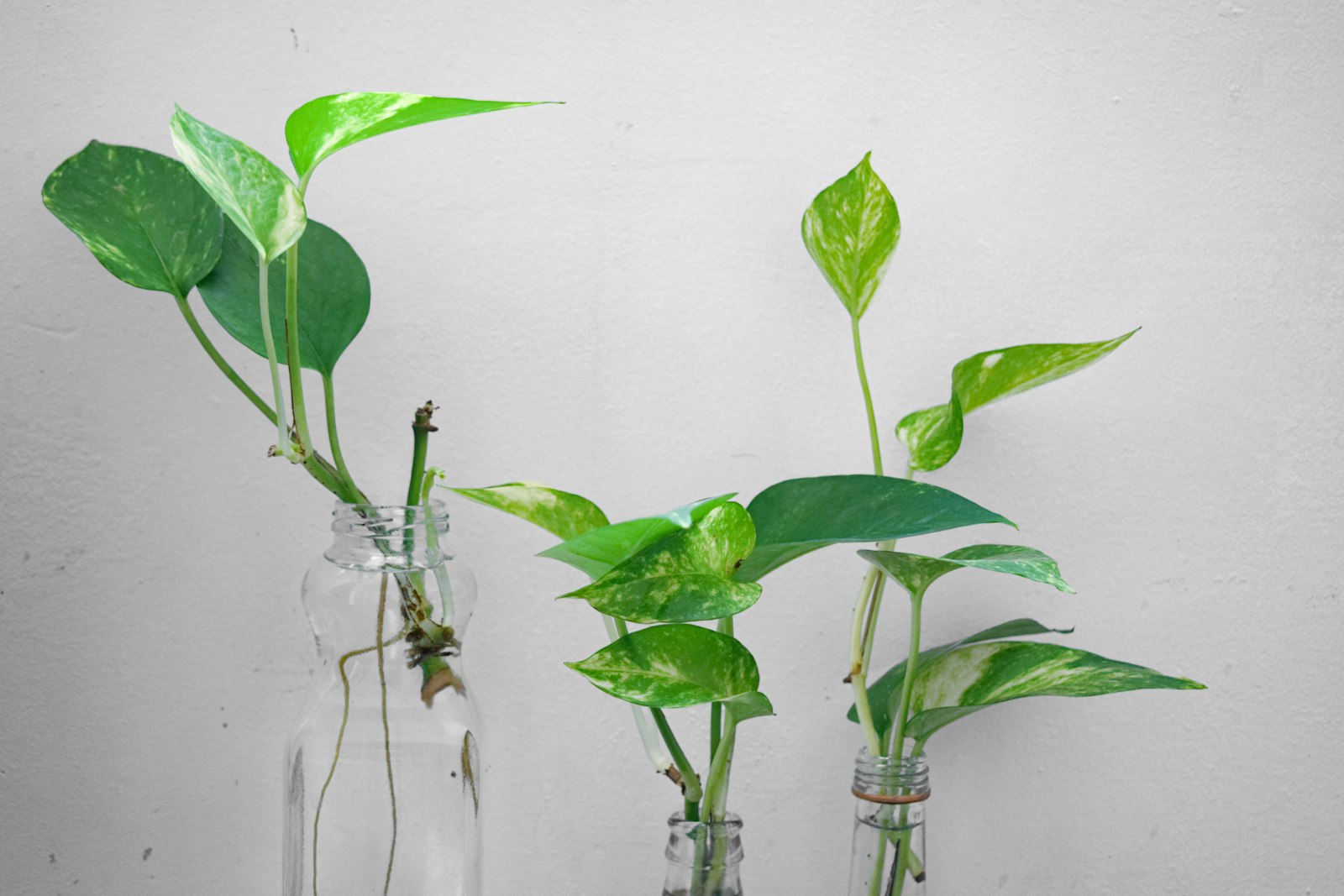
A jar of pothos cuttings on a kitchen windowsill, the classic way to propagate them, can look great for a solid three weeks with nice white roots forming. It’s easy to get a little complacent about changing the water since everything looks fine, and then the roots go dark and slimy and a couple of the cuttings are basically done for. “Looking fine” and “the water being fine” aren’t the same thing — the water needs checking closely, not just glancing at the roots.
Pothos root rot shows up in two pretty different contexts that don’t always get separated clearly: cuttings rotting in a propagation jar, and an established potted plant’s roots rotting in soil. The soil version is the same basic overwatering mechanism covered in the root rot piece and touched on in the pothos yellowing article, so if you’ve got a potted plant with yellowing leaves and wet soil, those cover it. This piece is mostly about the water propagation version, since it’s a genuinely different situation with its own specific causes.
| Symptom pattern | Likely cause |
|---|---|
| Roots gone dark, slimy, or mushy; water cloudy or smells off | Stagnant, unchanged water |
| Roots were healthy for a long time before declining | Left in water too long without potting up |
| Cutting never really took off, declined early | Possibly an already unhealthy parent plant |
Stagnant, unchanged water (the most common cause)
Water sitting in a jar or vase for too long without being changed becomes stagnant, oxygen depleted, and a breeding ground for bacteria, both of which stress and eventually rot the roots forming in it. It’s an easy mistake to make since the setup looks completely passive, just a jar on a windowsill, so there’s no obvious cue to remind you to maintain it the way watering a potted plant does.
The tell is cloudy or discolored water, sometimes with a faint smell, combined with roots that have gone from white or pale to dark, slimy, or mushy. Healthy pothos roots in water should stay a light color and feel firm, not soft.

The fix going forward is simple but needs consistency: change the water every three to five days, using room-temperature water (cold tap water can shock the roots), and rinse the jar itself each time rather than just topping off old water with new. If you catch it early, trim away any dark or mushy root tissue with clean scissors, change to fresh water immediately, and the cutting often recovers. If the rot has reached the stem itself, that particular cutting usually isn’t salvageable, though you can typically take a fresh cutting from healthy growth on the parent plant and start over.
Roots left in water too long without potting up
This one surprises people. Roots that develop in water are structurally adapted to that aquatic environment, thinner and more brittle than the roots the same plant would grow in soil, and if a cutting sits in water for months after it’s already well-rooted, without ever getting potted up, those roots can start to decline on their own, water quality aside, simply because they’ve outgrown what a jar of water can sustainably support long-term.
If you’ve had well-rooted cuttings sitting in water for a long stretch and roots that were previously fine start looking stressed despite regular water changes, it’s worth potting the cutting into soil rather than continuing to wait. Pothos roots transition from water to soil reasonably well if you do it once roots are a couple of inches long, keeping the newly potted cutting’s soil consistently moist (not soggy) for the first couple of weeks to ease the transition, since water roots aren’t yet great at pulling moisture from drier soil the way soil-grown roots are.
A struggling parent plant
Less common, but worth considering if a cutting seems to decline quickly despite good water maintenance. A cutting taken from a parent plant that’s already dealing with disease, pest issues, or general poor health sometimes carries that weakness into the cutting, showing up as poor root development or early rot regardless of how well you’re maintaining the water.
If you’ve ruled out water quality as the cause and a cutting still isn’t thriving, it’s worth checking the parent plant it came from for any signs of its own problems before trying again with a fresh cutting from a healthier part of the plant.
A quick note on soil-based root rot
If you’re dealing with an already-potted pothos rather than cuttings in water, and you’re seeing yellowing leaves along with wet soil, that’s the more familiar soil version of root rot, driven by overwatering rather than water-jar maintenance. The root rot piece covers the full diagnosis and recovery process, including how to check the roots and when repotting into fresh soil is necessary.
A few things people ask
How often should I really be changing propagation water? Every three to five days is a reasonable default, more often if you notice any cloudiness sooner than that. It’s a small enough habit that setting a recurring reminder helps if you tend to forget.
Is tap water bad for propagating pothos? Generally fine for most tap water supplies, though if you’re in an area with notably hard or heavily treated water, filtered or distilled water can reduce mineral buildup in the jar over time. It’s not usually the main driver of rot the way stagnant, unchanged water is.
Can I add anything to the water to prevent rot? Some people use a small amount of activated charcoal in the jar to help keep water cleaner for longer between changes, which can stretch the interval a bit, though it doesn’t replace actually changing the water on a reasonable schedule.
My cutting’s roots look fine but the leaves are yellowing. What’s going on? If the roots themselves look healthy, white, and firm, yellowing leaves on a water propagation cutting are more often related to light or the cutting adjusting to its new situation than to root rot specifically. Check the roots directly before assuming rot is the cause.
For the full rundown on keeping pothos happy long-term, light, watering, soil, and propagation, see the Pothos Care Guide. Next reads: Why Is Your Plant Drooping? (When You’ve Already Ruled Out Water), Overwatered or Underwatered? Here’s the Actual Way to Tell and Why Is My Plant Leggy? What’s Actually Happening and How to Fix It.