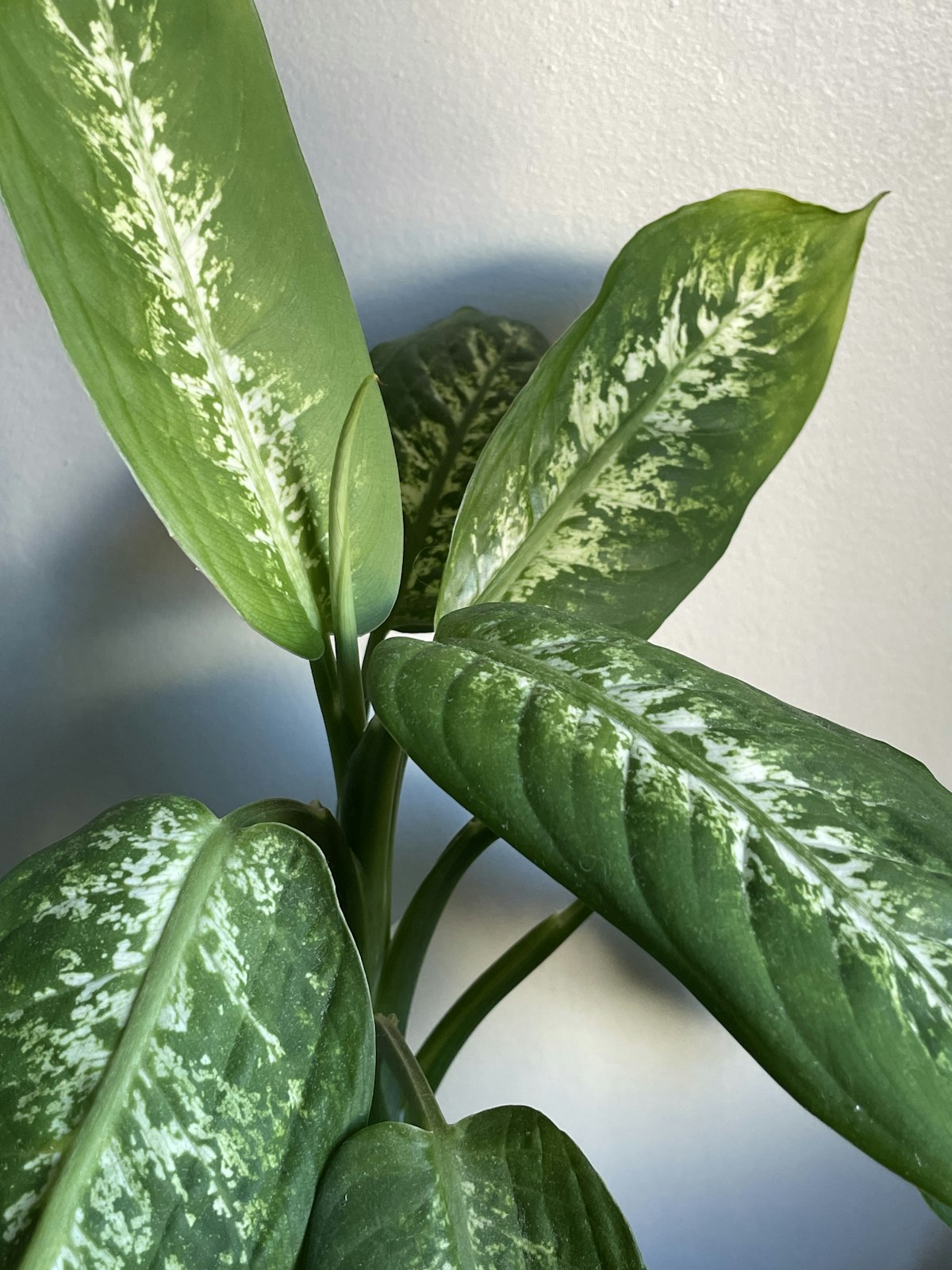
Yellowing from the bottom up soon after getting a dieffenbachia is common, and trimming off a damaged leaf without thinking twice about the sap is an easy mistake. Touching your lips afterward can leave your mouth tingling for the rest of the afternoon — a reminder of exactly why this plant earned the nickname dumb cane: its sap contains calcium oxalate crystals that can cause temporary numbness or swelling if it gets into your mouth. Handling it with a bit more care (gloves, and washing your hands afterward) and fixing the watering, which is usually the real problem, sorts out both issues.
Quick triage
| Symptom pattern | Likely cause |
|---|---|
| Lower leaves yellowing, soil consistently wet | Overwatering |
| Soil bone dry, leaves drooping or crisping at edges | Underwatering |
| Yellowing with pale, washed-out leaves in a very bright spot | Too much direct light |
| Dry air, brown leaf tips | Low humidity |
Overwatering
Consistently wet soil is the most common cause of yellowing on dieffenbachia, usually starting with the lower, older leaves first and sometimes paired with a soft or mushy stem. Letting the top inch or two of soil dry out between waterings prevents this, and cutting back on watering frequency once yellowing starts usually stops it from spreading to healthy leaves. If the base feels soft or mushy, root rot is worth checking for directly.
Underwatering
Letting the soil dry out completely and stay that way causes leaves to droop and crisp at the edges, sometimes yellowing before they eventually brown. A thorough watering typically restores firmness within a day, though badly crisped edges won’t fully recover their original look.
Too much direct light
Dieffenbachia prefers bright, indirect light, direct sun for extended periods can bleach the leaves pale and washed-out, sometimes with a yellowish cast that’s easy to mistake for a watering problem. Moving the plant a few feet back from a bright window, or filtering the light with a sheer curtain, usually resolves this within a few weeks of new growth.
Low humidity
Dry indoor air, especially during winter heating season, can cause crispy brown leaf tips and edges even when watering is otherwise consistent. A humidifier running nearby helps more than misting, which only raises humidity briefly.

A few things people ask
Why is dieffenbachia called dumb cane? Its sap contains calcium oxalate crystals that can cause painful swelling and temporary numbness of the mouth and tongue if chewed, historically making it difficult for a person to speak, hence the name. Always wash your hands after pruning or handling damaged leaves.
Is dieffenbachia toxic to pets? Yes, it’s considered toxic to cats and dogs for the same reason it’s risky for people, keep it well out of reach of curious pets.
Should I remove yellow leaves? Once a leaf has fully yellowed, removing it is fine and lets the plant focus energy on healthy growth, wear gloves or wash your hands afterward given the sap.
Why does my dieffenbachia look leggy with bare lower stems? This is common in lower light or as the plant ages, older lower leaves naturally drop while new growth concentrates at the top, cutting the stem back encourages bushier new growth from lower nodes if you want a fuller shape.
For a full rundown of light, watering, soil, and propagating from cane cuttings, see our dieffenbachia care guide. Next reads: Why Is My Snake Plant Turning Yellow?, Why Is My ZZ Plant Turning Yellow? and Why Are My Ti Plant Leaves Turning Brown?.