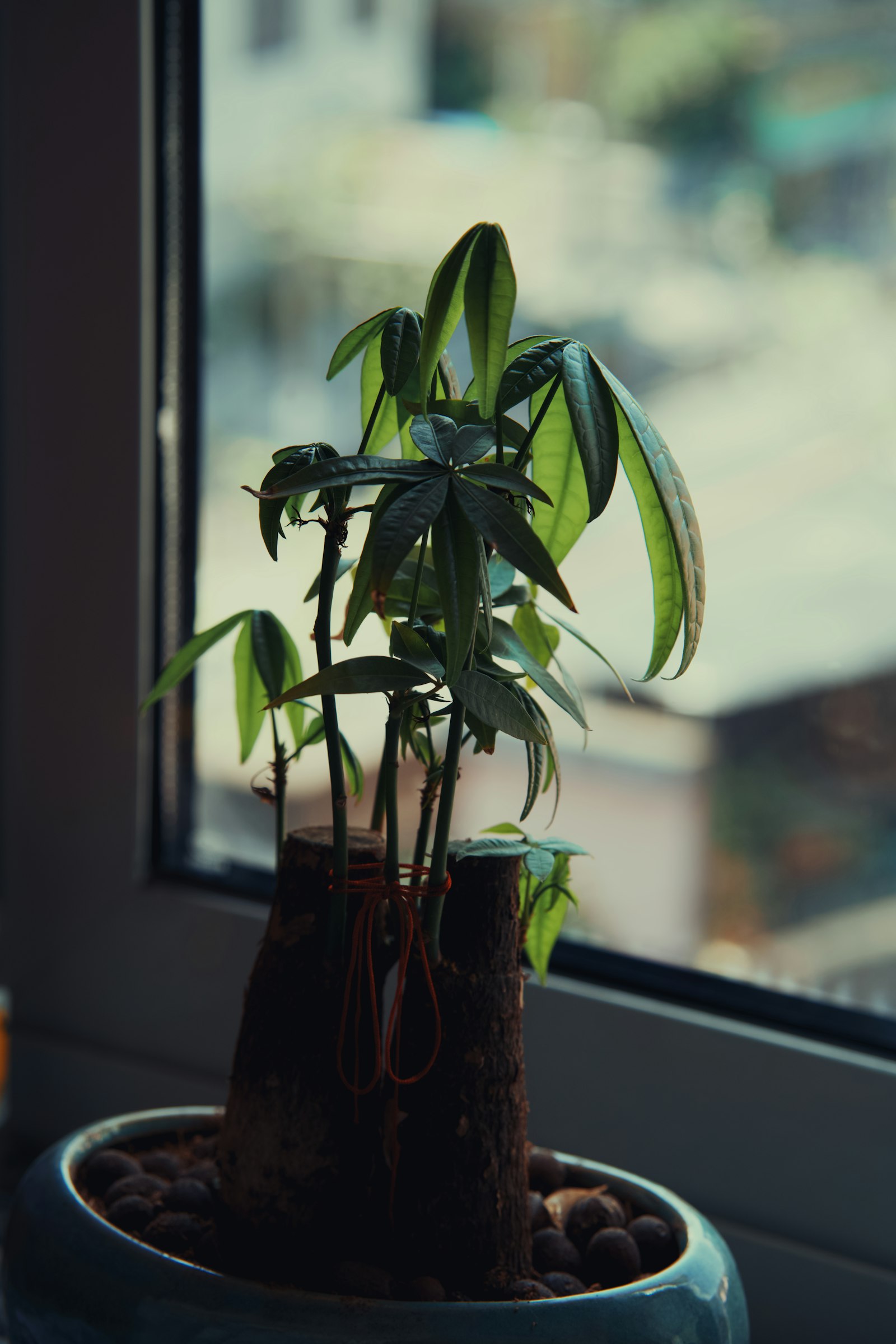
It’s easy to assume a money tree is some kind of succulent the first time you see that thick, braided trunk, and to water it accordingly, barely at all. The leaves start drooping within weeks, which reads as confirmation of overwatering, so watering gets backed off even further. The trunk isn’t a water-storage organ the way a cactus stem is — this plant actually wants fairly consistent moisture (though never soggy), the opposite of what its appearance suggests.
Light
Bright, indirect light works best, a spot near an east or north-facing window is usually ideal. Money tree tolerates medium light reasonably well, but growth slows and the plant can get leggy over time. Direct sun, especially through unfiltered south or west windows, can scorch the leaves.
Watering
Let the top inch or two of soil dry out between waterings, then water thoroughly. Despite the thick, swollen-looking trunk, this plant is not particularly drought tolerant and wants more consistent moisture than its succulent-adjacent appearance suggests. That said, it’s still genuinely sensitive to overwatering, soggy soil causes root and trunk rot, so the goal is consistency rather than either extreme.
If you’re seeing curling leaves, working through the specific cause is worth doing rather than assuming this plant needs desert-cactus-style care, that misconception is one of the most common reasons people run into trouble with it. If the trunk feels soft or mushy, root rot is worth checking for.
Soil and potting
A well-draining potting mix works well. Make sure the pot has drainage holes. Money tree grows at a moderate pace and typically needs repotting every one to two years, or when roots are visibly circling the bottom of the pot.
Humidity and temperature
This plant is native to wetland areas of Central and South America — the New York Botanical Garden notes it comes from tropical wetlands in Central and South America — and appreciates above-average humidity, though it tolerates typical household air reasonably well once established. A humidifier or pebble tray helps in dry climates. Normal indoor temperatures work well, and it doesn’t tolerate cold drafts.
Fertilizing
A balanced liquid fertilizer, diluted to about half strength, once a month during spring and summer supports healthy growth. Money tree is a moderate feeder, reduce or stop fertilizing in fall and winter when growth naturally slows.
Propagation
Stem cuttings root reasonably well in water or moist soil. Take a cutting with at least one node, remove the lower leaves, and place it in water until roots develop, or directly into slightly moist soil. This plant is typically grown from seed or cuttings commercially rather than propagated at home, so home propagation tends to be slower and less predictable than with some of the faster-growing plants in this guide series.

About the braided trunk
The braided trunk seen on most nursery-grown money trees isn’t a natural growth habit, it’s created by weaving together several young, flexible stems while the plant is small, then letting them fuse and thicken together as they mature. Once mature and woody, the braid is permanent and doesn’t need any maintenance. In cultures where this plant is popular as a gift, particularly in feng shui practice, it’s associated with good fortune and prosperity, which is part of where the common name comes from, along with the plant’s history of being cultivated as a cash crop for its edible seeds in its native range.
Common problems
Curling leaves are the most frequent concern, and overwatering from mistaken succulent-style care is a common underlying cause, alongside underwatering and normal transplant stress. If the trunk feels soft or mushy, root rot is worth checking for.
A few things people ask
Is money tree toxic to pets? No, the ASPCA lists money tree as non-toxic to cats and dogs, making it one of the safer choices in this guide series for households with curious pets.
Why does my money tree have five leaflets per stem? This is the plant’s natural leaf structure, called palmate compound leaves, five leaflets radiating from a central point like fingers on a hand. It’s considered a lucky number in some traditions associated with this plant, and it’s simply how the foliage normally grows.
Is it really a succulent? No, despite the swollen-looking trunk, money tree isn’t a true succulent and doesn’t store water the way a cactus or jade plant does. Treating it like a low-water desert plant is one of the most common care mistakes people make with it.
Why is my plant dropping leaves? Occasional leaf drop, especially older lower leaves, can be normal, but sudden or widespread drop usually points to a watering inconsistency, either direction, or a recent change in environment like a move or repotting. Next reads: Ming Aralia Care Guide: Light, Water, and Finding a Permanent Spot, Bird of Paradise Care Guide: Light, Water, and Growing It Indoors and Ficus Care Guide: Fiddle Leaf Fig, Rubber Plant, and Weeping Fig.