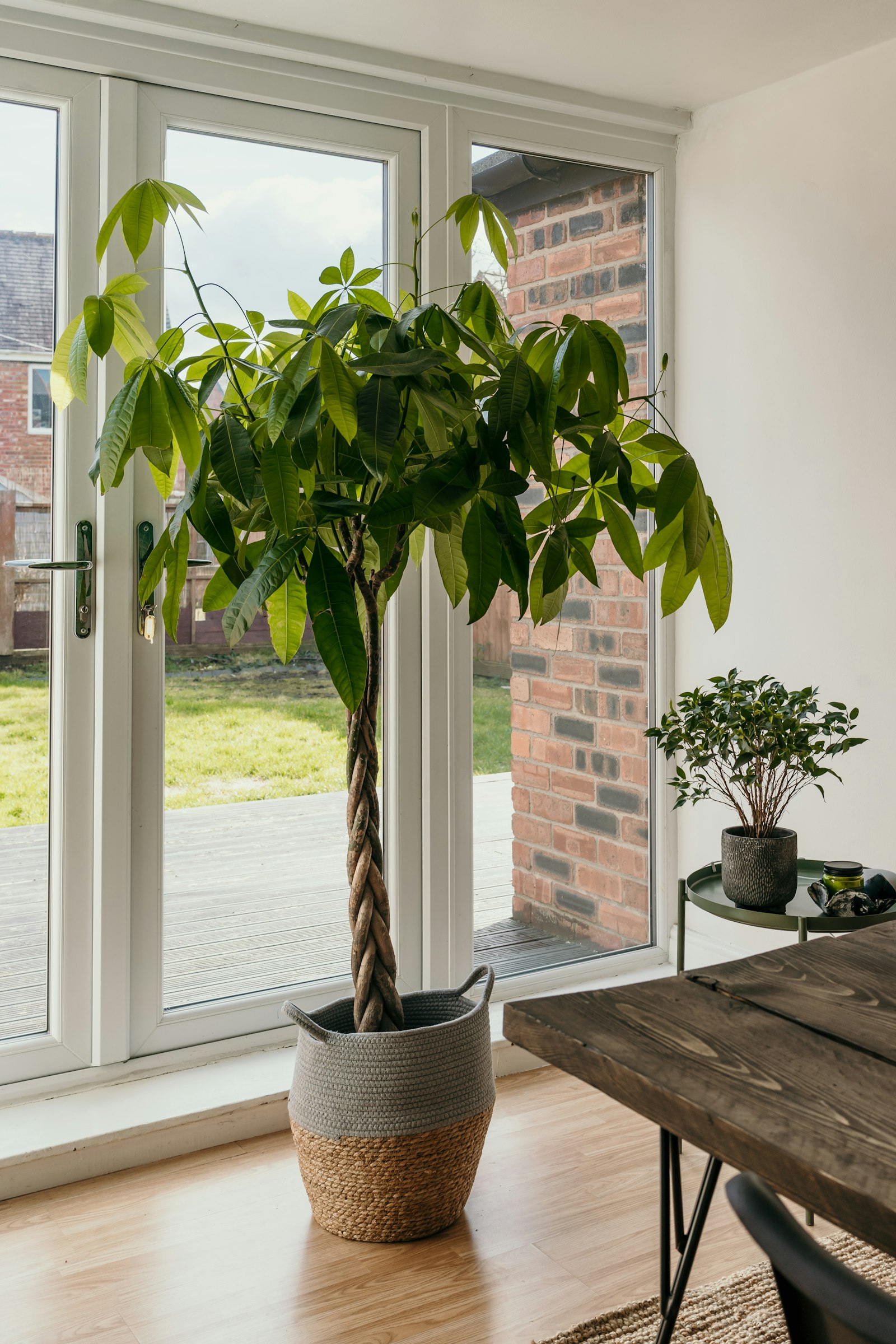
A money tree’s thick braided trunk makes it easy to assume, incorrectly, that it stores water the way a succulent does and can be watered on a similarly relaxed schedule. Keeping it on a stingy watering routine at first out of caution, then overcorrecting once it isn’t thriving and watering more generously without really checking the soil first, is a common pattern. Leaves start curling and a few go a bit yellow before the actual problem becomes clear: the soil staying wet for too long between waterings, not too little water overall.
Money trees (Pachira aquatica) get lumped in with succulents and cacti more than they should, mostly because of that swollen, braided trunk, but they’re not drought plants, and that mistaken assumption is part of why overwatering ends up being the most common cause of curling leaves with this species specifically, more so than with a lot of other common houseplants where underwatering and overwatering show up roughly equally often.
| What you see | Likely cause |
|---|---|
| Soil wet for days, curling leaves feel soft, maybe yellowing | Overwatering (most likely) |
| Soil bone dry, curling leaves feel crispy/dry | Underwatering |
| Dim spot, curling with leggy/sparse growth | Low light |
| Curling right after a move, repot, or cold snap | Stress response (usually temporary) |
Overwatering (the most common cause with this species)
Because of the trunk’s water-storing appearance, a lot of money tree owners either underwater it out of mistaken succulent logic, or swing the other way and overwater once they realize the plant isn’t a true succulent, without settling into the actual watering rhythm it needs, which is closer to a typical tropical houseplant, water when the top couple inches of soil have dried out, not on a rigid schedule either direction.
Consistently wet soil leads to root stress and eventually root rot, similar to the mechanism covered in the root rot piece, and curling combined with soft leaf texture, sometimes with a bit of yellowing at the edges, is usually the tell here rather than crispy curling. The trunk itself can also start to feel soft near the soil line if overwatering has gone on long enough to affect it, which is a stronger signal than the leaves alone.
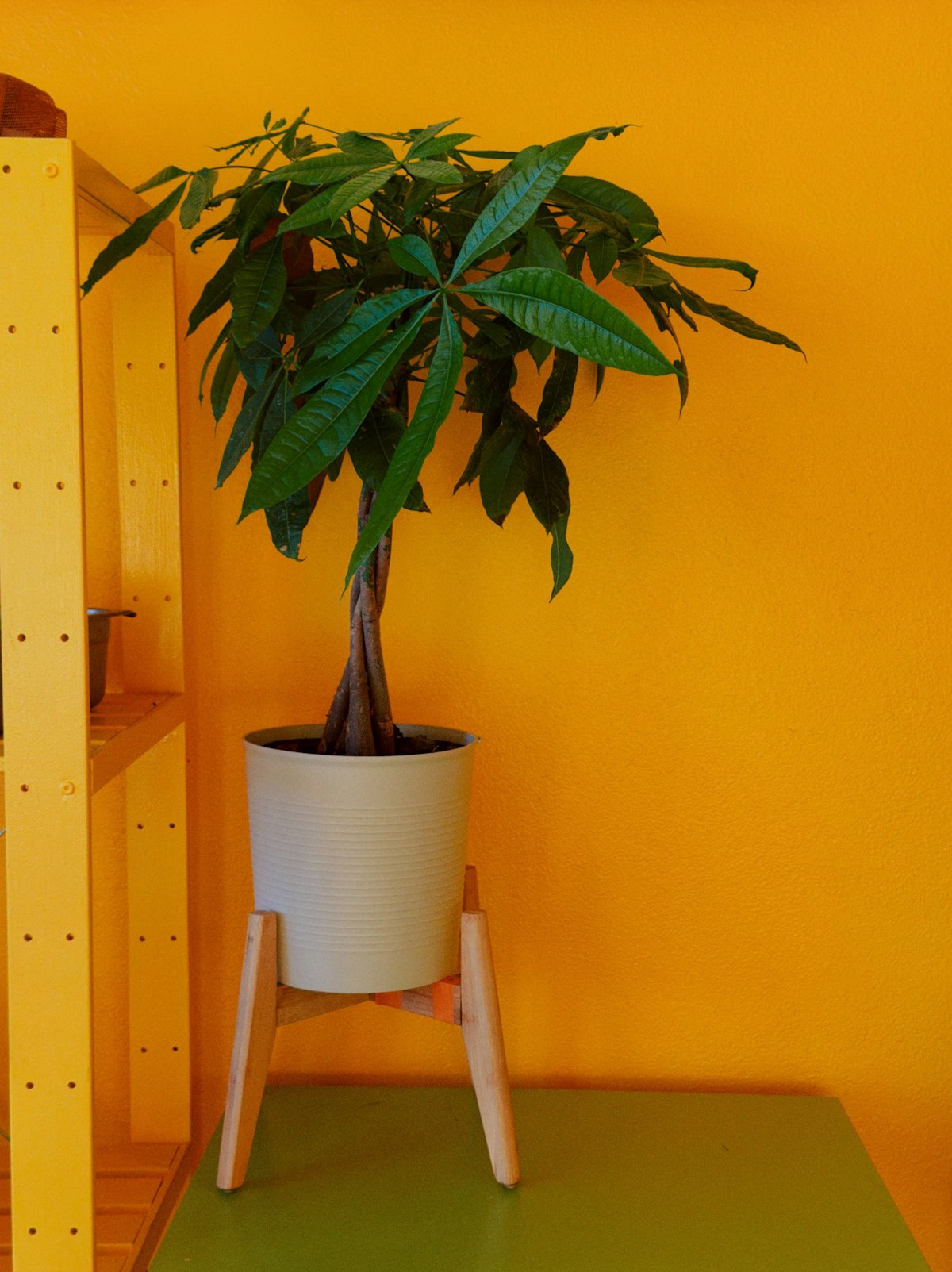
If this matches what you’re seeing, let the soil dry out more fully between waterings going forward, checking with a finger a couple inches down rather than watering on autopilot. If the trunk near the base feels soft or the soil has an off smell, it’s worth checking the roots for the dark, mushy tissue that indicates rot has already set in, and trimming that back to healthy tissue if so.
Underwatering
Less common than overwatering with this species specifically, but it happens, usually when someone leans too far into the mistaken “it’s basically a succulent” assumption and waters too sparingly. Underwatered curling tends to feel drier and slightly crispy at the edges rather than soft, and the soil will be dry well below the surface rather than just at the top.
A thorough watering, then settling into a routine based on actually checking the soil rather than a fixed interval, should resolve this. The broader mechanics of telling over- and underwatering apart are covered in more depth in the overwatered vs underwatered piece, if you want the general framework.
Low light
Money trees tolerate moderate light reasonably well but do best in bright, indirect light, and a plant kept in a consistently dim spot can develop curling leaves along with the sparser, leggier growth pattern that shows up when a plant is stretching for more light than it’s getting.
This tends to develop gradually rather than suddenly, and it’s usually accompanied by longer gaps between leaves along the stem, not just curling in isolation. Moving the plant to a brighter spot, still out of harsh direct sun, which can scorch the leaves, generally resolves it over time, though it won’t reverse growth that’s already happened.
Transplant, cold, or general stress
Money trees can curl their leaves temporarily after being repotted, moved to a new location, or exposed to a cold draft or sudden temperature swing, similar to stress responses seen in other houseplants. This is usually short-lived and resolves as the plant adjusts, without needing anything beyond keeping care consistent and avoiding compounding the stress with an unrelated care change at the same time.
If curling started right around a specific event like a move or a cold night, and watering checks out fine either direction, this is probably just the plant adjusting, and it should ease up within a couple of weeks.
A few things people ask
Is it true money trees don’t need much water because of the trunk? No, that’s a common misconception based on how the trunk looks. Money trees want their soil to dry out somewhat between waterings, similar to many other tropical houseplants, not the extended dry-outs a true succulent needs.
My money tree’s trunk feels a little soft. Is that always root rot? Not always, but it’s worth investigating rather than ignoring, especially if it’s paired with wet soil or curling, yellowing leaves. Check the roots if you can, and let the soil dry out fully regardless while you assess.
Should I mist my money tree to help with curling? Misting doesn’t address either of the main causes, watering habits or light, so it’s not likely to fix curling on its own. It’s fine as a minor humidity boost but shouldn’t be relied on as the actual fix.
How long does it take curled leaves to look normal again? Existing curled leaves usually don’t flatten back out fully, but new growth that emerges after the underlying cause is corrected should come in normal, which is the better sign to watch for rather than expecting already-curled leaves to recover.
For the full rundown on keeping money tree happy long-term, light, watering, soil, and the braided trunk, see the Money Tree Care Guide. Next reads: Why Are My Croton Leaves Curling?, Why Are My Rubber Plant’s Leaves Drooping? and Why Is My Ficus Losing Its Leaves?.