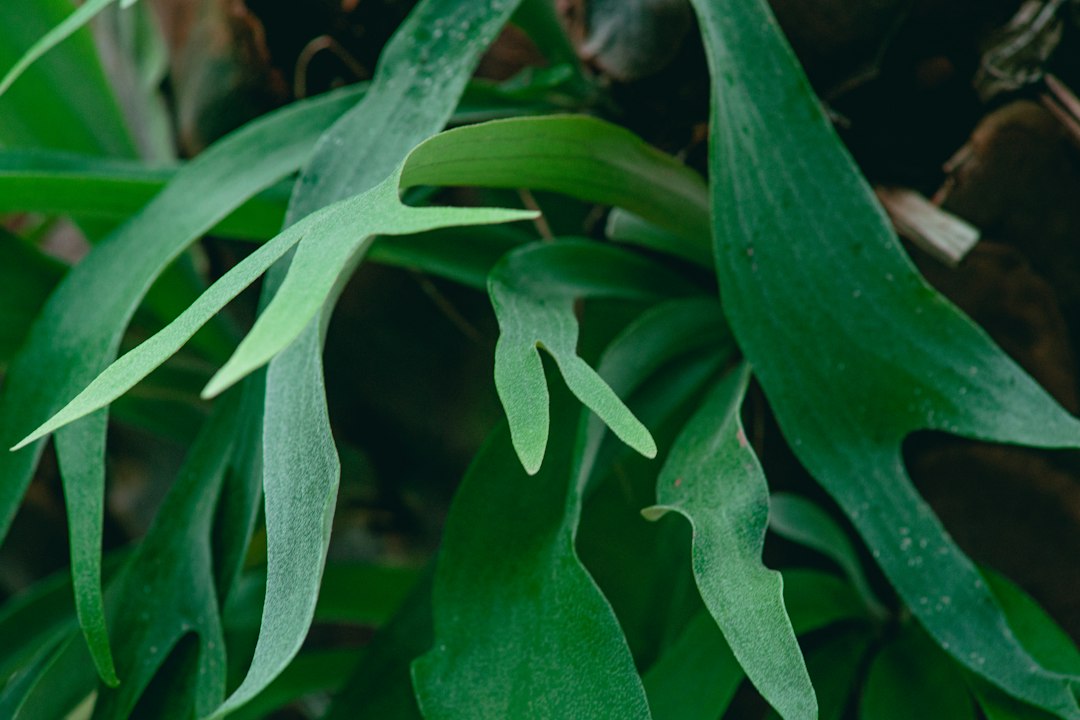
A staghorn fern on a board above the bathroom door is the kind of plant guests ask about every single time. It looks like a set of green antlers growing out of the wall. It can also be watered in the shower, which is either the laziest or the smartest plant routine there is.
Staghorns have a reputation for being tricky, but most of the trouble comes from treating them like a normal potted plant. They are not. In the wild they grow on tree trunks, clinging to bark with no soil at all, and once you care for them with that in mind, they are honestly pretty easygoing. This guide covers the common staghorn, Platycerium bifurcatum, which is the one you will find at nearly every garden center.
Quick reference
| Light | Bright, indirect. A few feet from an east window is ideal. |
| Water | Soak the whole mount when the moss is dry, roughly every 1–3 weeks |
| Growing medium | Sphagnum moss on a board, or a very chunky orchid-style mix |
| Humidity | 50% or higher preferred; bathrooms are great |
| Temperature | 60–80°F; keep above 50°F |
| Feeding | Weak balanced fertilizer monthly in spring and summer |
| Pets | Generally considered non-toxic to cats and dogs |
Light
Think dappled light under a tree. Bright, indirect light keeps the antler fronds full and forked; too little light gives you long, narrow, floppy fronds with fewer forks, and too much direct afternoon sun bleaches and scorches them. An east-facing window, or a few feet back from a south or west window, works well. Even a spot that gets light from a frosted window across the room can be plenty.
If your staghorn spends summer outdoors, keep it in shade or under a covered porch. Hanging it in open sun is the fastest way to brown, crispy patches.
Watering
This is the part that changes everything. Because a mounted staghorn has only a small pad of moss behind it, a splash from a watering can mostly runs off the board. The reliable method is soaking: take the mount down, set it face-down or sideways in a sink or bucket of room-temperature water, and leave it for 10 to 20 minutes. Let it drip completely before hanging it back up, so it is not leaking down your wall.
When to soak again? Feel the moss behind the shield frond and lift the plant. If the moss is dry and the whole thing feels noticeably lighter, it is time. In a warm summer that might be weekly; in a cool winter it could be every two or three weeks. The fronds will also go slightly soft and limp when the plant is thirsty. Let it dry out between soakings — staghorns tolerate being a bit dry much better than they tolerate staying wet.
Misting is nice for humidity, but do not count it as watering. It never reaches the roots.
Soil and potting
You can grow a staghorn in a pot, and many young ones are sold that way. If you do, skip regular potting soil entirely. Use a loose, airy mix like orchid bark with sphagnum moss, in a pot with good drainage, and expect the plant to eventually start creeping over the edge and wrapping its shield around the rim. Hanging wire baskets lined with moss also work well.
Long term, though, most staghorns are happiest mounted. See the section below on how to do that.
Humidity and temperature
Staghorns like humidity around 50 percent or more, but common P. bifurcatum handles normal household air reasonably well as long as it is watered properly. Bathrooms and kitchens are great spots. If your home is very dry in winter, a humidifier nearby makes a visible difference in how crisp the frond tips stay.
Keep it between roughly 60 and 80°F. It can handle brief dips into the 40s outdoors, but anything near freezing damages fronds, so bring it in well before the first frost.
Fertilizing
Feed once a month in spring and summer with a balanced liquid fertilizer at half strength or weaker. The easiest way is to add it to the soaking water every other soak. Skip feeding in fall and winter.
You will probably hear the old tip about tucking a banana peel behind the shield. It does add a bit of potassium as it breaks down, but it is slow, messy, and a reliable way to get fruit flies indoors. A diluted liquid fertilizer does the same job more cleanly.
Propagation
Mature staghorns produce pups — small offset plants that pop up around the edges of the main plant, each with its own little shield. Once a pup has a few fronds and is a few inches across, you can gently separate it with a clean knife, taking some roots and moss with it, and mount it on its own small board. Spring is the best time.
Staghorns also make spores (the brown, suede-like patches under the antler tips), and you can technically grow new plants from them. It is slow and fiddly, measured in many months, so for most people pups are the way to go. You cannot propagate a staghorn from a cut frond.
Mounting a staghorn, and why the brown shield stays
The thing that makes staghorns unlike almost any other houseplant is the shield frond — the flat, round frond at the base. It is not decoration. On a tree, those shields grow over and around the bark, trapping falling leaves and rain. The old shields turn brown and papery, a new green one grows over them, and the layers slowly become a moisture-holding, self-composting pad for the roots. That is why you never peel or trim a brown shield. It is doing exactly what it is supposed to.
Mounting simply recreates that setup. Here is how to do it:
- Pick a board. Untreated cedar or another rot-resistant wood, or a slab of cork bark, a bit larger than the plant. Add a hanging hook or wire to the back first.
- Make a moss mound. Soak a good handful of sphagnum moss, squeeze it out, and form a mound in the middle of the board.
- Set the plant. Remove most of the old potting mix from the roots and press the root ball into the moss, with the shield frond flat against the board and the growing point facing out. Add more moss around the edges.
- Tie it down. Wrap fishing line or plastic-coated wire around the plant and board in a crisscross pattern, going over the moss and shield but not over the antler fronds or the growing center. Do not use copper wire, which is toxic to plants.
- Be patient. Over the next season or two, new shield fronds grow over the ties and grip the board on their own. Eventually you will not be able to see the line at all.
Give a newly mounted fern a good soak and keep it out of direct sun for a couple of weeks while it settles.
Common problems
Brown fronds are by far the most common worry, and most of the time it is the shield doing its normal thing. When it is not — dryness, rot at the base, sunburn, or scale insects — the fixes are usually simple. The full breakdown is in Why Is My Staghorn Fern Turning Brown?, which walks through how to tell each cause apart.
If you like epiphytic ferns, the bird’s nest fern is a good next plant; it has a similar habit of collecting debris in its center, but grows happily in a pot.
FAQ
Is a staghorn fern safe for cats and dogs?
Staghorn ferns are generally considered non-toxic to cats and dogs. Even so, a cat chewing on the fronds is not good for the plant, so hanging it up high is a good idea anyway.
How fast does a staghorn fern grow?
Slowly to moderately. Expect a few new antler fronds and a new shield frond or two per year indoors. With good light and regular feeding, a plant can double in width over a few years.
Can I keep my staghorn fern in a pot permanently?
Yes, as long as the mix is very loose and drains fast. Over time it may outgrow the pot shape and start climbing out, which is usually the sign it is ready to be mounted.
Why are the new antler fronds long and narrow?
Usually not enough light. Staghorns grown in dim spots produce longer, skinnier fronds with fewer forks. Move it to a brighter spot (but out of harsh direct sun) and the next fronds should come in wider. Next reads: Bromeliad Care Guide: Light, Water, and Raising the Pups, Asparagus Fern Care Guide: Light, Water, and the Tubers Underneath and Boston Fern Care Guide: Light, Water, and Humidity.