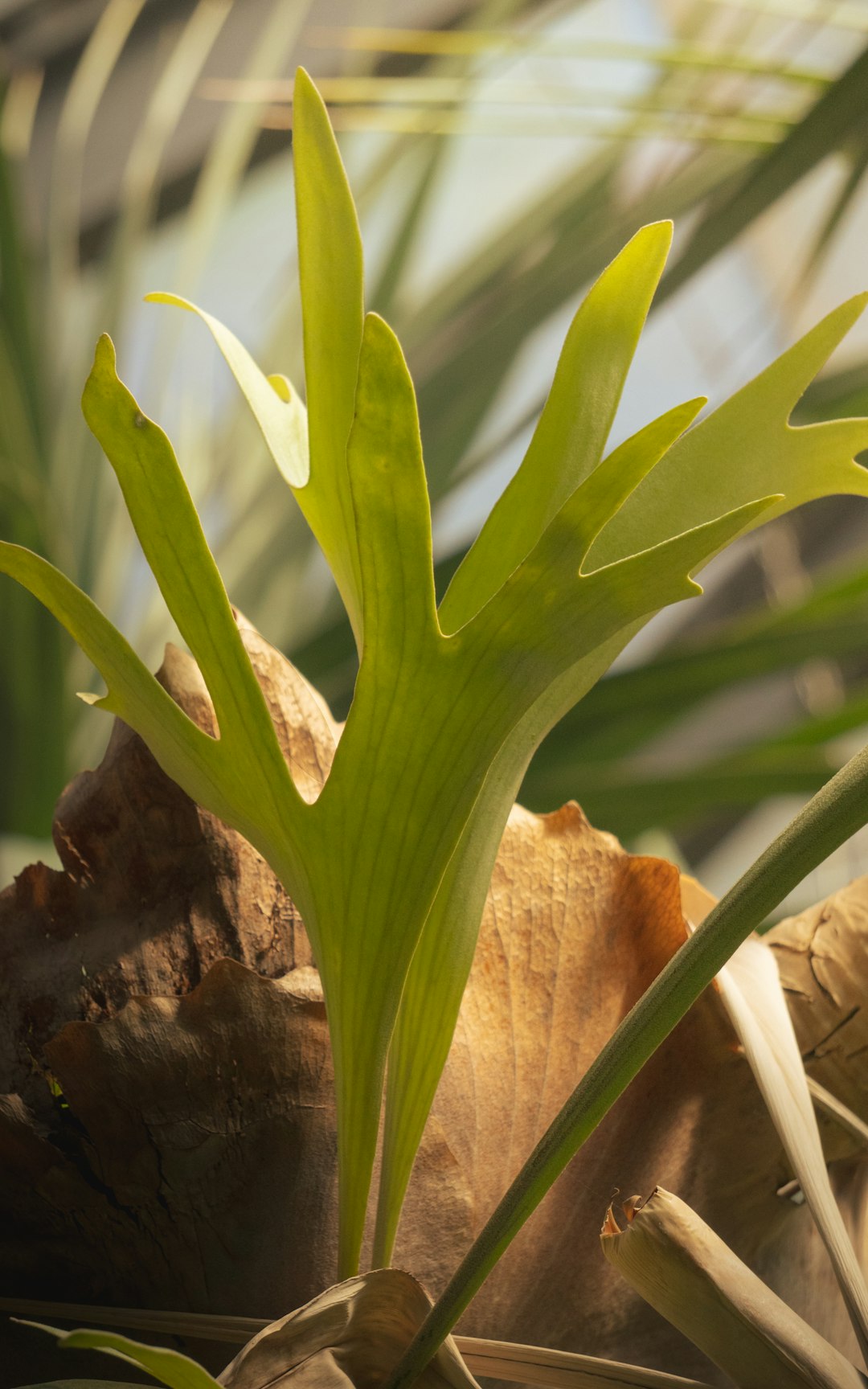
A staghorn fern that comes on a little cedar plank from a garage sale can nearly be killed within a month by trying to fix something that was not broken. The flat, round frond hugging the board goes brown and papery, like a dead leaf glued to the wood. It’s easy to assume it is rotting, peel the edge up to look underneath, decide it is “dead tissue,” and trim a chunk of it off with kitchen scissors.
That brown frond is the plant’s anchor, its water sponge, and its compost bin all at once. It is supposed to look like that. A fern cut that way sulks for the rest of the summer, and the lesson is that with staghorns, “brown” means about five different things — and only some of them are problems.
So before you cut anything, let’s sort out which brown you are looking at.
Quick triage
Answer these in order. Most people find their answer by question two or three.
- Is the brown part the flat, round frond pressed against the mount or pot? If it is dry, papery, and tan, that is almost always normal aging of the shield frond. Leave it alone.
- Is the brown on the underside of the antler-shaped fronds, near the tips, and does it look like suede or felt? Those are spores. Also normal.
- Are there small, raised, oval brown bumps scattered along the fronds that you can pop off with a fingernail? That is scale insects, not spores.
- Is the brown or black at the very base of the fronds, and does it feel soft or smell sour? That points to rot from staying wet too long. This is the urgent one.
- Are the antler tips crispy and brown, with fronds that feel limp or thin? The plant is too dry — either not enough water or not enough humidity.
- Are there pale, bleached, or scorched patches on the side facing a window? Too much direct sun.
1. The shield frond is browning (this is normal)
Staghorn ferns grow two completely different kinds of fronds. The antler fronds are the green, forked ones that stick out and get all the attention. The shield fronds (sometimes called basal or sterile fronds) are the round, flat ones that wrap around the base of the plant and clamp onto whatever it is growing on.
Shield fronds start out green and a little fleshy. Over a season or two they turn tan, then brown, then thin and papery. Then a fresh green shield grows over the top of the old one, and the cycle repeats. In the wild, those layers trap fallen leaves and rainwater, and the old brown shields slowly break down into the plant’s own food supply. On a mount at home they still do a useful job: they hold moisture against the roots and protect the growing point.
What to do: nothing. Do not peel it, trim it, or try to “clean up” the plant. The only time a brown shield is a concern is if it is soft, black, or mushy rather than dry and papery — that is cause number four below.
2. Brown fuzz under the antler tips: spores, or scale?
Once a staghorn is mature, the undersides of its antler fronds develop velvety brown patches near the tips. These are spore-bearing areas, and they are a sign of a healthy, grown-up plant. They feel soft, they spread as a continuous patch rather than as separate dots, and they only show up on the undersides near the ends of the fronds.
Scale insects look different once you know what to check for. They are individual raised bumps, usually oval, often tan to brown, and they can appear anywhere — along the middle of a frond, on the top surface, near the base. If you can flick one off with a fingernail and there is a tiny insect body underneath, it is scale. You may also see sticky honeydew or sooty black mold nearby.
What to do about scale: pick off what you can by hand, then dab the rest with a cotton swab dipped in rubbing alcohol. Be gentle — staghorn fronds are covered in a fine layer of whitish hairs that help the plant hold moisture and reflect harsh light, and scrubbing or wiping the fronds strips that coating. Avoid oil-based sprays on staghorns, because they can damage those hairs and the frond surface. Check again every week for a month, since eggs hatch in waves.
3. Crispy brown tips and limp fronds: too dry
This is the most common real problem, especially on mounted plants. A staghorn on a board has a small pocket of moss to hold water, and that pocket dries out far faster than soil in a pot. Indoors in winter, with the heat running, it can go bone dry in a few days.
The signs are antler frond tips turning brown and crispy, fronds that feel thin and floppy instead of firm, and a mount that feels light when you lift it. Misting alone usually does not fix this. It wets the surface hairs for a few minutes and evaporates long before it reaches the roots.
What to do: take the whole mount down and soak it, plant and board together, in a sink or bucket of room-temperature water for 10 to 20 minutes. Let it drip until it stops, then hang it back up. Repeat whenever the moss behind the shield feels dry and the plant feels light — for most homes that is somewhere between once a week in summer and once every two or three weeks in winter. A humidifier nearby helps a lot if your air sits below about 40 percent. The brown tips will not turn green again, but new fronds should come in healthy.
4. Black, soft base: rot from staying wet
This is the opposite problem, and it is the one that actually kills staghorns. If the plant stays soggy for days at a time — usually because it is potted in regular soil, mounted on something that never drains, or soaked again before it dried — the tissue at the base of the fronds can start to rot. You will see dark brown to black areas where the fronds meet the center of the plant, sometimes a mushy feel, sometimes a sour smell. The antler fronds may yellow, droop, and fall away.
What to do: stop watering and let the plant dry out more than you think it needs. Move it somewhere with better airflow. If it is in a pot of dense soil, move it into a loose, chunky mix (orchid bark and sphagnum works well) or onto a mount. Cut away any clearly mushy antler fronds with clean scissors, but do not hack at the shield. If the center growing point is still firm and you see a new frond starting, there is a good chance it will recover. If the center itself has gone soft, the main plant may be lost — check for any pups (small offset plants) around the edges, since those can sometimes be saved. The general advice in our root rot guide applies here too, and if you are not sure which side of the line you are on, the overwatered vs. underwatered breakdown walks through the difference.
5. Bleached or scorched patches: too much sun
Staghorns like bright light, but they grow under tree canopies in nature, not out in the open. Hanging one in an unshaded south or west window, or moving it outdoors for summer without easing it in, can burn the antler fronds. Sunburn looks like pale, washed-out, or yellow-white patches that later turn brown and dry, almost always on the side facing the light.
What to do: move the plant back a few feet from the window or behind a sheer curtain. The burned patches stay, but the plant will grow past them. If you take it outdoors for summer, start it in full shade for a week or two before giving it any morning sun.
A few things people ask
Should I cut off the brown shield fronds?
No. Even fully brown and papery, they are protecting the roots and holding moisture. The only exception is if a section is rotting and black — and even then, be cautious, because the living growing point sits right behind those layers.
Can I wipe the dust off my staghorn fern?
Not the way you would wipe a rubber plant. The silvery-white fuzz on the fronds is part of the plant, and rubbing it off leaves the frond more exposed to drying out. A gentle rinse under the tap or a soft brush is fine if it is really dusty.
Is the brown felt under the fronds a fungus?
Almost certainly not, if it is on the undersides near the tips and feels like suede. That is where staghorns make spores. Fungal spots usually show up as distinct dark spots, often with yellow halos, and they can appear on the top surface too.
Will brown antler fronds turn green again?
No. Once a frond, or part of one, is brown, it stays that way. You can trim a fully dead antler frond at its base once it is completely dry. Judge the plant’s recovery by the new fronds coming in, not the damaged ones.
If your staghorn is healthy and you just want the full routine — light, soaking, feeding, and how to mount one on a board — see our staghorn fern care guide. Next reads: Why Is My Bird’s Nest Fern Turning Brown or Curling?, Why Is My Boston Fern Turning Brown or Losing Leaves? and Why Is My Air Plant (Tillandsia) Turning Brown or Dying?.