
Brushing past an echeveria while dusting a shelf and watching three or four leaves just drop right off, clean and easy, barely any contact at all, can feel like damage. It usually isn’t: a lot of succulents are actually built to lose leaves this easily on purpose, and it’s how many of them naturally propagate themselves in the wild.
Leaves falling off a succulent can mean a few different things depending on how they come off and what they look like once they do, and it’s worth separating the normal, even useful version of this from the versions that actually indicate a problem, since they call for pretty different responses.
| Symptom pattern | Likely cause |
|---|---|
| Leaves detach easily with light contact, plump and healthy, no discoloration | Normal leaf drop (propagation trait) |
| Leaves falling off, soft, mushy, or discolored | Overwatering |
| Leaves shriveled, dry, falling off, soil bone dry | Underwatering |
| Falling limited to the lowest, oldest leaves | Normal aging |
Normal, easy leaf drop (a propagation trait in many species)
Quite a few common succulents, echeveria and sedum varieties especially, have leaves that detach readily with minimal contact as a natural trait, and in the wild, or even in cultivation, those dropped leaves can root and grow into new plants entirely on their own. This is sometimes called being “easily propagated by leaf,” and it’s a selling point for these species among plant people rather than a flaw.
The tell here is that the leaves come off cleanly with light contact, being brushed, bumped, or handled, and the leaves themselves still look plump, firm, and healthy rather than soft or shriveled. If this matches what you’re seeing, there’s nothing wrong with the plant, and you can even try propagating the dropped leaves.
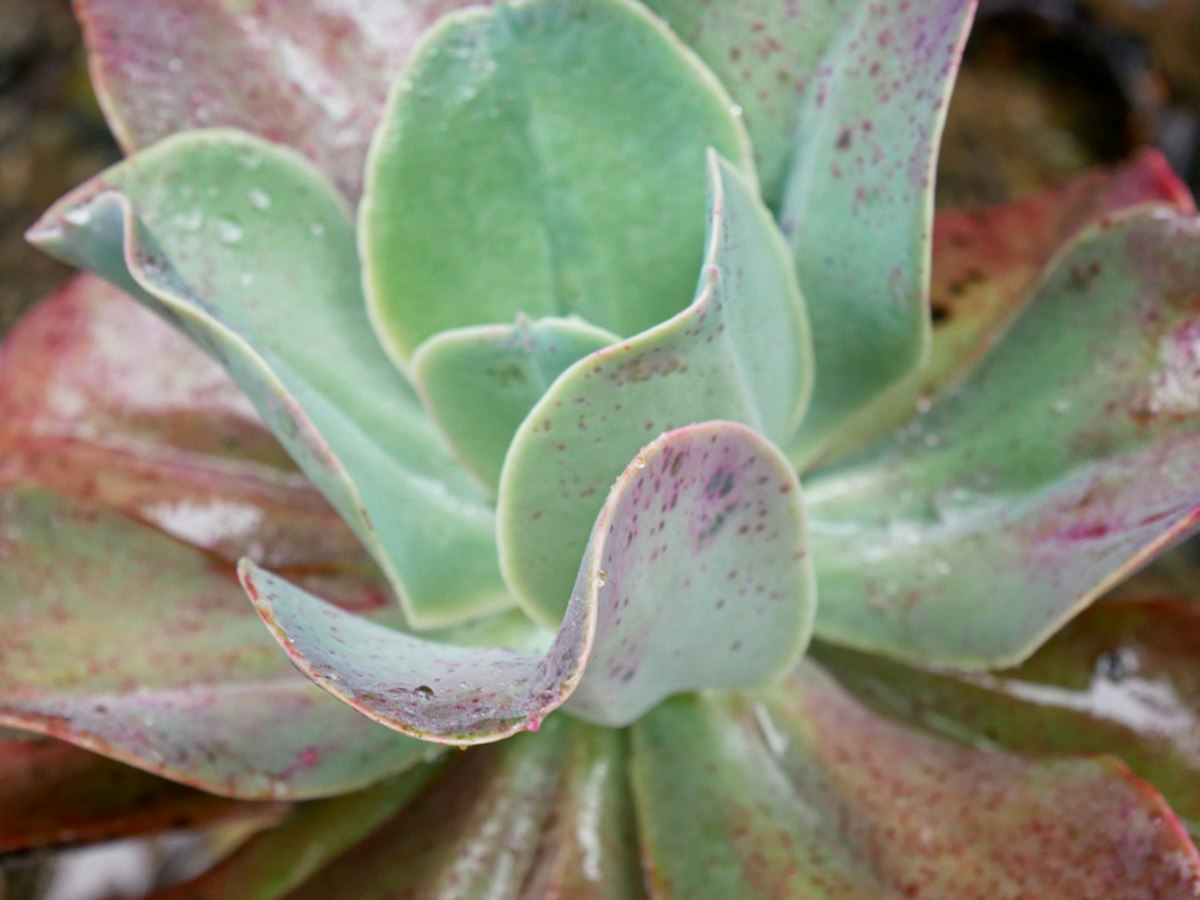
To propagate a dropped leaf, set it on top of dry succulent soil, don’t bury it, and leave it in bright, indirect light without watering until you see tiny roots and a new baby plant forming at the base, which can take a few weeks.
Overwatering
Less benign than the propagation trait above. Consistently wet soil causes succulent leaves to weaken and drop, usually with softness, discoloration, or a slightly mushy texture rather than the clean, firm drop of normal leaf shed. This is the same general mechanism covered in more depth in the succulent translucent leaves piece and the root rot piece, just showing up as leaves dropping rather than the leaves staying attached and turning translucent.
If falling leaves feel soft or look discolored, let the soil dry out completely before watering again, and check the roots for the dark, mushy texture that indicates rot has set in.
Underwatering
Less commonly the cause with succulents specifically, given how drought-tolerant most species are, but a long enough dry stretch can cause leaves to shrivel, wrinkle, and eventually drop, feeling dry and thin rather than plump on the way down.
A thorough watering, followed by returning to a normal succulent watering routine, letting the soil dry out mostly between waterings, should stop further loss, though the already-dropped leaves won’t return.
Normal aging of lower leaves
Succulents naturally shed their oldest, lowest leaves as part of regular growth, and this happens gradually over the plant’s life regardless of care quality. These leaves typically dry out and shrivel before falling, rather than dropping while still plump, and it’s limited to the very lowest, oldest growth on an otherwise healthy plant.
If this matches what you’re seeing, there’s nothing to address here beyond tidying up the fallen leaves if you’d like.
A few things people ask
How do I tell normal leaf drop from a problem at a glance? Check the leaf itself. Plump, firm, and undamaged points toward normal drop or propagation trait. Soft, mushy, or shriveled points toward an actual watering issue.
Can I really grow a new plant from a dropped leaf? Yes, with species that naturally shed leaves this easily, echeveria and sedum in particular. Set the leaf on dry soil without burying it and wait for roots and a small rosette to form at the base.
Is it bad if a lot of leaves fall off at once? A sudden, large-scale drop is more concerning than a few leaves here and there, and is more likely to point toward an actual stress cause, overwatering, a big temperature swing, or transplant shock, rather than the normal, gradual version.
Should I stop touching my succulent if leaves keep falling off? Not necessarily, since easy leaf drop in these species is often just how they’re built. If it’s happening constantly with light handling and the leaves look healthy, this is normal for the plant rather than something to prevent.
For the full rundown on keeping succulent happy long-term, light, watering, soil, and propagation, see the Succulent Care Guide. Next reads: Why Is My Jade Plant Dropping Leaves?, Why Is My Aloe Vera Turning Brown? and Why Is My String of Pearls Shriveling or Turning Mushy?.