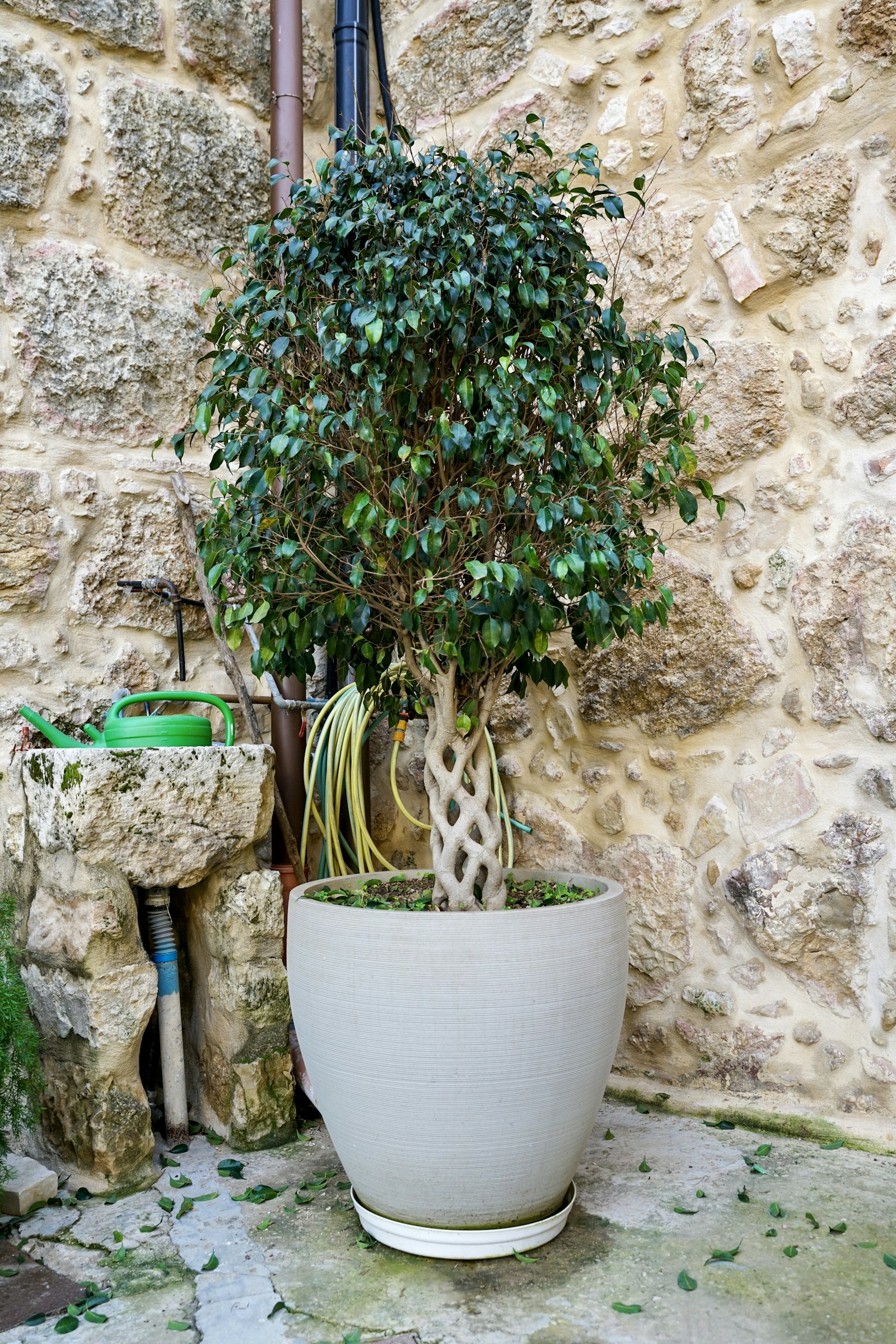
Moving a weeping fig about four feet across the living room — same amount of light as far as anyone can tell, just a different spot — can still lead to it dropping what feels like half its leaves onto the floor within a couple of weeks, even when nothing else about its care has changed. It’s alarming, but it’s just what ficus trees, Ficus benjamina especially, are known for doing.
Ficus trees have a well-earned reputation for being dramatic about change, dropping leaves in response to shifts that most other houseplants would shrug off entirely, a new spot in the room, a season change, even just being rotated. That sensitivity is the single most common reason for leaf drop with this plant, though watering issues, low light, and pests all play a role too and are worth ruling out.
| What you see | Likely cause |
|---|---|
| Drop right after a move, rotation, or repot | Environmental stress (classic ficus response) |
| Soil consistently wet or bone dry | Watering issue |
| Dim spot, gradual ongoing loss | Insufficient light |
| Sticky residue or small bumps on stems/leaves | Scale insects |
Environmental change and stress (the classic ficus response)
Ficus trees, and Ficus benjamina in particular, are known throughout the houseplant world for reacting to almost any change in their environment by dropping leaves, sometimes dramatically, sometimes within just a couple of weeks of the change. Moving the plant to a new room, rotating it, a shift in temperature, a change in the season’s light levels, or even just relocating it a few feet within the same room can all trigger this response.
The tell here is straightforward: leaf drop that started shortly after some change, however small, to the plant’s location or routine, without an accompanying watering or light problem that would otherwise explain it. This is frustrating precisely because the trigger often seems too minor to be the cause, which leads a lot of people to keep looking for a watering mistake that isn’t actually there.
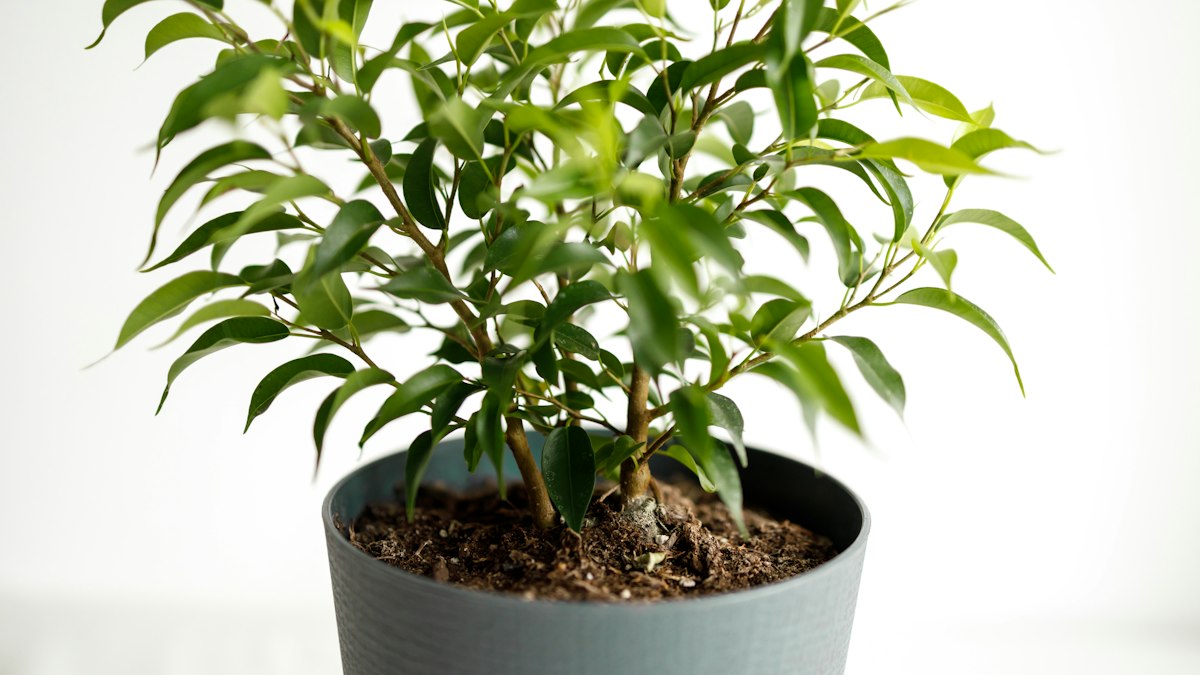
The good news is that this is usually temporary. Once the plant is left alone in a stable spot, consistent light, no more moving or rotating, it typically stabilizes and starts putting out new growth within a few weeks to a couple of months. Resist the urge to keep relocating it to try to fix the problem, since that just resets the adjustment period.
Watering issues
Both under- and overwatering can cause a ficus to drop leaves, alongside or instead of the more famous stress-drop response. Underwatered leaf drop tends to come with dry, brittle leaves beforehand, while overwatering-related drop tends to happen alongside yellowing and softer leaf texture, closer to the mechanism covered in the overwatered vs underwatered piece.
Check the soil before assuming stress is the cause, since watering problems are more directly fixable, a consistent watering routine based on checking soil moisture rather than a fixed schedule usually resolves this fairly quickly.
Insufficient light
A ficus kept in a spot with consistently low light will gradually thin out and drop leaves over a longer period, weeks to months, rather than the more sudden drop associated with environmental stress. This tends to be slower and more continuous rather than a distinct, concentrated event tied to one specific change.
Moving the plant to a brighter spot with plenty of indirect light, or supplementing with a grow light in a dim room, should slow and eventually stop the ongoing loss, though it won’t be an immediate fix.
Scale insects and other pests
Ficus trees are particularly prone to scale insects, small, stationary sap-sucking pests that often go unnoticed at first because they look more like small bumps or growths than typical bugs. Heavy infestations stress the plant enough to cause leaf drop, sometimes alongside a sticky residue called honeydew on leaves or nearby surfaces.
Check stems and the undersides of leaves closely for small brown or tan bumps that don’t brush off easily. If found, treat with insecticidal soap or a systemic treatment, and expect to repeat treatment over several weeks since scale can be persistent.
A few things people ask
How long does it take a ficus to recover from leaf drop after a move? Often a few weeks to a couple of months once the plant is left in a stable location, though severe drop can take longer to fully regrow.
Should I stop watering a ficus that’s dropping leaves from stress? No, keep your normal watering routine going based on soil moisture. Stress-related drop isn’t a watering problem, and changing your routine in response can introduce an actual watering issue on top of the stress response.
Is it normal for a ficus to drop a few leaves periodically even when healthy? Some occasional older leaf drop is normal as part of regular growth. What’s notable is a sudden, concentrated wave of drop rather than the occasional single leaf here and there.
Will a bare ficus branch grow leaves again? Usually yes, as long as the branch itself is still alive, indicated by flexibility and green tissue under the bark if scratched gently. Give it time in stable conditions before assuming a branch is dead.
For the full rundown on keeping ficus happy long-term, light, watering, soil, and propagation, see the Ficus Care Guide. Next reads: Why Are My Rubber Plant’s Leaves Drooping?, Why Is My Schefflera (Umbrella Plant) Dropping Leaves? and Why Is My Ming Aralia Losing Its Leaves?.