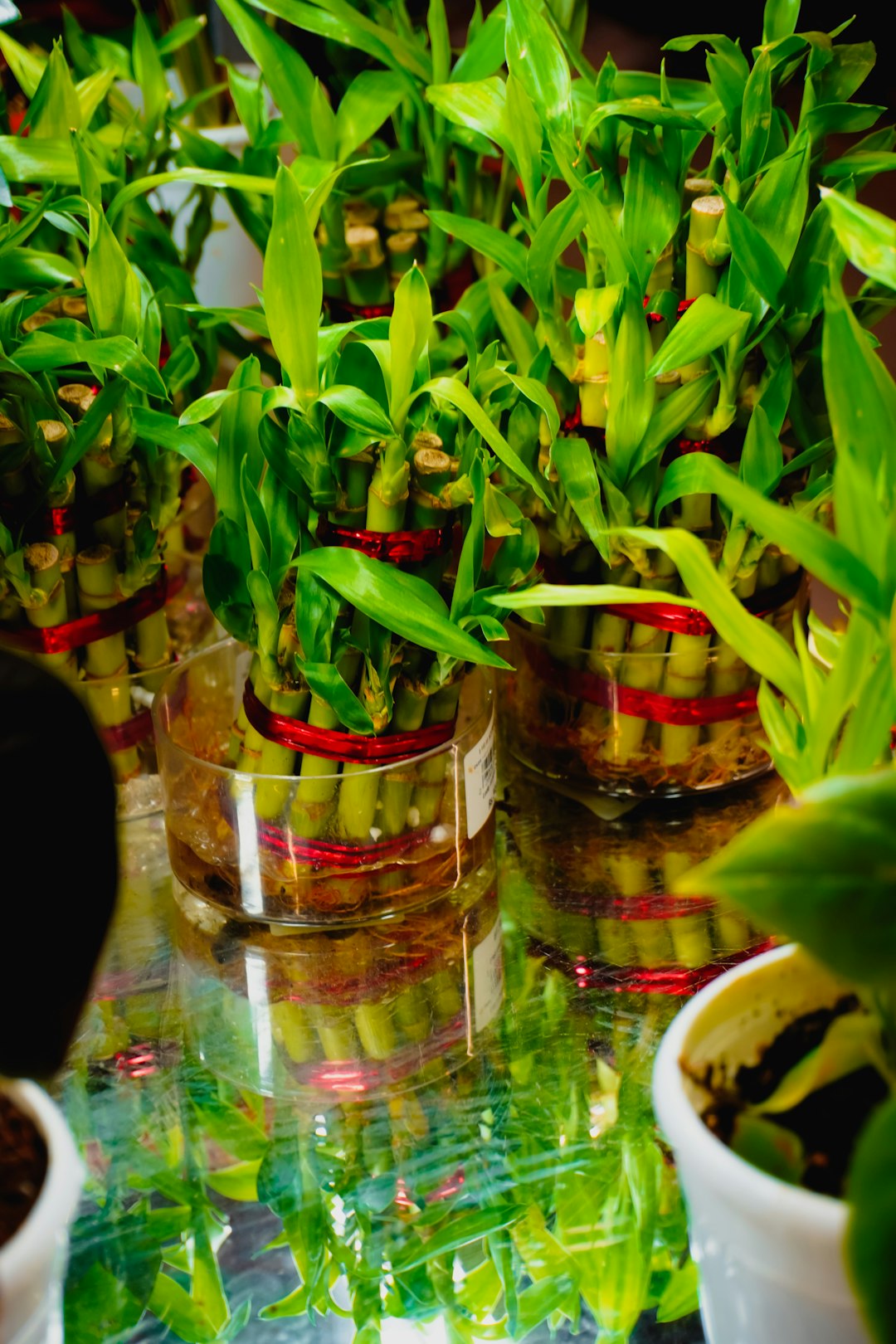
Lucky bamboo is a popular desk and shelf plant because it can live in a vase of water with almost no fuss. The name is a bit misleading: it is not a bamboo but a Dracaena (Dracaena sanderiana), a relative of the corn plant. The easy part is that it tolerates low light and indoor conditions. The tricky part is that it reacts badly to direct sun, dirty water and heavy feeding.
This guide covers the routine that keeps it healthy. If the leaves or stalk are already changing color, the page on why lucky bamboo turns yellow goes deeper.
Light
Bright, indirect light is best. Lucky bamboo grows in the shade of larger plants in the wild, so direct sun can scorch or bleach the leaves. It tolerates low light but grows more slowly there. A spot a few feet from a window, or near one with a sheer curtain, works well. In a dark room, a small grow light helps; see grow lights for houseplants.
Watering
In a vase, keep the roots covered with water and change it regularly, rinsing the container each time so slime and algae do not build up. Filtered, distilled or rainwater is a safer choice than tap water, because dracaenas are widely reported to be sensitive to the chlorine or fluoride in some supplies. If the plant is grown in soil, keep it lightly moist and never soggy.
Soil and potting
Lucky bamboo can grow either in water or in a well-draining potting mix. In water, pebbles or glass beads hold the stalks upright. In soil, a pot with drainage holes is essential. Either way, the container should be large enough that the roots are not cramped, and a plant that has outgrown its vase can be moved to a bigger one.
Humidity and temperature
Normal indoor warmth suits lucky bamboo well. Cold drafts, heating vents and air conditioners can stress it, and very dry air may cause brown leaf tips. A steady, warm spot away from vents is the safe choice.
Fertilizing
Lucky bamboo needs very little. A very diluted liquid fertilizer made for water-grown plants, used sparingly, is plenty. Overfeeding is a common cause of yellow leaves, so when in doubt, feed less.
Propagation
Lucky bamboo is easy to propagate from cuttings. A healthy stalk section with a node can be placed in clean water, where it forms roots over a few weeks. Side shoots can also be cut off and rooted the same way. Use a clean blade and change the water often while roots form.
The stalks: what makes this plant different
The twisted, braided and tiered shapes sold in shops are not natural. Growers shape the stalks by controlling how light reaches them, turning the plant so it bends toward the light, and some designs are made by training stems around a form. The practical effect for owners is that the shape is mostly decorative and the stalk, not the leaves, is the plant’s core. A healthy stalk is firm and green. A stalk that turns yellow or soft is rotting and will not recover, so it is worth checking the stalks as well as the leaves. The ties and ribbons often seen on shop arrangements should not be left so tight that they cut into the stalk.
Common problems
Yellow leaves and stalks, brown tips and rot usually come back to light, water quality or feeding. The page on why lucky bamboo turns yellow sorts out the causes. For a wider look at what a struggling plant might be showing, see houseplant problems by symptom. Another relative is covered in the dracaena care guide.
A few things people ask
Does lucky bamboo need soil?
No. It can live in water alone as long as the roots stay covered and the water is kept clean, though it can also grow in potting mix.
How much light does lucky bamboo need?
Bright, indirect light is best. It tolerates low light but grows more slowly, and direct sun can scorch the leaves.
Why are the tips brown?
Brown tips are commonly linked to chemicals in tap water or to dry air. Using filtered or distilled water often helps.
Is lucky bamboo safe around pets?
No. The ASPCA lists Dracaena, the genus lucky bamboo belongs to, as toxic to dogs and cats. See the ASPCA ribbon plant (Dracaena) page and keep the plant out of reach.