
Heartleaf philodendron is a good first plant for anyone who has just started paying attention to what they own instead of just letting things sit on a windowsill: it’s cheap and the tag says it’s hard to kill. That turns out to be mostly true, though overwatering it out of some misguided idea that more attention is always better is an easy mistake. It bounces back easily once you back off, which is pretty representative of how forgiving this plant actually is.
| Care factor | What it needs |
|---|---|
| Light | Medium to bright indirect; tolerates low light well |
| Water | Water when top inch is dry; avoid soggy soil |
| Soil | Standard well-draining potting mix |
| Growth | Trails or climbs with support |
| Toxicity | Toxic to cats and dogs (calcium oxalate) |
Light
Heartleaf philodendron tolerates a wide range of light and is one of the more shade-tolerant common houseplants, but it does best in medium to bright indirect light. In lower light it’ll survive and keep growing, just more slowly, with longer gaps between leaves along the vine. Direct hot sun can scorch the leaves, so keep it out of unfiltered south or west-facing exposure.
Watering
Let the top inch or two of soil dry out between waterings, then water thoroughly. Philodendron is fairly tolerant of a missed watering here and there but doesn’t like sitting in soggy soil for extended periods. Overwatering is the more common way people run into trouble with this plant.
If you’re seeing leaves curling, working through the specific cause usually starts with checking soil moisture and humidity before assuming the worst. Brown spots point toward a different set of causes entirely, worth checking separately since the fix depends on whether it’s an actual infection or something more benign like sunburn. The general overwatered versus underwatered breakdown is a good starting point whenever something looks off.
Soil and potting
A standard, well-draining potting mix works fine, philodendron isn’t particularly picky about soil composition. Make sure the pot has drainage holes. It grows at a moderate pace and typically needs repotting every one to two years, sooner if you notice roots circling the bottom of the pot or growth slowing despite otherwise good care.
Humidity and temperature
Average household humidity is fine, though it’ll grow a bit lusher with more. Normal indoor temperatures, roughly 65 to 85°F, work well. It doesn’t tolerate cold drafts, keep it away from drafty windows or doors, especially in winter.
Fertilizing
A balanced liquid fertilizer, diluted to about half strength, monthly during spring and summer supports steady growth. It’s not a heavy feeder and will grow reasonably well even with minimal fertilizing. Hold off in fall and winter.
Propagation
Like pothos, heartleaf philodendron propagates easily from stem cuttings with at least one node. Place the cutting in water or moist soil, roots typically develop within a couple of weeks in water. It’s a reliable way to fill out a sparse plant or start new ones to share.
Philodendron versus pothos
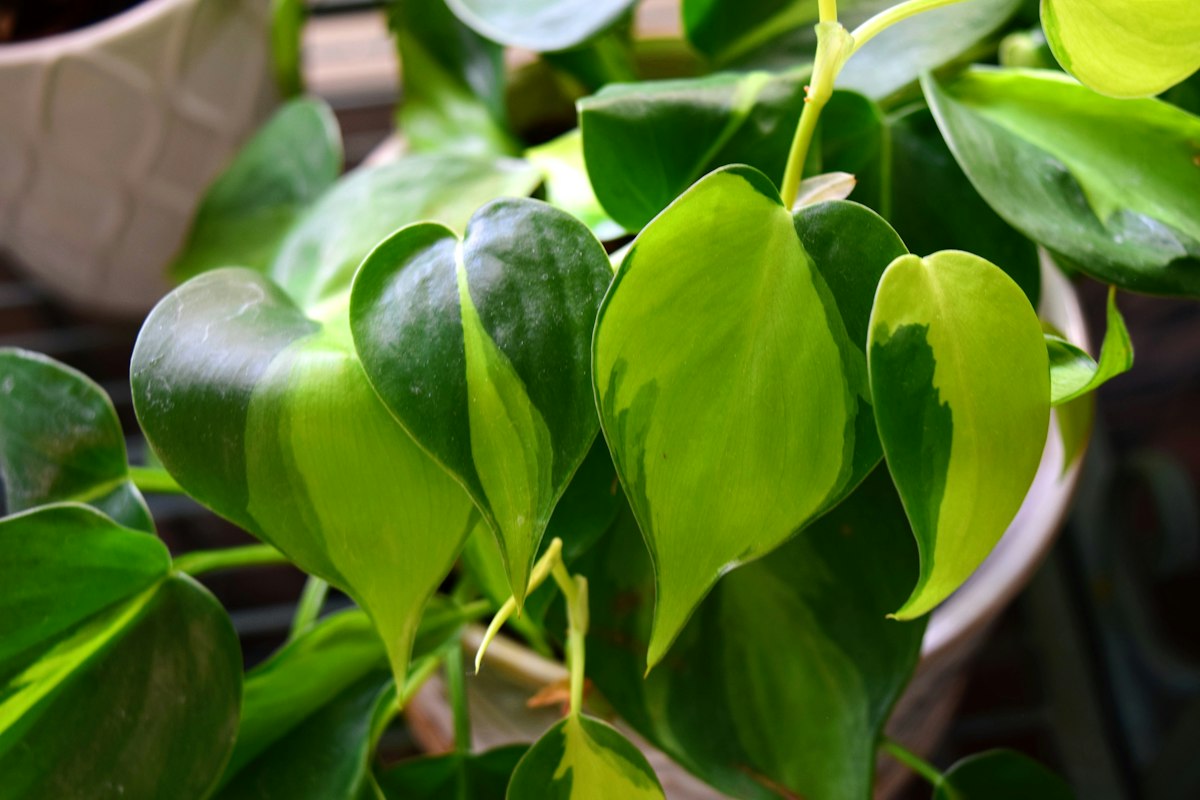
These two get confused constantly since they look similar at a glance and share very similar care needs. Philodendron leaves tend to be heart-shaped with a smoother, more matte texture and emerge from a thin, papery sheath called a cataphyll that eventually dries and falls off. Pothos leaves are usually a bit thicker and glossier, and new growth emerges directly without that sheath. If you’re not sure which one you have, the care advice here largely overlaps either way, so it’s not a critical distinction for day-to-day care.
A few things people ask
Is philodendron toxic to pets? Yes, like most aroids, philodendron contains calcium oxalate crystals that are toxic to cats and dogs if chewed, typically causing oral irritation and drooling rather than anything severe, but it’s worth keeping out of reach.
Should I give my philodendron something to climb? Heartleaf philodendron can either trail or climb. Giving it a moss pole or similar support tends to produce larger leaves as it matures, while letting it trail keeps a fuller, cascading look. Either is fine, it comes down to preference.
How fast does it grow? Under good conditions it’s a reasonably fast grower, vines can put on several inches of new growth a month during the active growing season, slowing considerably in low light or winter.
Are all philodendron varieties this easy to care for? Heartleaf is among the most forgiving, but the philodendron genus includes a wide range of types, from other vining varieties to large upright species, with somewhat different care needs. This guide focuses on heartleaf specifically since it’s the most commonly kept type. Next reads: Pothos Care Guide: Light, Water, Soil, and More, Arrowhead Plant Care Guide: Light, Water, and Climbing Versus Trailing and English Ivy Care Guide: Light, Water, and Propagation.