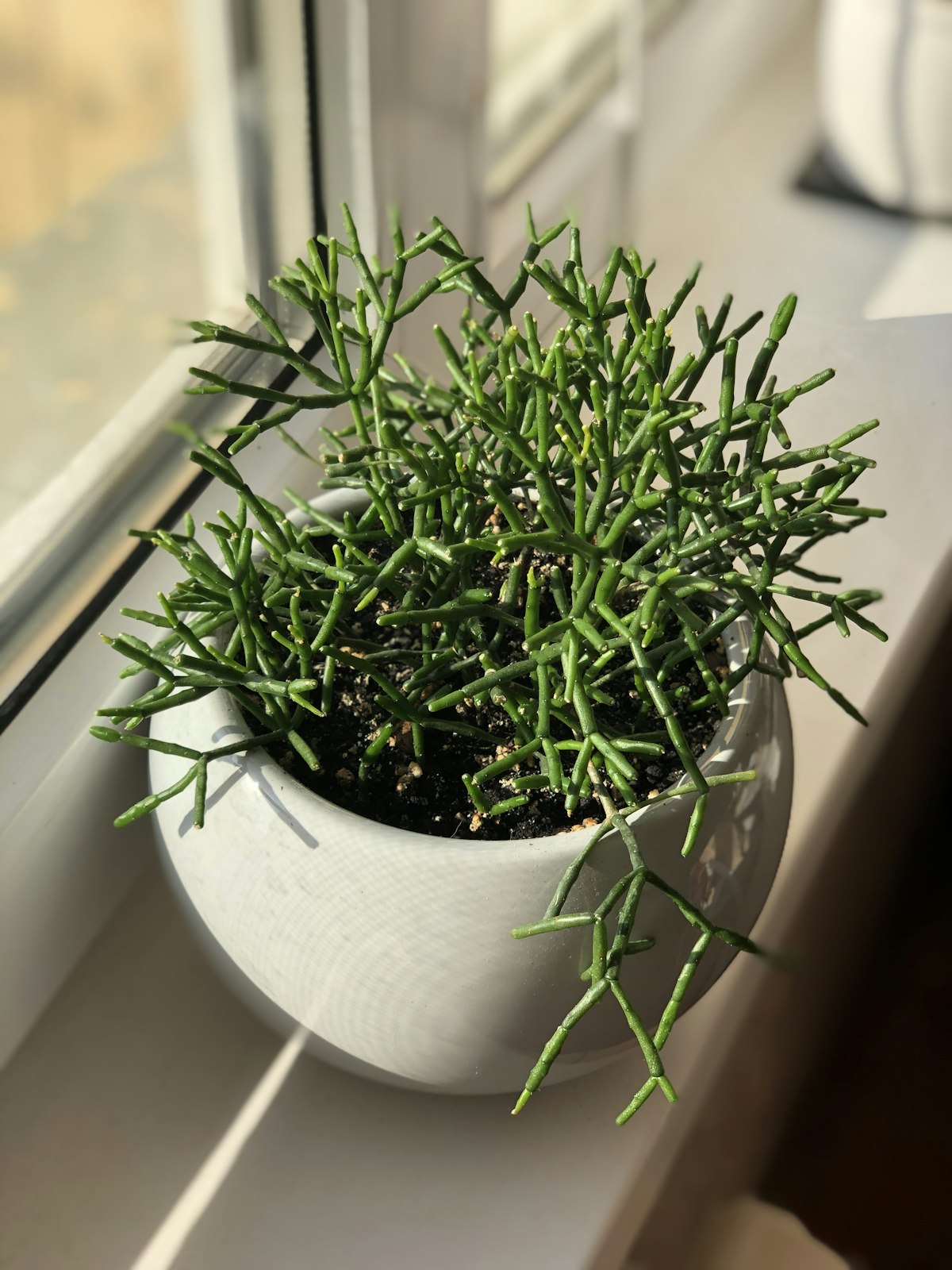
Putting a rhipsalis on the sunniest windowsill and watering it on the same sparse schedule as other cacti, on the assumption that a cactus is a cactus, backfires within a few weeks: the thin trailing stems turn pale and papery in the strongest sun and shrivel from lack of water everywhere else. Rhipsalis is a rainforest cactus that grows on trees in dappled shade, not a desert plant at all, and treating it like one is exactly backward.
Quick triage
| Symptom | Likely cause |
|---|---|
| Stems thin, wrinkled, and shriveled, soil dry | Underwatering |
| In direct sun, stems look pale, bleached, or scorched | Sunburn |
| Segments turning brown and mushy, or dropping off in clumps | Overwatering or rot |
| Just an occasional older segment dropping, rest looks healthy | Normal segment drop |
The desert cactus misconception
Unlike the desert cacti most people picture, rhipsalis is native to rainforests, where it grows as an epiphyte, clinging to trees and absorbing moisture from the air rather than rooting in soil, in bright, dappled shade rather than baking in direct sun on open ground. This single misunderstanding causes most of the problems people run into, watering it as sparsely as a desert cactus and giving it the same intense direct light leaves it both thirsty and sunburned at the same time.

Underwatering
Rhipsalis wants more consistent moisture than a typical cactus, letting the soil dry out completely and stay that way causes the thin, segmented stems to wrinkle and shrivel. Watering when the top inch or so of soil has dried, rather than waiting for the whole pot to dry out, keeps the stems plump and prevents this from happening.
Sunburn
Direct sun, especially through a south or west-facing window in the afternoon, can bleach or scorch rhipsalis stems, showing up as pale, washed-out patches or crispy, discolored sections. Bright, indirect light, the kind you’d give a pothos or a fern, suits it far better than the intense direct sun that a desert cactus or succulent would want.
Overwatering and rot
While rhipsalis wants more water than a desert cactus, it still needs the soil to drain well and doesn’t tolerate sitting in water. Consistently soggy soil causes stem segments to turn brown, soft, and mushy, sometimes dropping off entirely. If the base feels soft or mushy, root rot is worth checking for directly.
Normal segment drop
Rhipsalis naturally sheds older segments occasionally as part of normal growth, especially as it puts energy into new trailing stems. An occasional dropped segment with no other symptoms, healthy color and firmness elsewhere on the plant, isn’t something to worry about.
A few things people ask
Is rhipsalis toxic to pets? No, the ASPCA lists mistletoe cactus as non-toxic to dogs and cats, one of the safer trailing plants for households with curious pets.
Why is it called mistletoe cactus? Its small, pale berries resemble mistletoe berries, and like true mistletoe, rhipsalis grows naturally as an epiphyte on tree branches in the wild rather than rooting in soil on the ground.
How do I propagate rhipsalis? It roots easily from stem cuttings, let a cut segment callous over for a day or two, then set it on top of or partially into a well-draining potting mix, roots typically form within a few weeks.
Does rhipsalis need high humidity? It appreciates more humidity than a desert cactus but tolerates typical indoor conditions reasonably well, it’s far more sensitive to watering and light than to air moisture specifically.
For a full rundown of light, watering, soil, and growing it as a hanging plant, see our rhipsalis care guide. Next reads: Why Is My Christmas Cactus Turning Red?, Why Is My Haworthia Turning Brown or Mushy? and Why Is My Aloe Vera Turning Brown?.