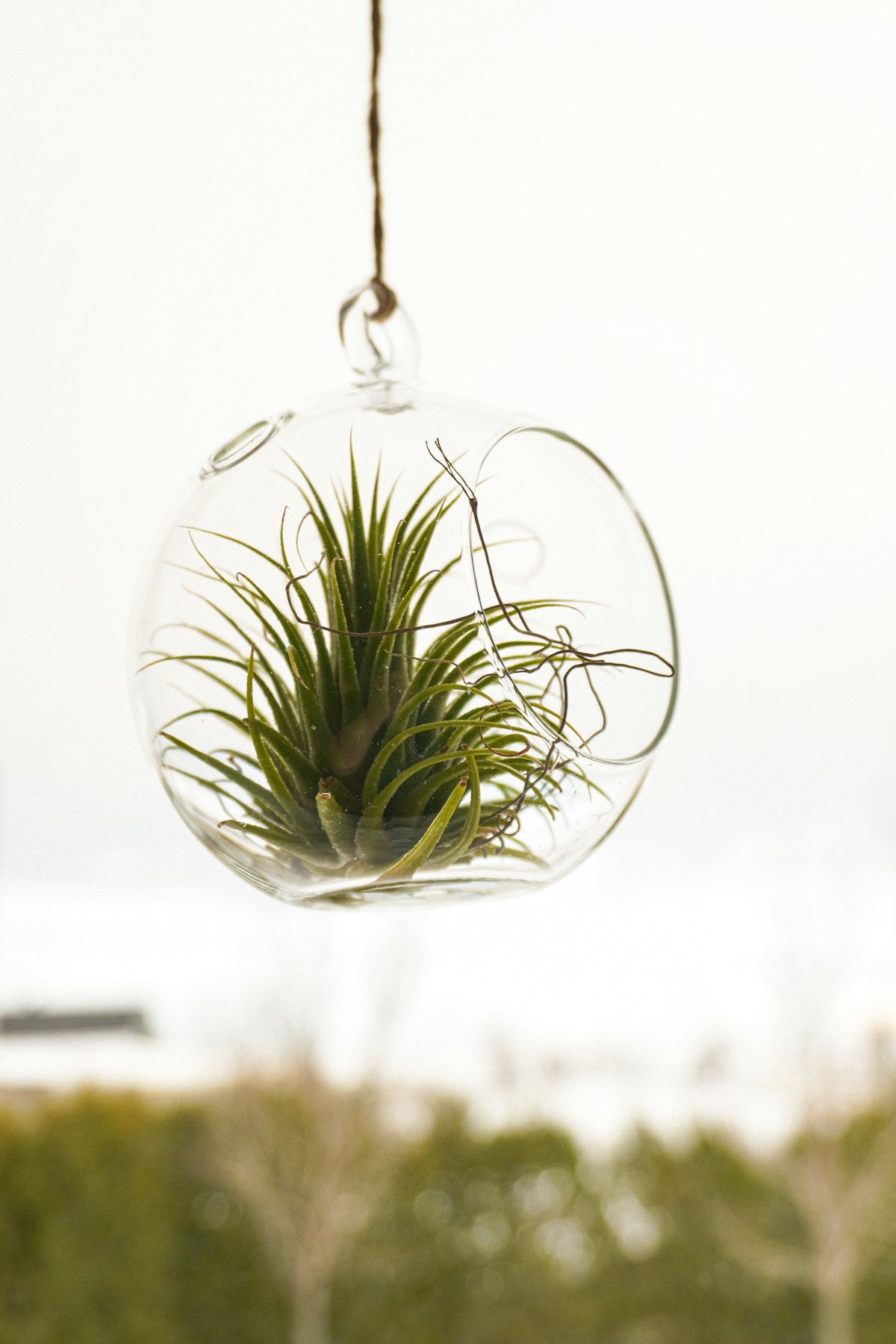
Air plants confuse a lot of people because almost none of the usual houseplant rules seem to apply — no pot, no soil, no watering can. Treated like little sculptures, they slowly decline; once the soaking routine is understood, they go from something quietly worrying to some of the lowest-effort plants around. They are genuinely different from everything else in this guide series, in a good way once the routine clicks.
Light
Bright, indirect light works best, a spot a few feet back from an east or west-facing window suits most varieties. Direct sun for extended periods, especially through glass, can scorch the leaves, while very low light slows growth and dulls the coloring on some varieties.
Watering
Air plants don’t grow in soil, so watering works completely differently than every other plant in this guide series. Soak the whole plant in room-temperature water for 20 to 30 minutes, roughly once a week, then shake off excess water and let it dry fully, upside down or at an angle — the New York Botanical Garden recommends drying in a spot with good air circulation so it dries within about four hours. Misting alone usually isn’t enough hydration on its own, treat it as a supplement between soaks rather than a replacement for them, especially in a dry home.

No soil needed
This is the defining trait of air plants and the reason care looks so different — Iowa State University Extension explains they collect all the water they need through specialized cells on their leaves called trichomes, rather than through roots in soil. Any roots they do produce are mainly for anchoring to a surface like bark or driftwood, not for feeding the plant. This means there’s no potting mix to worry about, no repotting schedule, and no risk of the soil-related overwatering issues that affect most of the other plants on this site, the tradeoff is that the watering routine itself needs more direct attention.
Humidity and temperature
Average to above-average humidity helps air plants go longer between soaks without drying out, a bathroom with a window or a spot near a humidifier works well. They prefer warm, stable temperatures and should be kept away from cold drafts and air conditioning vents, which speed up moisture loss between waterings.
Fertilizing
A fertilizer formulated specifically for air plants, mixed into the soak water at a light dilution once a month during spring and summer, supports steady growth and more vivid coloring. Standard houseplant fertilizer is generally too strong and can burn the leaves, so it’s worth seeking out one made for tillandsia specifically.
Propagation
Air plants are typically propagated from offsets, or pups, that grow at the base of a mature plant, often after it flowers. Once a pup reaches roughly a third the size of the parent, it can be gently separated and cared for as its own plant, though leaving it attached is also fine if you’d rather let a cluster grow together.
Creative ways to display air plants
Because they need no soil or pot, air plants are one of the most flexible plants in this guide series to display, hanging glass terrariums, mounted on driftwood or bark, tucked into a shell or bowl, or simply set on an open shelf all work as long as the plant can be easily removed for soaking. Avoid gluing an air plant permanently into a display, since it needs to come out fully for watering, a light wire cradle or an open-mouthed container it can be lifted out of works better long-term than a sealed arrangement.
Common problems
Curling, graying, or crispy leaves are almost always tied to underwatering, our full guide on why air plants turn brown or die walks through how to tell that apart from rot, sun damage, and poor air circulation. A dark, mushy, or foul-smelling base points to rot from water that didn’t fully dry out after soaking.
A few things people ask
Is an air plant toxic to pets? No, air plants are considered non-toxic to cats and dogs, one of the safer choices in this guide series for households with curious pets.
How long do air plants live? Individual plants typically live a few years before flowering and gradually declining, but the pups they produce carry the plant forward indefinitely, so a well cared for cluster can last many years.
Can I use tap water for soaking? Yes, in most areas, though very hard or heavily chlorinated water is worth avoiding, filtered or rain water is a safer choice if your tap water is unusually harsh.
Why does mine look different from other tillandsia I’ve seen? Tillandsia is a large genus with hundreds of species ranging from soft and silvery to stiff and green, appearance varies widely, but the soak-and-dry watering routine stays consistent across nearly all of them. Next reads: Bromeliad Care Guide: Light, Water, and Raising the Pups, Staghorn Fern Care Guide: Light, Water, and Mounting on a Board and Rhipsalis Care Guide: Light, Water, and Growing It as a Hanging Plant.