
A snake plant bought because every list of “plants you cannot kill” has it at the top, then treated exactly like the rest of the collection and watered on the same weekly schedule, tends to go wrong a few months in: the base of one leaf goes soft and yellow, and by the time it’s noticed, the leaf is basically done for. Pull it and the bottom couple of inches are mush. The thing that makes snake plants nearly indestructible, their tolerance for neglect, is also exactly what makes them unable to handle a normal watering schedule — the same care that keeps a pothos happy can kill a snake plant.
That’s really the whole story with snake plant yellowing, more than with almost any other houseplant. Where a symptom like this usually sends you down a list of four or five possible causes, with snake plants it’s overwhelmingly one thing, and the reason it catches people out is that these plants get recommended as beginner-proof so often that new owners don’t think to water them any differently than whatever else they own. It’s the same kind of multi-cause guessing game as a pothos doing something similar, but snake plants are a much narrower case.
| What you see | Likely cause |
|---|---|
| Soil damp/wet, yellowing starts low or at the base | Overwatering (almost certainly) |
| Soil bone dry for months | Underwatering (possible, but rare) |
| One thick, older leaf yellowing slowly over months | Normal aging |
| Pale, washed-out yellow on the sun-facing side only | Too much direct sun |
| Yellow/gray, water-soaked look after cold exposure | Cold stress |
Overwatering — the cause behind most snake plant yellowing
Snake plants are succulents at heart, storing water in those thick, rigid leaves, which is exactly why they tolerate weeks of neglect without complaint. It also means their roots have basically no tolerance for sitting in wet soil. Where a pothos or monstera can handle being a little overwatered for a while before it really shows, a snake plant’s roots start rotting relatively fast once the soil stays consistently damp, and the coverage of the root rot article applies here too, just on a shorter timeline than with most houseplants.
The tell is usually yellowing that starts at the base of a leaf, sometimes with that section going soft or mushy rather than staying firm, and it can spread up the leaf from there. Multiple leaves affected, soil that’s wet several inches down, and a pot that maybe doesn’t drain well are all supporting evidence. If a leaf feels soft or squishy anywhere along its length, that’s a stronger warning sign with snake plants than the plain yellow color is, since it usually means rot has already started rather than just being on the way.
If this matches what you’re seeing, stop watering immediately and let the soil dry out completely, not just the top layer, before watering again. Snake plants genuinely want to go quite dry between waterings, more than most people expect, closer to every two to six weeks depending on light and season than a fixed weekly routine. If you pull the plant and find soft, dark, or foul-smelling roots or rhizome, that section needs to be cut away and the plant repotted into fresh, fast-draining soil, the same as with root rot in any other houseplant. A pot with no drainage hole makes this whole problem far more likely no matter how careful you are otherwise, and it’s worth checking that first if you’re not sure whether you’re dealing with too much water in general, which the overwatered vs. underwatered piece covers in more detail.
Just an older leaf aging out
Less dramatic, and worth ruling out before you assume the worst. Snake plants do shed their oldest leaves eventually, same as most plants, but because they grow so slowly, this tends to happen rarely and to a single leaf at a time rather than the frequent leaf-by-leaf turnover you’d see on something fast-growing like a pothos.
The giveaway is that it’s one thick, mature leaf, usually one of the outer or older-looking ones, yellowing gradually over the course of weeks to months while the rest of the plant looks completely normal and everything else stays firm and green. It doesn’t go soft or mushy the way an overwatered leaf does. If that’s what you’re seeing on an otherwise healthy-looking plant you haven’t been watering much, it’s likely just the plant retiring an old leaf, and there’s nothing to fix.
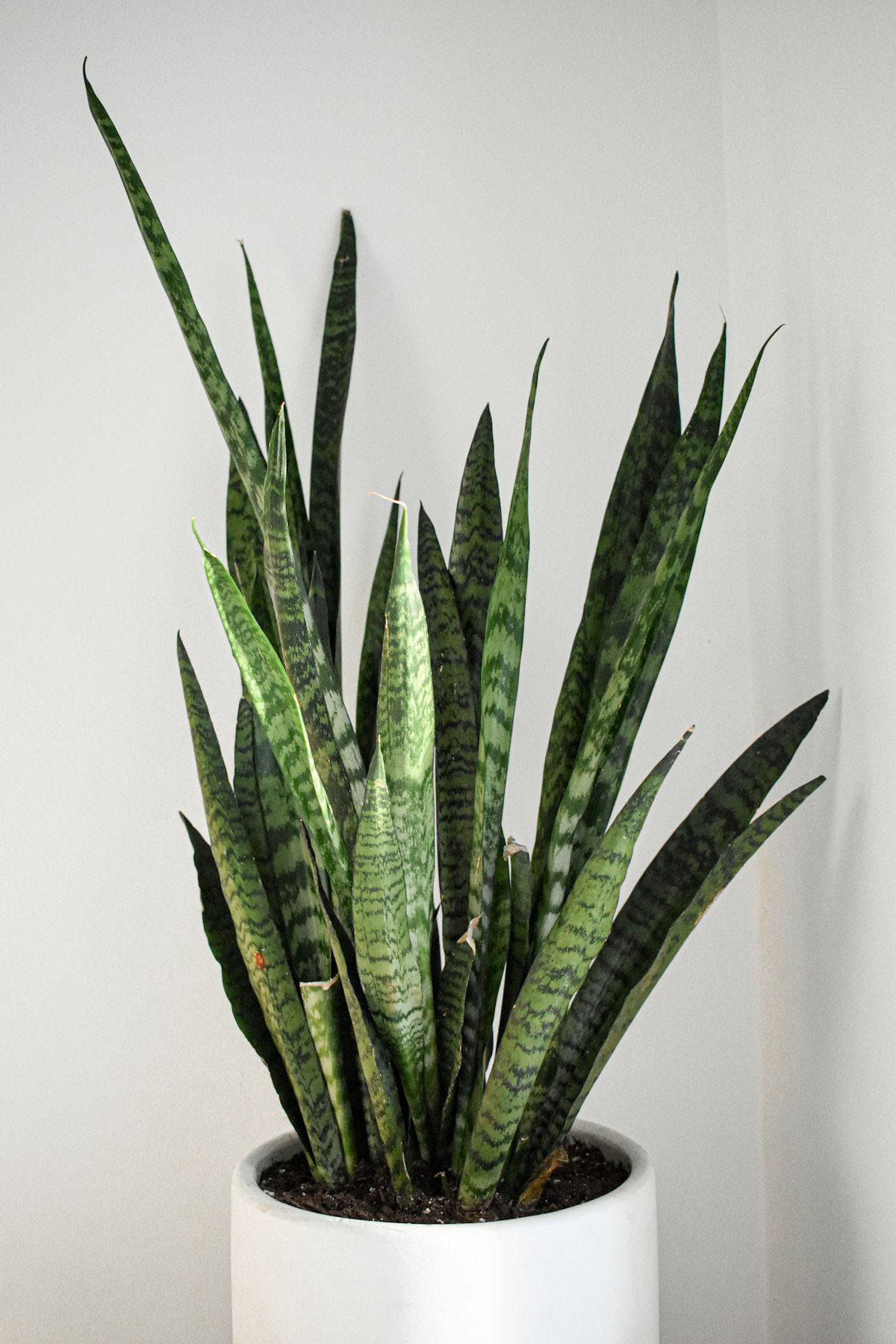
Too much direct sun
Snake plants handle a wide range of light better than most houseplants, which is another reason they’re recommended so often, but intense direct sun for extended periods, especially through a south-facing window in summer, can still stress the leaves.
This shows up differently than overwatering yellowing: it tends to be more of a pale, washed-out, or bleached yellow rather than the same intensity of color, and it’s concentrated on the side of the leaf that actually faces the sun, with the shaded side staying a normal green. It’s also dry rather than soft to the touch. Pulling the plant back a couple feet from the window, or filtering the light with a sheer curtain during the most intense part of the day, generally stops it from progressing, though the already-affected section won’t green back up.
Cold stress
Snake plants are native to tropical West Africa and don’t handle cold the way their reputation for toughness might suggest. Temperatures below the mid-50s Fahrenheit for any real stretch of time can cause damage, and it often shows up as yellowing or a grayish, water-soaked look, sometimes followed by soft or mushy patches similar to what overwatering causes, which can make the two easy to confuse if you’re not thinking about recent temperature exposure.
Worth considering if the plant’s been near a drafty window in winter, on a porch that got a surprise cold night, or in a room where the heat’s been off for a while. Moving it somewhere consistently above 55°F or so is the fix, and like sun damage, existing affected tissue won’t recover, but it should stop spreading once the plant’s back in a reasonable temperature range.
A few things people ask
Is a little bit of yellow on one leaf an emergency? No. One leaf slowly yellowing, especially an older one, is often just normal aging. Multiple leaves going yellow at once, or any softness at the base, is what should actually get your attention.
Can I cut off the yellow part and save the rest of the leaf? For a partially yellow but still firm leaf, you can trim just the affected tip if it bothers you visually, and the rest of the leaf will keep functioning fine. If the base is soft, the whole leaf needs to come off, and it’s worth checking the roots below it too.
How do I know if it’s actually root rot and not just yellowing? Softness is the key difference. Plain yellowing with the leaf still firm is a color problem. Yellowing plus any mushy, squishy, or collapsing texture means rot has set in, and it calls for unpotting the plant and checking the roots rather than just adjusting how you water going forward.
My snake plant’s leaves are yellow at the edges only, not the base. What’s that? Edge yellowing that stays thin and doesn’t spread inward is often related to inconsistent watering extremes, swinging between very dry and briefly overwatered, rather than one clear cause. Settling into a consistent “water thoroughly, then wait until properly dry” routine usually stops it from continuing on new growth.
For the full rundown on keeping snake plant happy long-term, light, watering, soil, and propagation, see the Snake Plant Care Guide. Next reads: Why Is My ZZ Plant Turning Yellow?, Monstera Leaves Turning Yellow: How to Tell Which of the Five Reasons It Actually Is and Why Are My Dieffenbachia Leaves Turning Yellow?.