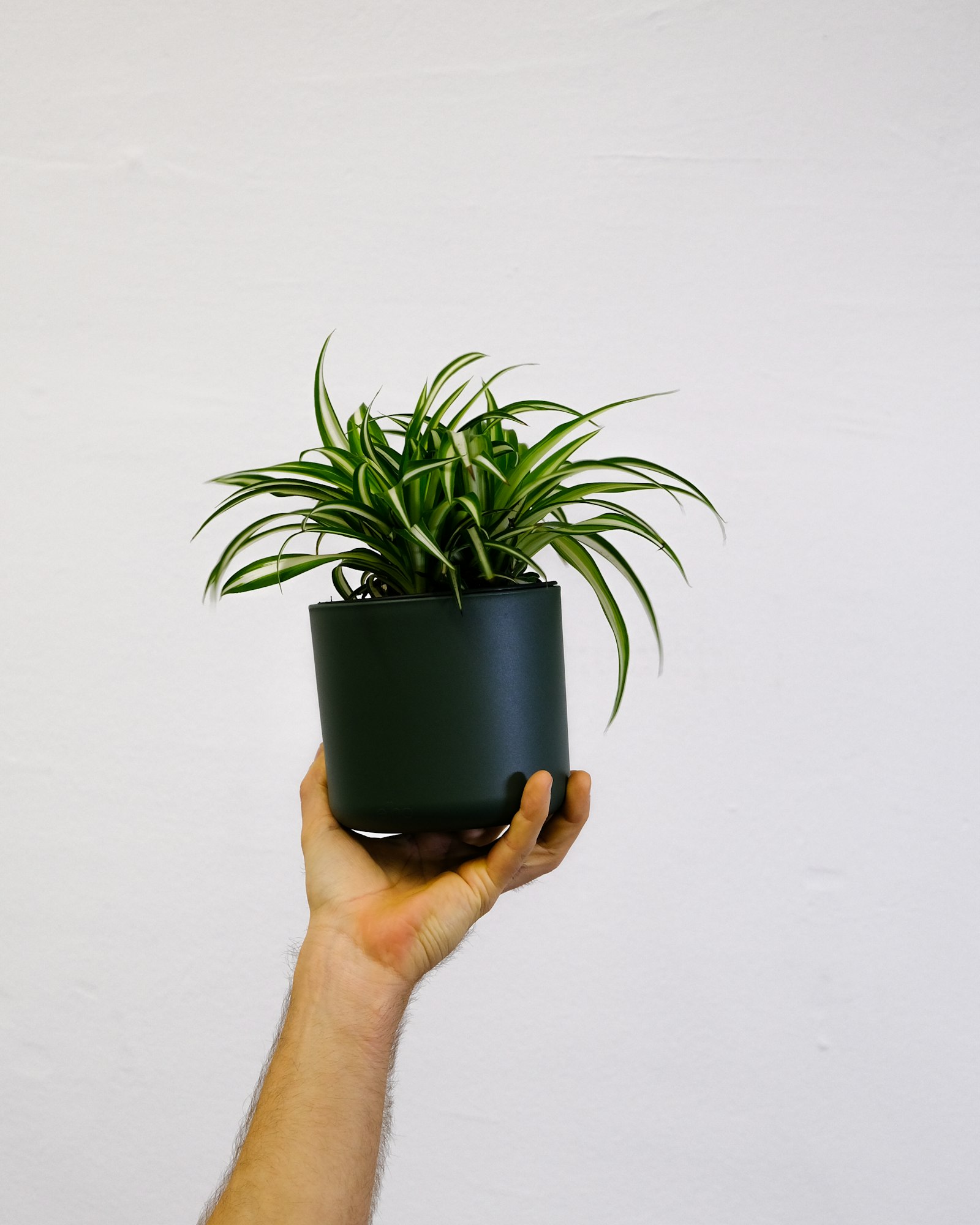
A spider plant that develops brown tips on basically every leaf within a few months of coming home, despite doing everything the care tag suggests, is easy to chalk up to watering — and fiddling with the watering rarely helps. Unpotting it can reveal the real cause: the entire pot is just roots, a dense tangled mass with barely a trace of actual soil left. Repotted into something a size or two up, the next round of new leaves can come in with clean tips.
Spider plants get recommended as nearly foolproof, and mostly they are, but brown tips are close to a universal complaint with this plant regardless, which is a little ironic given the reputation. There are four genuinely different things behind it, and one of them, being root-bound, is the one almost nobody checks first even though it’s extremely common with spider plants specifically, since they’re fast, aggressive root growers that outgrow pots quicker than most houseplants.
| Symptom pattern | Likely cause |
|---|---|
| Plant’s been in the same pot a year+, roots poking from drainage holes or circling the soil surface | Root-bound (most overlooked cause) |
| Tips brown fairly evenly despite consistent watering, air on the dry side | Low humidity |
| Soil dries out fast, plant clearly thirsty between waterings, not root-bound | Underwatering, or fluoride/chlorine sensitivity from tap water |
| Only the oldest, outermost leaves affected; new growth stays clean | Normal aging |
Root-bound (the one people miss)
Spider plants build root systems fast, including thick, tuberous roots that store water, and a happy, actively growing spider plant can fill a pot solid within a year or so. Once the roots have nowhere left to expand and barely any soil left to hold water, the plant simply can’t take up enough moisture to keep every leaf tip hydrated, even if you’re watering on a totally reasonable schedule, which is exactly why this cause gets missed so often.
The tell is usually roots visible at the drainage holes, roots circling along the surface of the soil, or a plant that seems to need watering unusually often compared to how it used to. If you’re not sure, it’s worth just sliding the plant out of its pot to look. A dense wall of roots with little visible soil is your answer.
The fix is repotting into a container one or two sizes larger, using fresh, well-draining potting mix, ideally during the growing season (spring through summer) when the plant recovers fastest. Spider plants handle repotting well and usually bounce back within a few weeks with new, cleaner growth.

Low humidity
Spider plants appreciate more humidity than their tough reputation suggests, and persistently dry air, especially from forced-air heating in winter, causes tips to brown as the leaf loses moisture faster than the plant can resupply it.
This tends to affect the plant fairly evenly rather than being isolated to old growth, and it often coincides with a specific spot, like near a heating vent or a drafty window. A humidifier nearby, grouping plants together, or simply relocating away from direct dry airflow usually stops new tips from browning, though it won’t reverse tips that are already affected.
Underwatering (and tap water sensitivity)
Straightforward underwatering causes tip browning the same way it does in most houseplants, through generalized water stress that shows up first at the leaf tips, the furthest point from the plant’s water supply. If you’re not sure whether the issue is too little water or something else, the overwatered vs. underwatered piece covers the actual soil test.
Worth knowing too: spider plants are one of the more famous examples of fluoride and chlorine sensitivity in tap water, similar to what happens with peace lilies and their well-documented tap water issue, and it produces the same kind of tip browning even when watering habits are otherwise fine. If your tips keep browning despite consistent, reasonable watering and the plant isn’t root-bound, switching to distilled or filtered water for a couple of months is worth trying before assuming you’re doing something else wrong.
Just normal aging
Spider plants, like most plants, don’t keep every leaf forever, and older leaves near the base or outer edge of the plant naturally brown and die back over time as the plant redirects energy to new growth and the plantlets it’s famous for producing.
The giveaway is that it’s isolated to the oldest-looking leaves while everything newer stays green and clean, and it happens gradually rather than across the whole plant at once. If that’s what you’re seeing, there’s nothing to fix, just trim the fully browned leaves off at the base if the look bothers you.
A few things people ask
How often should I actually repot a spider plant? Roughly once a year for a young, actively growing plant, or whenever you notice roots at the drainage holes or unusually fast drying between waterings, whichever comes first. Mature plants that have settled into a large pot can go longer.
Can I just trim the brown tips instead of fixing the cause? You can trim for appearance, cutting at an angle to mimic the leaf’s natural point rather than straight across, but it’s purely cosmetic. New growth will brown the same way until the actual cause, whichever one it is, gets addressed.
My spider plant has brown spots, not just tips. Different problem? Spots in the middle of leaves, especially with a water-soaked or dark appearance, more often point toward overwatering or occasionally fungal issues rather than the tip-browning causes here, which are mostly about insufficient water reaching the leaf tip specifically.
Does this happen to the baby plantlets too? Yes, plantlets can get brown tips for the same reasons as the parent plant, though a root-bound parent plant specifically tends to put out plenty of plantlets anyway, since that’s often a stressed plant’s way of trying to reproduce before conditions get worse.
For the full rundown on keeping spider plant happy long-term, light, watering, soil, and propagation, see the Spider Plant Care Guide. Next reads: Why Does My Dracaena Have Brown Tips?, Why Are My Bird of Paradise’s Leaves Turning Brown? and Why Does My Monstera Have Brown Spots?.