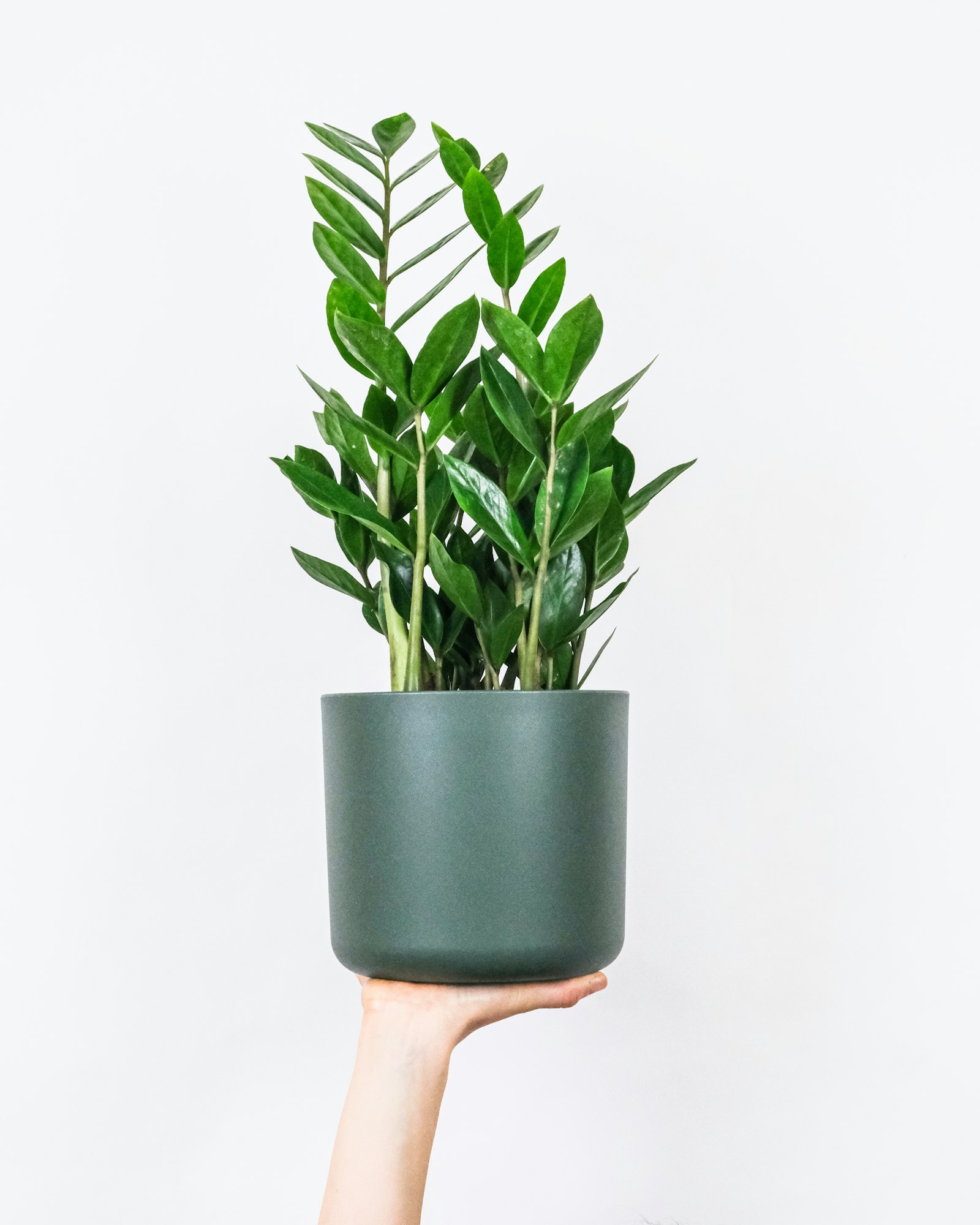
A whole stem on a ZZ plant can go completely yellow over about two weeks, base to tip, while every other stem stays dark green and glossy. It’s easy to become convinced the whole plant is dying and root rot has set in — but pulling the plant to check shows roots and rhizomes that are firm, pale, and completely healthy. That one stem was just done, an old one the plant was cycling out on its own, and once it’s cut at the base, the rest of the plant keeps right on growing like nothing happened.
ZZ plants get the same “impossible to kill” reputation as snake plants, and for similar reasons, they store water underground in thick, potato-like rhizomes and tolerate serious neglect. That storage system also means yellowing shows up a bit differently than it does in most houseplants, and one whole stem going yellow isn’t automatically the crisis it looks like, which is the thing that trips up most ZZ owners.
| Symptom pattern | Likely cause |
|---|---|
| Soil consistently damp, stem/rhizome base feels soft | Overwatering (rhizome rot) |
| One whole stem yellowing gradually, rest of plant firm and normal | Normal stem cycling |
| Yellowing spread thin across many leaflets, long-term low light | Low light |
| Soil bone dry for a long stretch | Underwatering (rare) |
Overwatering (rhizome rot)
This is the one that actually matters. ZZ plant rhizomes need to dry out between waterings the same way snake plant leaves do, and consistently wet soil causes the rhizomes to rot, which cuts off the water supply to whatever stems connect to the affected section, similar to the mechanism covered in the root rot piece, just happening underground in a rhizome instead of in fine roots.
The tell here is texture and scope: the base of the stem, right where it meets the soil, feels soft or mushy rather than firm, and often more than one stem is affected, sometimes with a slightly unpleasant smell from the soil if it’s gone on a while. This is meaningfully different from a single stem cycling out naturally, which stays firm the whole way until it’s fully done.
If this is what you’re seeing, stop watering and let the soil dry out completely before watering again, more than feels intuitive, closer to the drought tolerance you’d give a snake plant than a typical tropical houseplant. Similar mechanics show up in snake plants when they’re overwatered, if you want the comparison. If you unpot the plant and find soft, dark, or foul-smelling rhizome tissue, that section needs to be cut away with a clean blade back to firm, healthy tissue, and the plant repotted into fresh, fast-draining soil.

Just a stem cycling out (often mistaken for disease)
ZZ plants grow in cycles from their rhizome, sending up new stems periodically while occasionally retiring older ones, and a single stem yellowing uniformly from base to tip over the course of a few weeks, while the rest of the plant stays completely unaffected, is frequently just this normal process rather than anything wrong.
The giveaway is that it’s isolated to one stem (occasionally two, rarely more at once), the stem stays firm rather than going soft, and everything else on the plant, including the rhizome if you were to check it, looks completely healthy. If that matches what you’re seeing, there’s nothing to fix. Once the stem has fully yellowed, cut it off at the base with clean scissors or shears, and the plant will typically send up new growth from the rhizome in time, often faster than you’d expect.
Low light over an extended period
ZZ plants tolerate low light better than almost any common houseplant, which is a big part of their reputation, but genuinely insufficient light for a long stretch can still cause gradual, more diffuse yellowing across multiple leaflets rather than the clean, whole-stem yellowing of normal cycling.
This tends to develop slowly, often over months, and it’s easy to miss since the plant isn’t otherwise struggling or wilting the way a less light-tolerant plant would. If the plant’s been in a genuinely dim corner for a long time and the yellowing looks scattered and gradual rather than isolated to one stem, moving it somewhere with more indirect light usually stops further yellowing, even if it takes a while for that improvement to show in new growth.
Underwatering
The least common cause by a wide margin, since ZZ plants are built to handle serious drought, but a plant that’s gone bone dry for an extended stretch, especially in a small pot during a hot period, can eventually show some yellowing along with leaflets that feel notably thin or slightly shriveled.
A thorough watering resolves this, and honestly, if you’re worried you’ve been underwatering a ZZ plant, that’s usually the less risky mistake to have made compared to overwatering it, given how much drought this plant can handle before actual damage sets in.
A few things people ask
How do I tell a naturally cycling stem apart from overwatering damage without unpotting the plant? Feel the base of the affected stem. Firm all the way down means it’s just cycling out naturally. Any softness or mushiness at the base means check the rhizome, since that points toward rot.
Should I water more if I see yellowing, just in case? Not by default, no. Given how much more common overwatering is as an actual cause with this plant, watering more in response to yellowing you haven’t diagnosed is more likely to make things worse than better. Check the soil and the stem base first.
Will a new stem grow back after I cut off a yellow one? Usually yes, assuming the rhizome underneath is healthy, which it should be if the stem was just cycling out normally rather than rotting. New growth can take anywhere from a few weeks to a couple of months to appear, depending on the season and how established the plant is.
Is it normal for ZZ plants to grow slowly? Very much so. They’re naturally slow growers even in good conditions, so don’t mistake a lack of new stems over a short period for a problem on its own, especially outside the active growing season.
For the full rundown on keeping ZZ plant happy long-term, light, watering, soil, and propagation, see the ZZ Plant Care Guide. Next reads: Monstera Leaves Turning Yellow: How to Tell Which of the Five Reasons It Actually Is, Why Are My Dieffenbachia Leaves Turning Yellow? and Why Is My Cactus Turning Yellow?.