
Watering a desert cactus on the same schedule used for tropical plants — weekly, without thinking about how different its actual water needs are — is a common mistake. The base starts going yellow, then a slightly sickly pale green, over a few weeks, and it is easy to keep assuming the plant just needs more time to adjust to its new pot. By the time the base is soft enough to press in with a finger, the rot has often already traveled further up than expected.
Cacti get lumped in with low-maintenance, hard-to-kill houseplants, and in terms of drought tolerance that reputation is earned, but their tolerance for consistently wet soil is close to zero, which makes overwatering the dominant cause of yellowing by a wide margin. A few other causes exist too, but they’re far less common and usually easier to distinguish once you know what to check.
| Symptom | Likely cause |
|---|---|
| Yellowing starting at the base, soil staying damp, base feels soft when pressed | Overwatering / root or stem rot (most common, most urgent) |
| Yellowing spread evenly across the whole cactus, no softness, long time in a dim spot | Insufficient light |
| Yellowing on the side facing a window, especially after a move to a sunnier spot | Sunburn or heat stress |
| Yellowing limited to old, lower growth; rest of the plant green and firm | Normal aging |
Overwatering and rot (the most common and most urgent cause)
Desert cacti are adapted to infrequent rainfall and fast-draining, gritty soil, and consistently moist conditions, whether from overwatering, poor drainage, or a pot without adequate holes, quickly leads to root and stem rot, which Clemson Extension attributes to a soil mix that does not drain quickly or overly frequent watering. Yellowing at the base is often the first visible sign, since that’s usually where rot begins before working its way upward, and it’s frequently accompanied by a texture change from firm to soft or mushy.
This is a more urgent version of the overwatering mechanism covered in the root rot piece, and cacti in particular can go from a small patch of yellowing to serious, hard-to-reverse rot faster than many other houseplants, since the water-storing tissue that makes them drought-tolerant also makes rot spread readily once it starts.
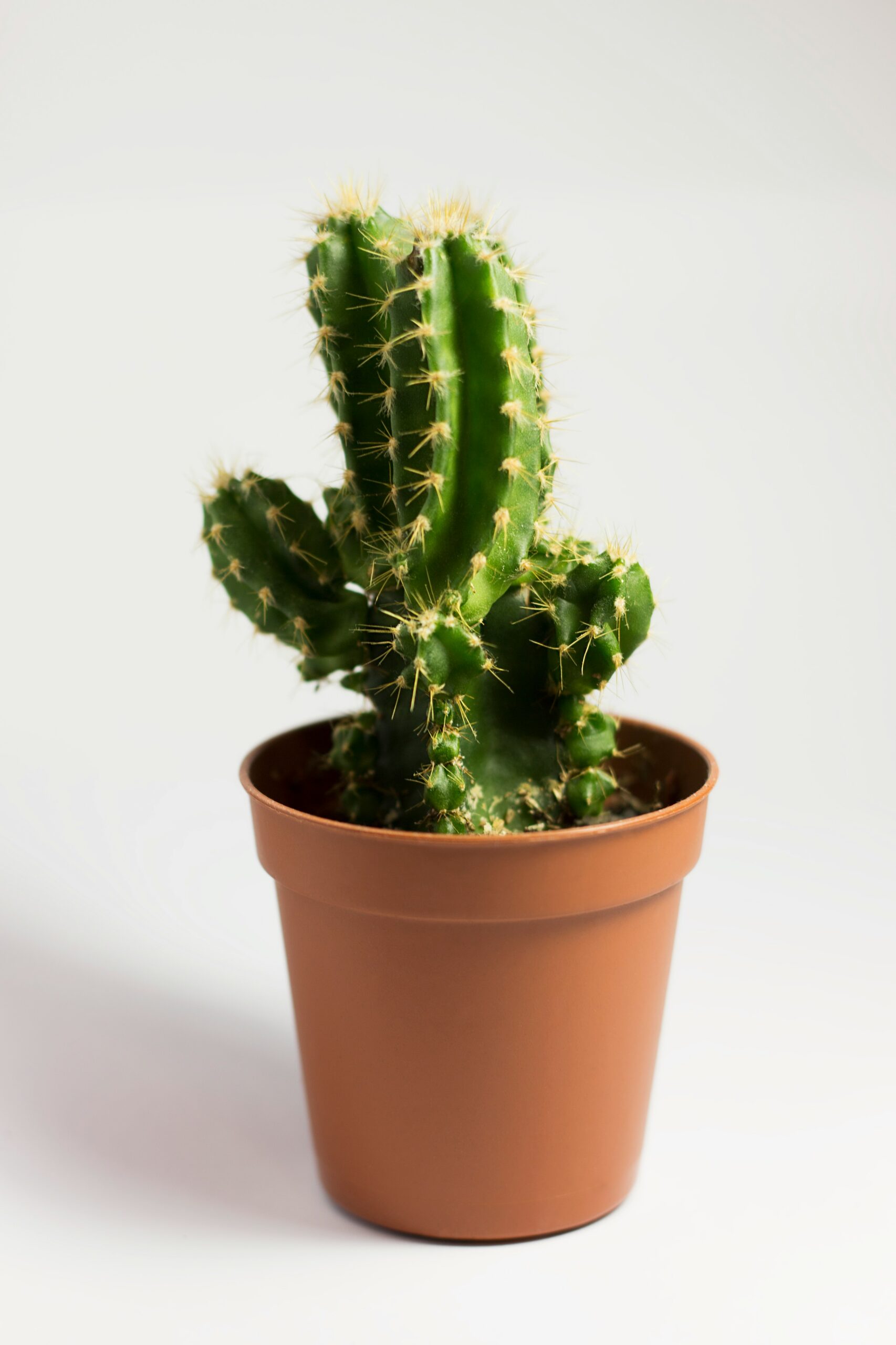
Press gently at the base and anywhere yellowing is visible. Firm tissue with just discoloration may still be salvageable by stopping watering entirely and letting the soil dry out completely, potentially repotting into fresh, fast-draining cactus soil. Soft or mushy tissue means active rot, and at that point cutting away the affected section back to firm, healthy tissue, letting the cut callus over for a few days, and then repropagating from the healthy top portion is often more realistic than trying to save the whole plant.
Insufficient light
Cacti generally want more direct light than most houseplants, and a plant kept in a dim spot for an extended period can develop a diffuse, pale yellow-green cast across the whole plant rather than concentrated at the base, sometimes along with etiolation, a stretched, distorted growth pattern as the cactus reaches for more light.
This tends to develop slowly over weeks or months, and it’s distinguished from rot by the total absence of softness anywhere on the plant. Moving the cactus to a brighter spot, ideally with several hours of direct sun, should stop further yellowing, though the already-affected growth won’t fully green back up.
Sunburn or heat stress
Less common but does happen, particularly with a cactus moved abruptly from indoor or shaded conditions into intense direct sun, similar to the sunburn mechanism that affects other succulents. Yellowing from sun stress tends to concentrate on the side facing the light source and can progress to a bleached or tan discoloration in more severe cases, rather than spreading evenly.
If this matches a recent move to a sunnier spot, providing some filtered shade for a week or two before returning to full sun, or acclimating more gradually next time, prevents further damage. Already-affected tissue won’t reverse, but new growth should be unaffected once the plant adjusts.
Normal aging of lower growth
Some cacti naturally yellow or brown at the very base as older tissue ages, particularly in columnar species, while the rest of the plant continues growing normally from the top. This is a slow, cosmetic process rather than a sign of a problem, and it’s worth distinguishing from rot mainly by checking firmness, aged tissue stays firm, rotted tissue does not.
If yellowing is confined to the oldest base growth on an otherwise healthy, firm, actively growing cactus, there’s generally nothing to address here.
A few things people ask
How often should I actually water a cactus? Far less often than most houseplants, typically every two to four weeks during active growth and even less in winter, watering thoroughly and then letting the soil dry out completely before watering again rather than following a fixed weekly schedule.
Can a cactus recover from rot if I catch it early? Yes, often, if the affected tissue is still firm and you stop watering and improve drainage immediately. Once tissue has gone soft, that portion won’t recover, but the healthy remainder can sometimes be saved by removing the rotted section.
Is yellow always a bad sign with cacti? Not always. Some yellowing is part of natural aging, and some cactus varieties simply have yellow-green coloring as part of their normal appearance. Context, whether it’s spreading, whether there’s softness, and whether it matches a recent care change, matters more than color alone.
What kind of soil should I use to prevent this? A fast-draining cactus or succulent-specific soil mix, often amended with perlite or coarse sand, drains far better than standard potting soil and significantly reduces the risk of the consistently wet conditions that lead to rot.
For the full rundown on keeping cactus happy long-term, light, watering, soil, and winter rest, see the Cactus Care Guide. Next reads: Why Is My Christmas Cactus Turning Red?, Why Is My Aloe Vera Turning Brown? and Why Is My Snake Plant Turning Yellow?.