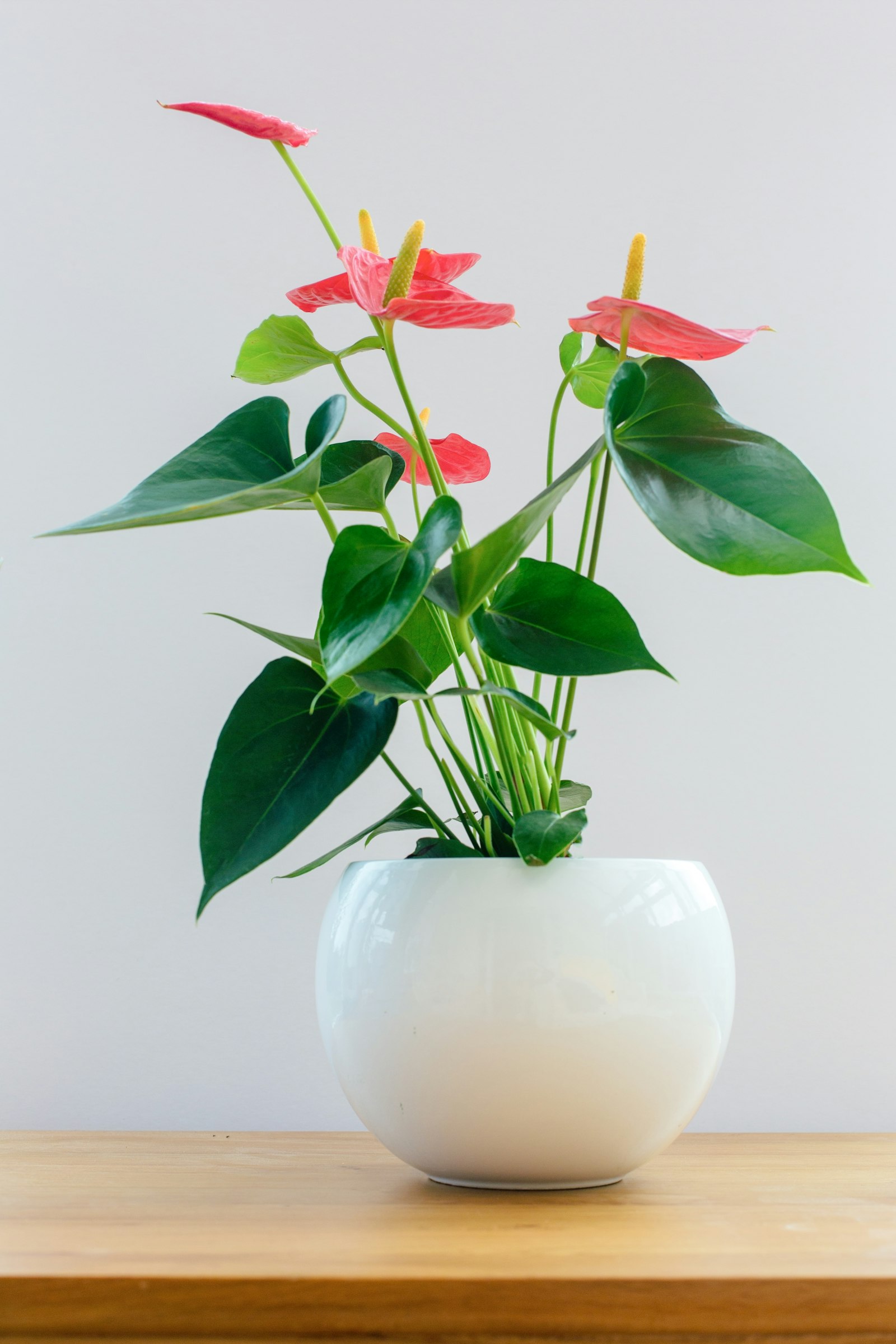
A glossy, heart-shaped anthurium with the occasional red flower spike can start yellowing in an odd pattern: the veins stay distinctly green while everything between them fades to yellow, almost like a stained glass window. Root rot is the first suspicion, but pulling the plant out shows roots that are completely fine. That pattern (interveinal chlorosis) points to a nutrient deficiency, something not many people consider as a houseplant problem until they see it laid out that clearly.
Yellowing anthurium leaves trace back to four main causes: overwatering or root rot, nutrient deficiency, low light, and normal lower-leaf aging. The pattern of the yellowing is the biggest clue here, uniform yellowing versus a distinct vein pattern points toward very different explanations.
| What you see | Likely cause |
|---|---|
| Veins stay green, tissue between yellows (mesh look) | Nutrient deficiency |
| Yellowing with soft/mushy stems, wet soil | Overwatering or root rot |
| Overall pale yellow-green, dim spot | Low light |
| Only oldest, lowest leaves | Normal aging |
Nutrient deficiency
Anthuriums are somewhat prone to nutrient deficiencies, particularly magnesium and iron, that produce a distinctive pattern called interveinal chlorosis, the veins remain green while the tissue between them yellows, since the plant preferentially routes limited nutrients to keep the vein structure functioning. This is different from every other cause here because it has an actual visual pattern rather than uniform discoloration.

This often happens when the potting mix has depleted its available nutrients over time without being replenished, or when soil pH has drifted outside the range anthuriums prefer, which can lock out certain nutrients even if they’re technically present in the soil. A balanced houseplant fertilizer at a diluted strength, applied consistently through the growing season, usually resolves this over the following weeks as new growth comes in. If the affected leaves don’t improve, they likely won’t, but new growth should look normal once the deficiency is corrected.
Overwatering or root rot
Anthuriums are aroids that prefer their chunky, well-draining mix to dry out somewhat between waterings, and consistently soggy conditions can lead to root rot, which typically shows up as more uniform yellowing rather than the vein-pattern of a nutrient issue, often paired with soft or mushy stems and sometimes a sour smell from the soil.
Check the soil moisture and the base of the stems. If everything feels consistently damp and stems near the soil line are soft, let the mix dry out significantly, and inspect the roots for rot, trimming away any that are brown and mushy, if you decide to repot.
Low light
Anthuriums generally want bright, indirect light, and prolonged low light can cause leaves to fade to a pale, washed-out yellow-green, generally across the whole leaf rather than in the vein pattern of a nutrient deficiency. Growth also tends to slow and stretch toward the nearest light source.
Moving the plant to a brighter spot with indirect light, a few feet from an east or west-facing window works well for most anthuriums, should bring new growth back to a deeper, healthier green over the following weeks.
Normal lower-leaf aging
Like most houseplants, anthuriums naturally shed their oldest, lowest leaves over time as the plant directs energy toward newer growth. This shows up as isolated yellowing on just the bottom-most leaves while everything else on the plant continues looking healthy.
If it’s just an older leaf or two, and the rest of the plant looks full and green, this is likely just normal aging. You can trim the yellowing leaf at the base for appearance, but no other action is needed.
A few things people ask
How long does it take to fix a nutrient deficiency? New growth typically starts showing improvement within a few weeks of consistent fertilizing, though already-affected leaves generally won’t revert to fully green.
Should I use a specific fertilizer for anthuriums? A balanced, general houseplant fertilizer diluted to about half strength works well for most anthuriums, applied roughly monthly during the growing season and reduced or paused in winter.
Can tap water cause nutrient lockout in anthuriums? Mineral buildup from hard tap water can contribute to shifts in soil pH over time, which can compound a nutrient deficiency, so flushing the soil periodically with plain water can help alongside fertilizing.
Is yellowing on an anthurium flower spike a concern? The flower spikes, technically modified leaves called spathes, naturally age and fade in color over several weeks as part of their normal lifecycle, which is separate from and not a sign of a problem with the plant’s foliage.
For the full rundown on keeping anthurium happy long-term, light, watering, soil, and propagation, see the Anthurium Care Guide. Next reads: Why Are My Begonia’s Leaves Turning Yellow?, Why Are My Pothos Leaves Turning Yellow? and Monstera Leaves Turning Yellow: How to Tell Which of the Five Reasons It Actually Is.